
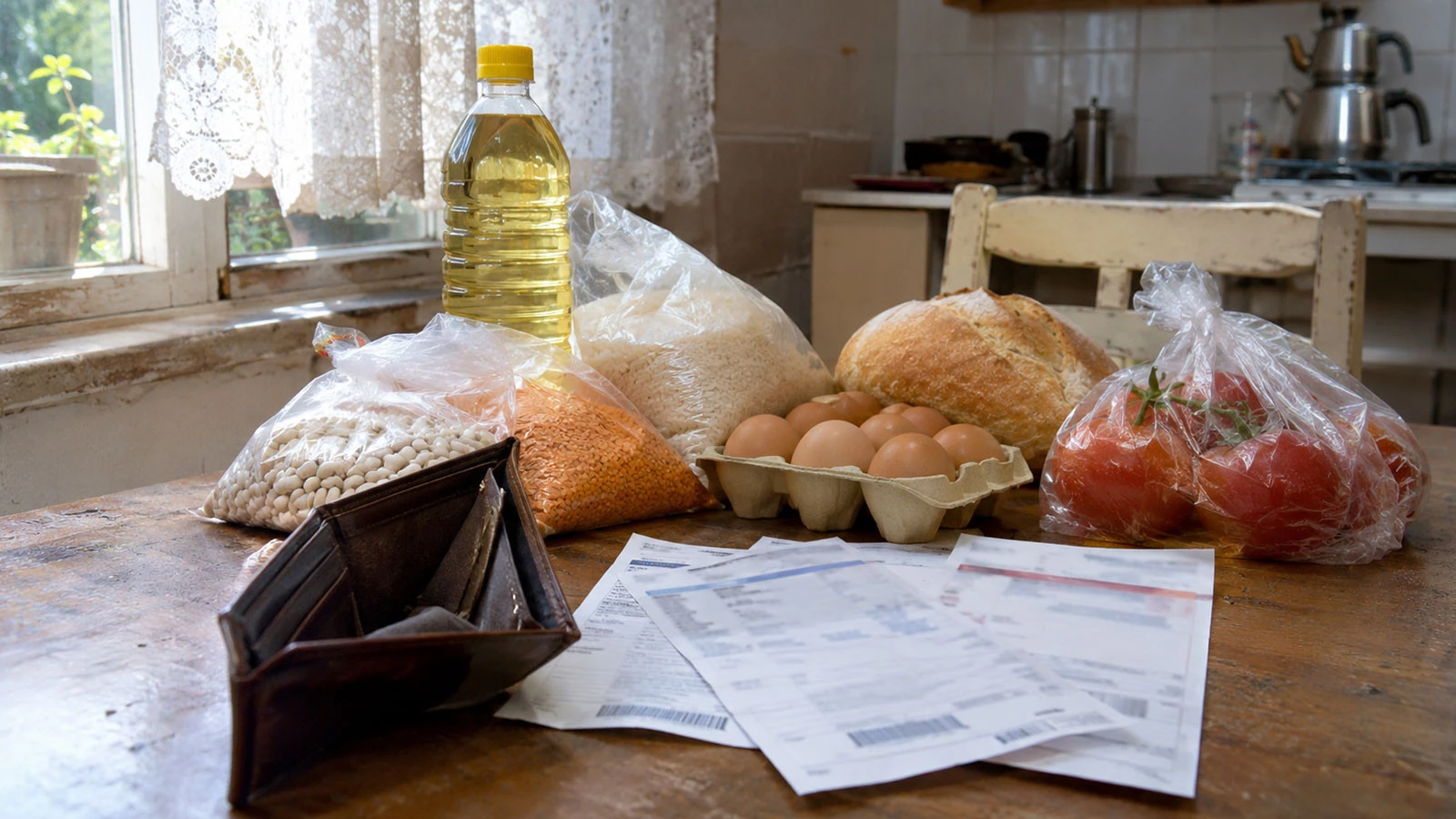
The high cost of living, which is a common problem for millions of households in Türkiye, is experienced at different levels according to income groups. While annual inflation was 29.77 percent in October, the price increase in the expenditure group covering housing, water, electricity, gas and other fuels reached 40.24 percent. The annual increase in food and non-alcoholic beverages was calculated as 27.73 percent and in transportation 36.39 percent. According to TÜİK data, housing and rent rank first in the consumption expenditures of households in Türkiye with 29.3 percent, while transportation and food have a share of 20.5 percent and 17.3 percent, respectively. However, when looking at income groups, significant differences emerge. While the lowest-income households spend approximately 68 lira of every 100 lira they spend on housing and nutrition, this amount decreases to 38 lira in the highest income group. Thus, while the weight of basic needs in consumption varies according to income level, the reflection of price increases on household budgets also varies.
68 OUT OF 100 LIRAS ARE GOING AWAY
Households in the lowest income 20 percent group in Türkiye allocate 38.7 percent of their consumption expenditures to housing and rent, and 29.2 percent to food and non-alcoholic beverages. Thus, the share of two basic needs in total expenditures reaches 67.9 percent. In other words, approximately 68 lira out of every 100 lira spent by these households is used for shelter and nutrition. The remaining 32 lira is distributed to transportation, clothing, health, education, communication and other needs.
THE RATE FOR THE RICH IS 38 PERCENT
At the other end of the income distribution there is a different spending structure. In the highest income 20 percent group, the share of housing and rent in total consumption expenditures is calculated as 25.7 percent, and the share of food is 12.4 percent. The sum of the two items corresponds to 38.1 percent. When compared to the lowest income group, there is a difference of 29.8 points. While the share of transportation in high-income households reaches 25 percent, this rate is 8.6 percent in the lowest income group.
40 PERCENT INCREASE IN HOUSING
One of the factors that increased the impact of inflation on low-income families was the increase in housing-related expenses. According to TURKSTAT’s October data, the price index of the group covering housing, water, electricity, gas and other fuels increased by 40.24 percent in the last year. In the same period, general consumer inflation was 29.77 percent. Thus, the annual price increase in the housing group exceeded the general inflation by 10.47 points.
BIG DIFFERENCE IN FOOD
The difference between income groups is also seen in kitchen expenses. While the lowest-income households allocate 29.2 percent of their consumption expenditures to food, this rate remains at 12.4 percent in the highest income group. The difference of 16.8 points is interpreted as food occupies a greater place in the expenses of low-income families.
EVERY EXPENDITURE IS DIFFERENT
According to the evaluations of economic experts, although general inflation reflects the average consumption habits across the country, the price increases faced by each household differ. The expenditure items of tenants, homeowners and families with children are not the same. While the annual price increase in October was 48.86 percent in education and 43.29 percent in health, evaluations indicate that families feel the cost of living at different levels depending on the products and services they purchase.
