
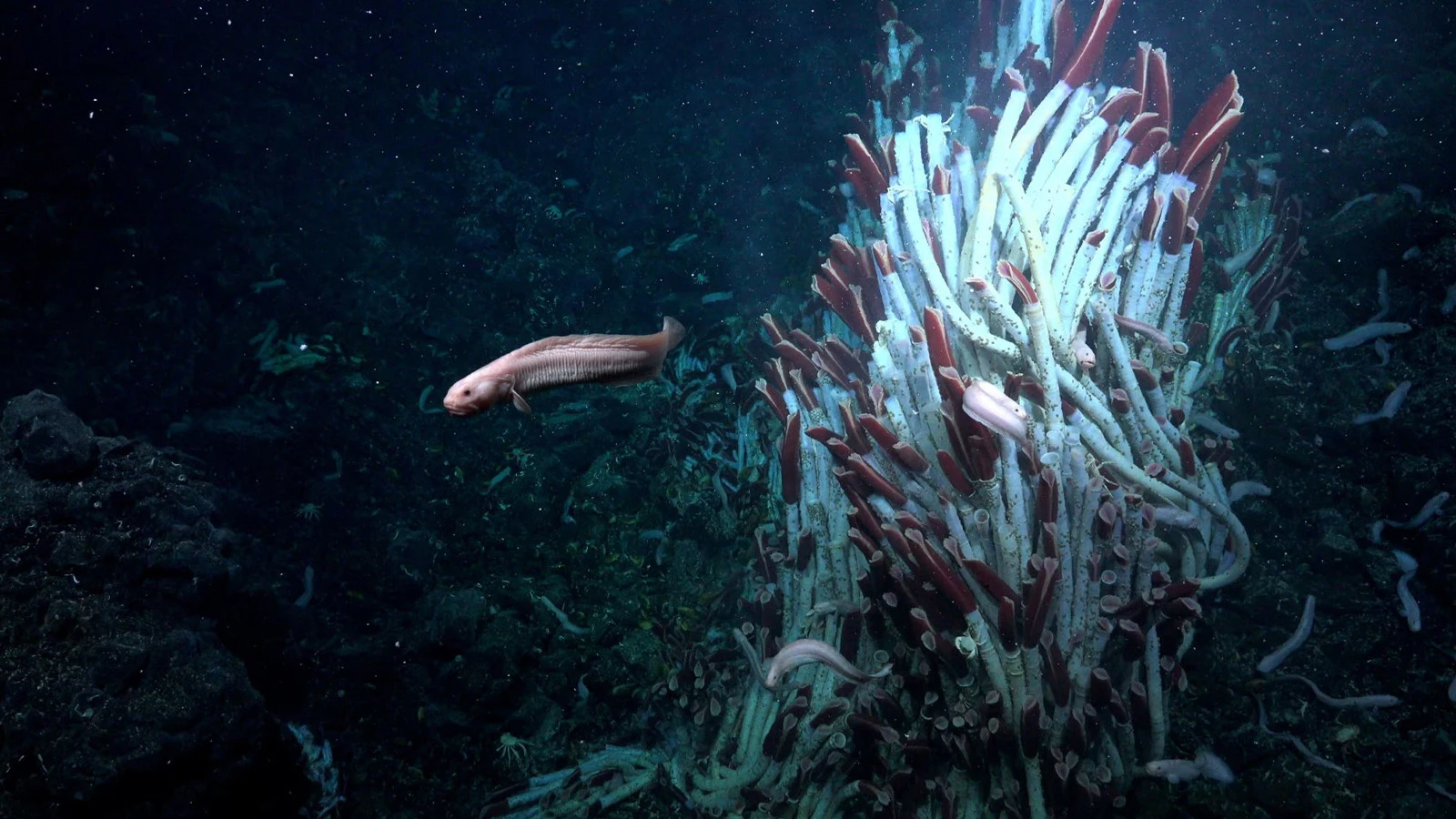
New discoveries on the ocean floors, which are among the least explored regions of the world, are following each other. In the newly announced study by the MARUM research center of the University of Bremen in Germany and the Royal Netherlands Institute for Marine Research, a total of 4,139 animals were detected in 244 metal-containing nodules extracted from 4 thousand to 6 thousand meters deep in the Pacific. The discovery of 245 creatures in a single formation revealed that the habitats that deep-sea mining could threaten are more complex than thought. Mining nodules rich in manganese, nickel, cobalt and copper can also eliminate the habitats of the creatures that live in these formations.
UNKNOWN SPECIES AT A DEPTH OF 10 THOUSAND METERS
Research conducted in the Mariana and Kermadec trenches in the Pacific revealed the diversity of creatures living under extreme pressure. In the study announced in May 2026, 32 species belonging to six different animal groups were identified in samples obtained from a depth of approximately 10 thousand meters. Among these, there are creatures that the scientific world has not known before. The discovery of traces of pine pollen in some single-celled organisms showed that plant matter on land could be transported thousands of kilometers and reach the deepest points of the oceans.
GIANT LIFE AREAS IN A SUNLESS WORLD
The research by Chinese scientists, published in the journal Nature in July 2025, revealed living communities extending to a depth of 9,533 meters in the Pacific. Dense habitats consisting of tube worms and bivalve mollusks were identified along a line of approximately 2,500 kilometers in the Kuril-Kamchatka and Aleutian trenches. The basis of the food chain in these ecosystems is microorganisms that obtain energy from chemical compounds such as methane and hydrogen sulfide instead of sunlight. The discovery showed that large living communities can survive at depths where photosynthesis is not possible.
IS OXYGEN PRODUCED AT THE BOTTOM OF THE OCEAN?
The research, conducted in the Clarion-Clipperton region of the Pacific and published in the journal Nature Geoscience in 2024, suggested that metal-containing nodules could contribute to oxygen production without sunlight. Researchers hypothesized that the electrical potential on the seafloor could drive the separation of water. However, this phenomenon, called “dark oxygen,” has not yet been confirmed. The findings continue to be the subject of debate regarding the functioning of deep-sea ecosystems.
71 PERCENT OF THE BASE HAS NOT BEEN MAPPED
According to April 2026 data from the International Hydrographic Organization, only 28.7 percent of the world’s ocean floor has been mapped to modern standards. Information about the detailed structure of the remaining large regions and the living communities they contain is limited. Scientists evaluate that new ecosystems can be discovered in undersea mountains, hydrothermal vents and deep pits that have not yet been examined.
