
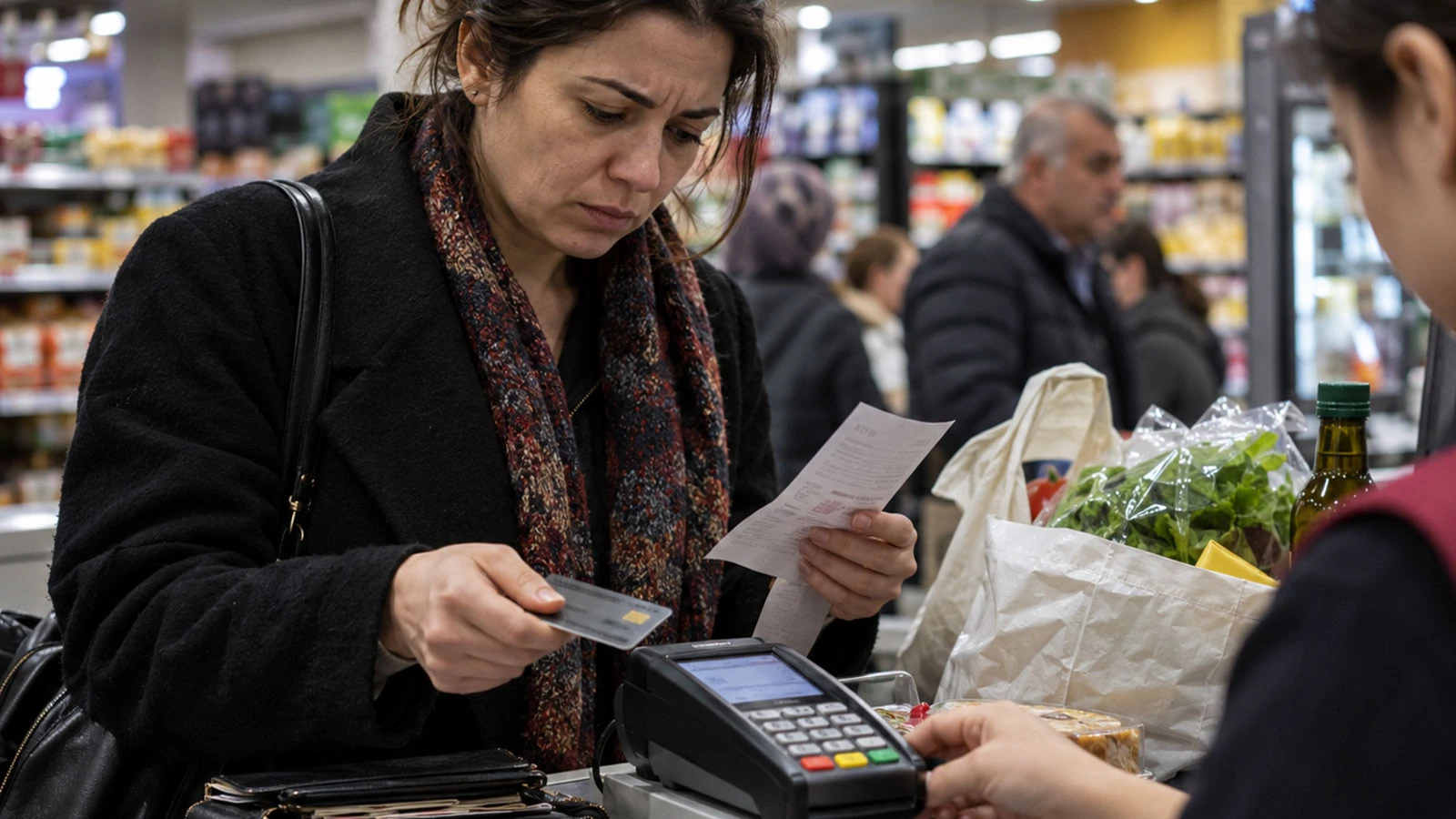
According to September data of the Interbank Card Center (BKM), card payments, which were 2 trillion 189 billion liras in the same month last year, increased to 2 trillion 965.5 billion liras in 2026. Thus, while the spending amount increased by 776.3 billion lira in one year, 2 trillion 515 billion lira of the payments were made by credit cards. In the same period, the number of credit cards increased by 11 percent and reached 155 million. However, a significant part of the increase in spending was due to price increases.
EVERY PAYMENT IS MORE EXPENSIVE
The most striking detail in BKM data was the difference between the amount of spending and the number of purchases. While 1 billion 765 million payments were made with cards in September 2025, this number increased to 1 billion 955 million in September 2026. Although the number of payments increased by 11 percent, the money spent grew by 35 percent. Thus, the average amount paid in each transaction increased from 1,241 lira to 1,517 lira. This year, 276 lira more was spent for an average card payment made last year.
INFLATION EFFECT
Another reason for the rise in card payments is the cost of living. According to TÜİK’s September data, annual inflation was 29.73 percent. Accordingly, the price of goods and services, which could be purchased for an average of 10 thousand liras last year, reached approximately 12 thousand 973 liras this year. The 35 percent increase in card spending in the same period corresponds to a real increase of approximately 4 percent when adjusted for inflation.
DEBT BURDEN IS GROWING
In response to the increase in spending amounts, the difficulties in repaying credit card debts are also increasing. The fact that the non-performing loan ratio in individual credit cards exceeds 5 percent shows that the share of debts that banks have difficulty collecting in the total has increased.. On the other hand, interest costs pose a separate burden for citizens who cannot pay off their entire credit card debt. Interest continues to accrue on the remaining debts, especially for those who can only pay the minimum amount.
901 BILLION LIRA ON THE INTERNET
A significant portion of card spending took place over the internet. In September, online payments increased by 35 percent compared to last year and reached 901 billion lira. Thus, approximately 30 lira out of every 100 lira spent with cards was used in online shopping. The amount of contactless payments increased by 43 percent and exceeded 1 trillion 24 billion lira. 4 out of every 5 card payments in the store were made contactless.
INCREASING INTEREST BURDEN
According to analysts, a significant part of the increase in card spending stems from increasing prices. When inflation is taken into account, the real increase in expenditures remains at 4 percent. On the other hand, the approximately 65 percent increase in non-performing debts on credit cards since the beginning of the year reveals that the repayment problem is getting worse. According to calculations, if a monthly interest rate of 3.75 percent is applied to a credit card debt of 50 thousand liras, the interest burden for only one month reaches 1,875 liras, excluding taxes. For consumers who cannot pay off the entire debt, this cost is carried over to the following months. Thus, while an interest burden is added to increasing expenditures, the share of households’ disposable income allocated to debt payments carries a risk of growth.
