
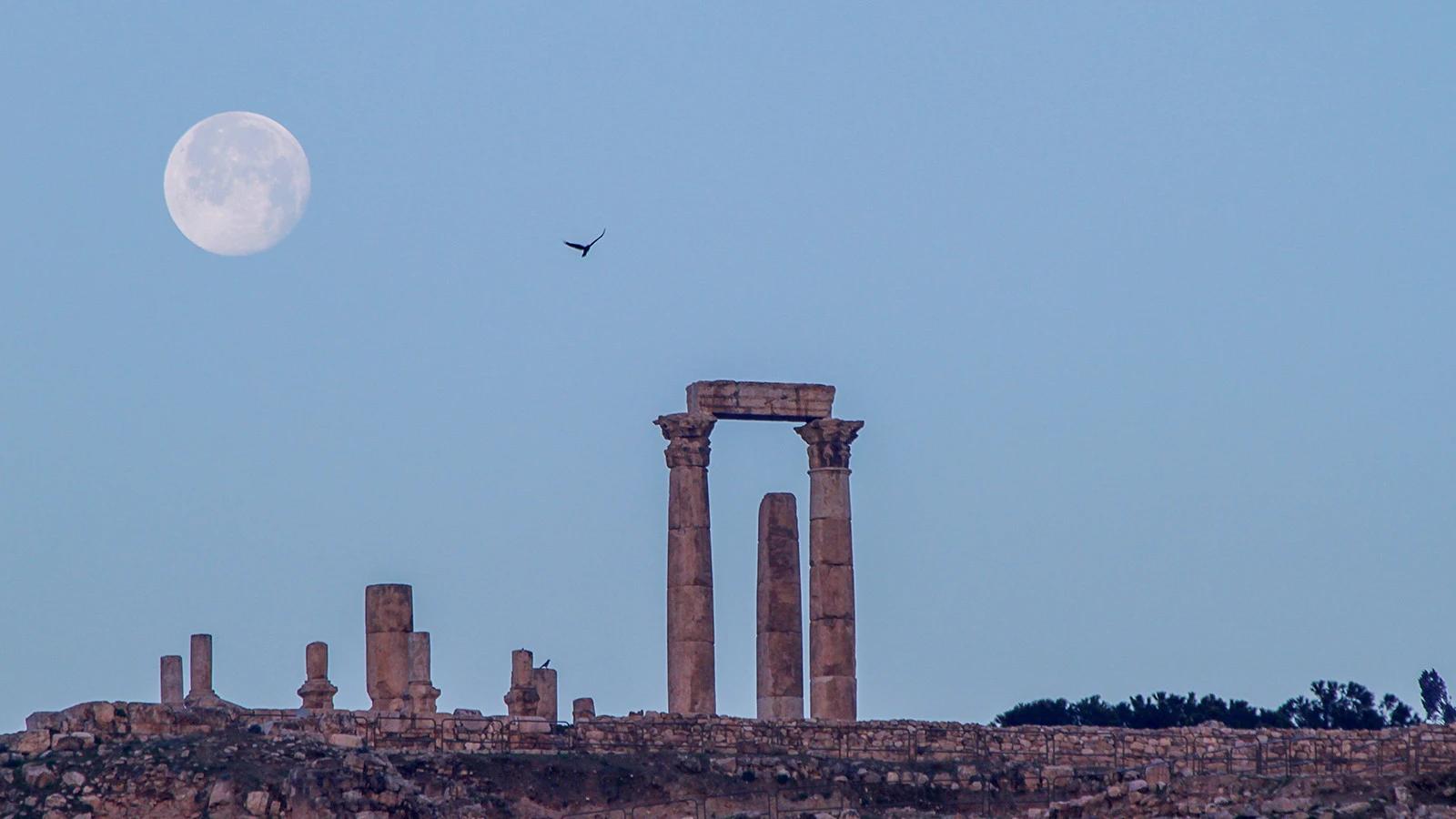
THE PHILOSOPHER WHO THINKS THERE IS LIFE ON THE MOON
Ancient Greek philosopher Anaxagoras (Anaxagoras) was one of the thinkers who tried to explain the functioning of the universe through natural events rather than mythological narratives. The philosopher, who lived between 500-428 BC, was born in the city of Klazomenai, located near Izmir today. One of Anaxagoras’ remarkable views was that the Moon could host other living things. The philosopher claimed that there was extraterrestrial life in the mountains of the Moon. This idea is one of the fundamental questions of today’s search for life in space: “Are there living things outside Earth?” It is considered as one of the examples of the debate in the Ancient Age.
HE SEE THE SUN NOT AS GOD, BUT AS A MASS OF ANGRY METAL
Anaxagoras’ views on astronomy differed significantly from the widespread beliefs of his time. In ancient Greek society, the movement of the Sun in the sky was explained in terms of the journey of the Sun god Helios in his horse-drawn chariot. The philosopher argued that the Sun was not a divine being, but a large mass of hot metal. He defined stars as high-temperature rocks like the Sun. He claimed that the Moon was not a sacred being that radiated light, but a large and rocky celestial body.
HIS OPINIONS REVEALED A REACTION AND HE WAS SENT TO EXILE
Anaxagoras’ explanation of the celestial bodies independently of the gods conflicted with the religious acceptance of the period. In Greek mythology, the Moon was identified with the goddess Selene with its movement in the sky. The philosopher’s description of the Moon as a rocky body and his claim that living things could exist on it drew reaction. A lawsuit was filed against Anaxagoras, who was accused of atheism while he lived in Athens. Although his close friend, Athenian statesman and commander Pericles, defended him, the philosopher could not avoid being exiled. Thus, the thinker who tried to explain natural events through reason and observation was faced with the political and religious pressure of the period.
THERE ARE AN UNLIMITED NUMBER OF WORLDS IN THE UNIVERSE
Anaxagoras was not the only philosopher in ancient Greece who thought about extraterrestrial life and the existence of other worlds. Democritus of Abdera (460-370 BC) argued that there were an infinite number of worlds in the universe. He thought that some of these worlds were similar to Earth, while others had completely different characteristics. This approach of Democritus later differed from the understanding of the universe of Plato and Aristotle. While the position and uniqueness of the Earth in the universe came to the fore in the thoughts of Plato and Aristotle, Democritus suggested that many worlds could exist.
