
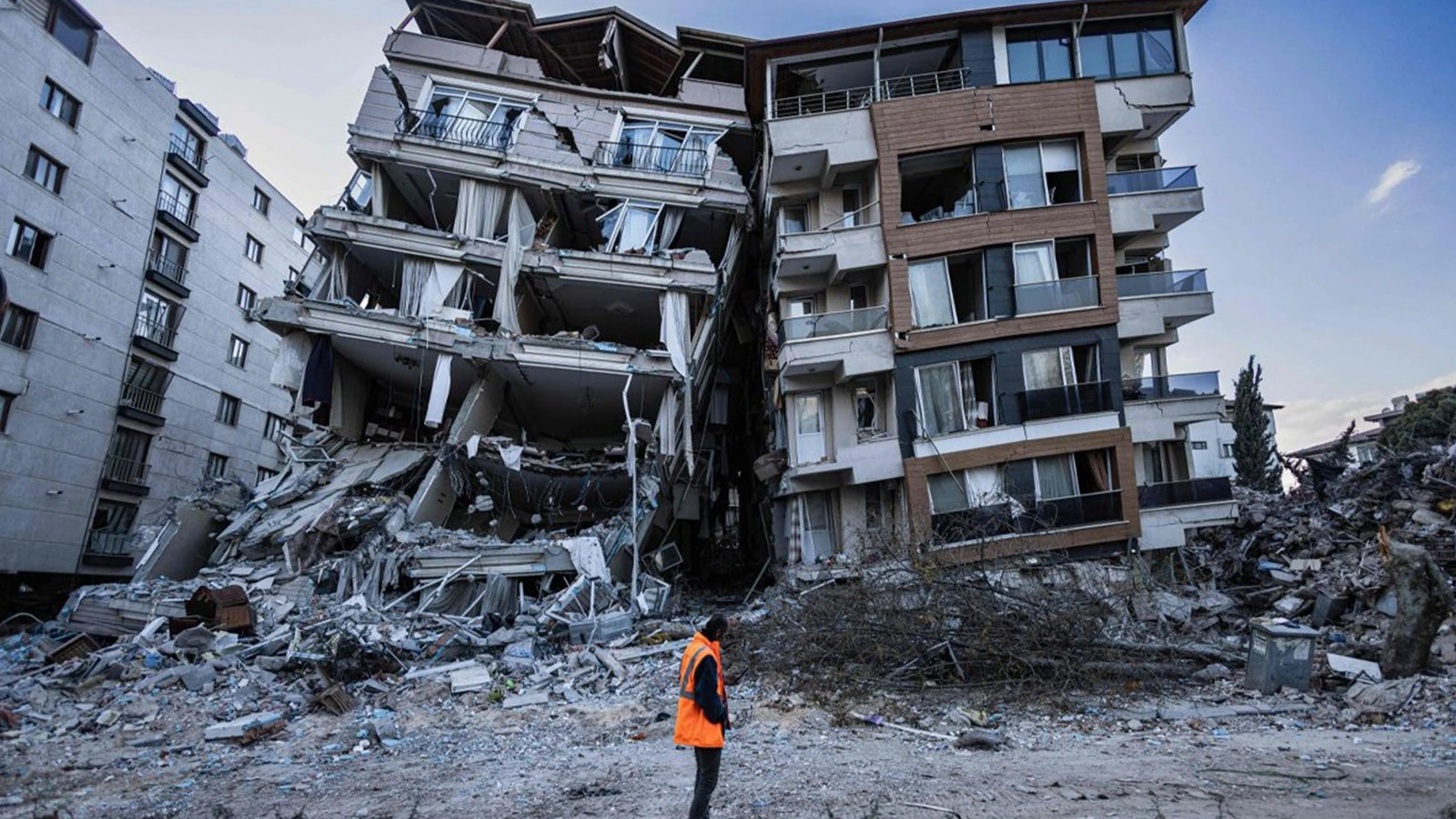
The Marmara earthquake debate, which Türkiye has not been able to conclude for years, is once again on the agenda with the minor earthquakes that occurred in the last week and the mutual statements of experts. Discussions flared up first after the micro earthquakes recorded in the central part of the Marmara Sea, and then after the 3.9 magnitude earthquake that occurred off the coast of Çanakkale’s Ayvacık district. While some experts stated that small earthquake clusters should be closely monitored in the last week, the second stage of the discussion was Prof. Dr. It started with the words “We expect the big earthquake in the northern branch soon”, which Naci Görür used after the earthquake off the coast of Çanakkale. Geology Specialist Dr. Ramazan Demirtaş stated that there is approximately 280-300 kilometers between the Northern Aegean area where the earthquake occurred and the northern arm of the Marmara Sea and argued that a direct relationship cannot be established between the two areas. Demirtaş also said that the expression “as soon as possible” does not reveal a measurable, testable or scientific time period.
IT CANNOT BE CALLED A PIONEERING EARTHQUAKE!
The first link in the recent earthquake discussions was the small-scale earthquake activity recorded in the Middle Marmara Trench on July 10. Evaluating AFAD data, Prof. Dr. Osman Bektaş explained that a cluster of micro earthquakes with magnitudes below 3.5 occurred in the region, at a depth of approximately 6-9 kilometers. Bektaş specifically stated that this activity alone cannot be considered a harbinger of a major earthquake.
THOUSANDS OF SHAKES ARE HAPPENING
Dr. Ramazan Demirtaş stated that many small and medium-sized earthquakes occurred in the Marmara Sea, and that most of these earthquakes did not result in a larger earthquake. Demirtaş also said, “562 earthquakes between 3 and 5 magnitudes were recorded in the Marmara Sea between 1999 and 2025. The total number of earthquakes between 2011 and 2026 was 6 thousand 508.” Demirtaş also stated that 1280 separate tremors were recorded in the region between the 5.8 magnitude earthquake on September 26, 2019 and the 6.2 magnitude earthquake on April 23, 2025. “Although more than a thousand earthquakes occurred after the earthquake on April 23, 2025, no new earthquake of magnitude 6 or above occurred,” he said.
“WE ARE WAITING FOR YOU SOON”
While the discussions were continuing, a 3.9 magnitude earthquake was recorded in Çanakkale’s Ayvacık district on the night of July 15. After the earthquake, Prof. Dr. Naci Görür’s evaluation restarted the discussion about the Marmara earthquake. Görür stated that the earthquake was a shallow and small earthquake that occurred on the Küçükkuyu Fault. Stating that this zone, which is considered the southern branch of the North Anatolian Fault, shows that the Marmara Region is stretched, Görür said, “We expect the big earthquake in the northern branch as soon as possible.”
“THERE ARE 300 KM BETWEEN”
Dr. Naci Görür’s statement. Ramazan Demirtaş objected with successive posts. While Demirtaş’s first objection was towards the geographical and tectonic location of the area where the earthquake occurred, he said, “There is 280-300 km between the Kumburgaz-Adalar segment of the northern branch of the Marmara, where he said ‘We are expecting an earthquake soon’, and the Skyros-Edremit basin, where the 3.9 earthquake occurred. What is the relevance? It is tragicomic.”
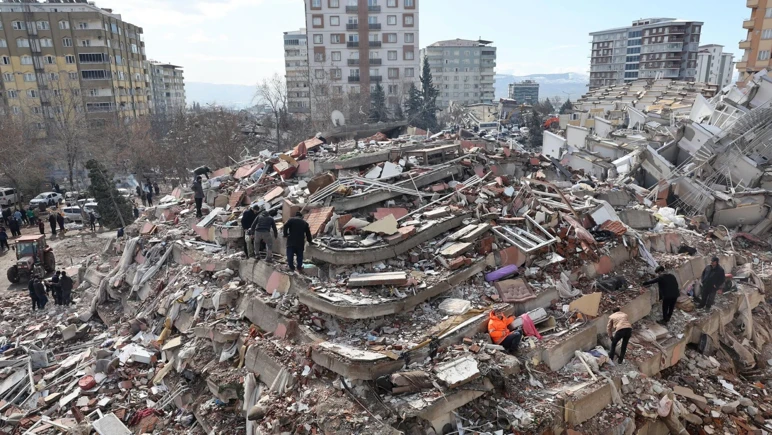
3D MAPS REQUIRED
On the other hand, although there is a difference of opinion regarding the latest statements of experts, the area between the areas damaged by the 1912 Şarköy-Mürefte and 1999 İzmit earthquakes The fault section within the Sea of Marmara has long been considered a seismic gap.. Paleoseismology, seafloor surveys, GPS measurements and historical earthquake records show that faults in the Marmara region have accumulated significant slip deficits. Earthquake Scientist Prof. Dr. Cenk Yaltırak warns at every opportunity, “In order to determine the danger of a fault, you need to determine not only its surface trace but also its deep geometry and make a 3D map.”
(email protected)
