
Global warming
Climate summit in Brazil: Thousands take to the streets
Updated November 15, 2025 – 4:50 p.mReading time: 3 minutes

Activists and indigenous people are putting pressure on the UN climate conference. They are concerned with protecting indigenous peoples, the rainforest and moving away from oil, gas and coal.
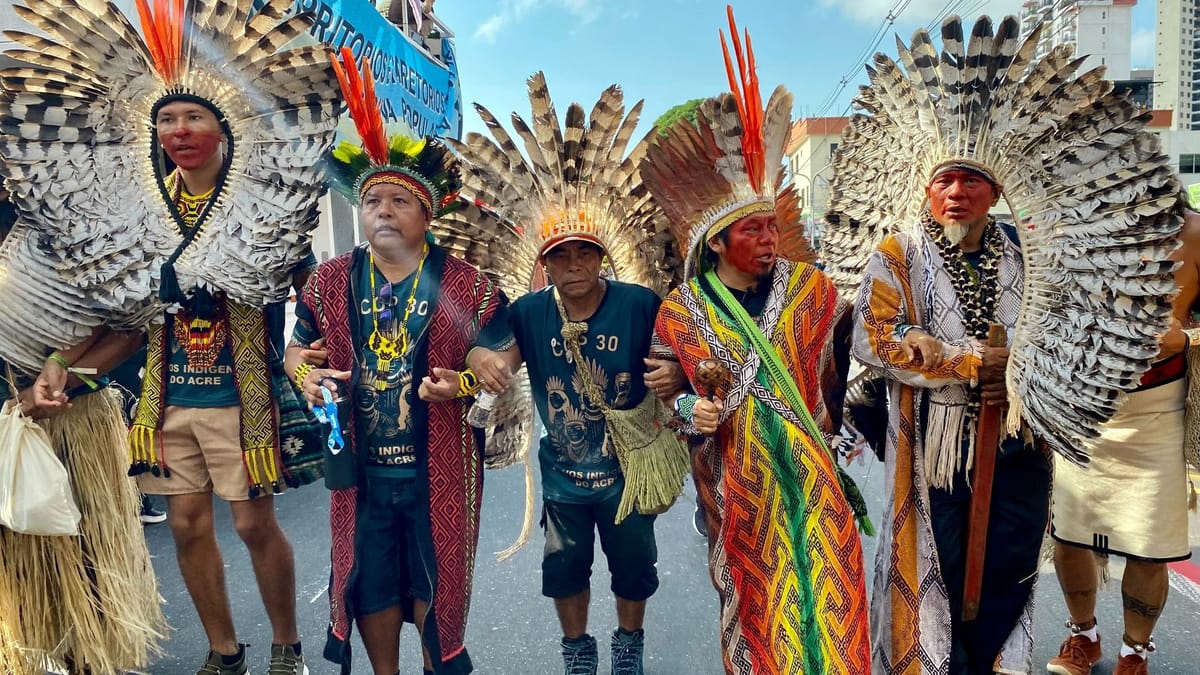
At the halfway point of the two-week UN climate conference in Brazil, thousands of people demonstrated for greater ambition in the fight against global warming and the protection of indigenous communities. The “March for the Climate” marched through the center of the city of Belém in the morning (local time) with loud chants and slogans.
Thousands of demonstrators also took to the streets in dozens of cities in Germany on Friday. The Fridays for Future movement called for more determination from the German government at the UN meeting for climate protection and steps to move away from oil, gas and coal.
During a short visit to Belém, the President of the UN General Assembly, Annalena Baerbock, classified the climate crisis as the “greatest threat of our time” – despite the many wars and conflicts around the world. The Green politician told the German Press Agency: “Around 3.6 billion people – almost half of the world’s population – are now at great risk from the consequences of climate change.” Specifically, these include droughts, floods, extreme heat and growing food insecurity. All of this reinforces the “vicious circle of hunger, poverty, displacement, instability and conflict.”
The large protest march in Belém was led by indigenous people who have to defend their ancestral areas in Brazil – including in the rainforest – against agricultural companies, loggers and illegal gold miners.
Unlike previous climate conferences in authoritarian states such as Azerbaijan or Egypt, this year in Belém there are also visible protests in the urban area. Parallel to the UN climate conference, the “People’s Summit” is meeting on the university grounds with hundreds of organizations, movements and networks from Brazil and abroad.
Just on Friday, dozens of indigenous people and other climate activists blocked the main entrance to the conference for hours in the morning. And on Tuesday evening, indigenous people and other activists even stormed the entrance hall of the tent city, which was actually heavily secured. They forced open doors and scuffled with security forces.
At the COP30 until the end of next week, around 200 countries will discuss how global warming can be curbed more quickly. The focus is, among other things, on a roadmap to move away from oil, gas and coal – something that is being resisted by rich Gulf states such as Saudi Arabia, which continue to earn billions from oil and gas.
It is also about demands from developing countries for more aid in order to be able to better adapt to the fatal consequences of the climate crisis. However, the industrialized countries are insisting that no more money comes to the table than was promised last year. The UN conference in Baku decided that the core goal would be for industrialized countries to provide at least $300 billion in climate finance annually by 2035.
