
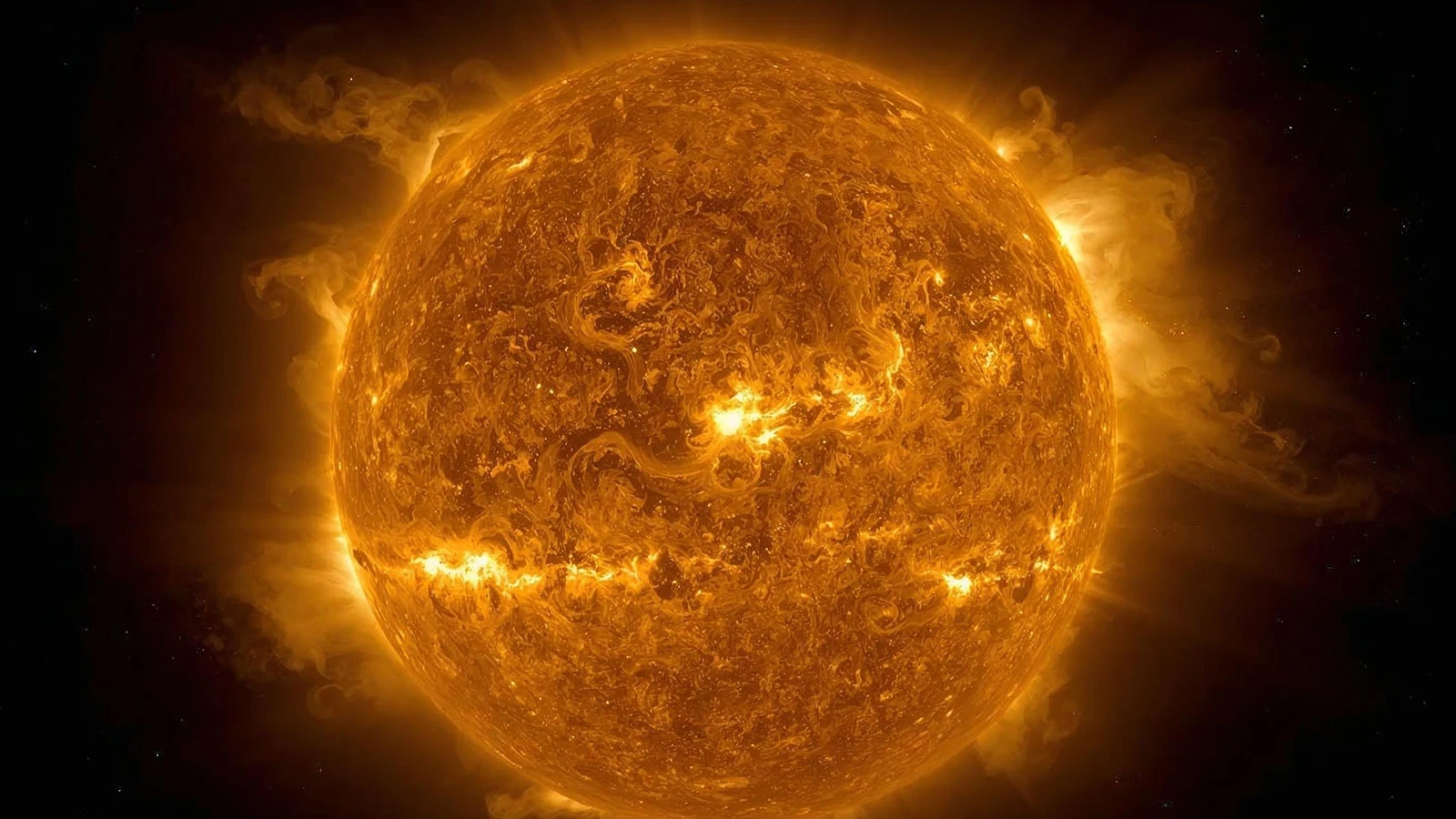
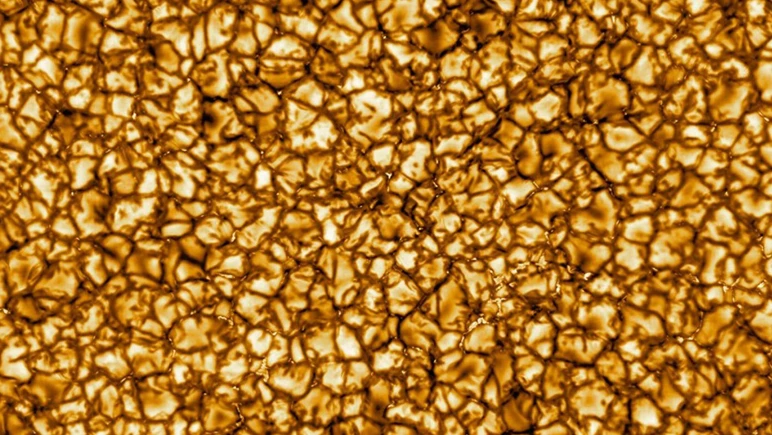
The Daniel K. Inouye Solar Telescope at the Haleakalā Observatory in the US state of Hawaii has imaged the Sun’s surface in unprecedented detail.
In new observations, extremely small-scale movements occurring in the Sun’s atmosphere were detected. Scientists determined that the fluctuations seen in the images are Kelvin-Helmholtz instability, which occurs as a result of two different plasma layers moving over each other at different speeds.
Similar formations can be seen in clouds and oceans on Earth. However, the movements of the extremely hot plasma in the Sun occur under very different conditions.
ONLY 20 KILOMETER STRUCTURES WERE SEEN
Thanks to the high resolution of the Inouye Solar Telescope, even structures approximately 20 kilometers wide could be distinguished on the Sun’s surface.
This scale is extremely small compared to the diameter of the Sun, which is approximately 1.4 million kilometers.
Researchers state that these structures have been theoretically predicted before, but have not been directly imaged in such detail in the Sun’s atmosphere.
ONE OF THE BIGGEST SECRETS OF THE SUN
The new images are not only visually striking. The discovery could also help answer one of the long-standing questions of solar physics.
While the visible surface of the Sun has a temperature of approximately 5,500 degrees Celsius, the temperature in its outer atmosphere, the corona, can reach millions of degrees.
For many years, scientists have been trying to understand why the atmosphere becomes hotter as we move away from the Sun.
It is considered that the newly imaged small-scale turbulences and waves may play a role in transporting energy to the upper layers of the Sun’s atmosphere.
THE WORLD’S MOST POWERFUL SOLAR TELESCOPE
The main mirror of the Daniel K. Inouye Solar Telescope, operated by the US National Solar Observatory, is 4 meters in diameter. The telescope is considered one of the world’s most powerful observatories designed to study the Sun.
Thanks to high-resolution observations, scientists can study sunspots, magnetic fields and plasma motions at scales never before possible.
Researchers think that such observations may also contribute to a better understanding of solar explosions and energy events radiating into space.
When powerful explosions on the Sun reach Earth, they can cause geomagnetic storms that can affect satellites, communication systems, GPS services and power grids.
