
HISTORY RECEIVED UNDER THE LAKE!
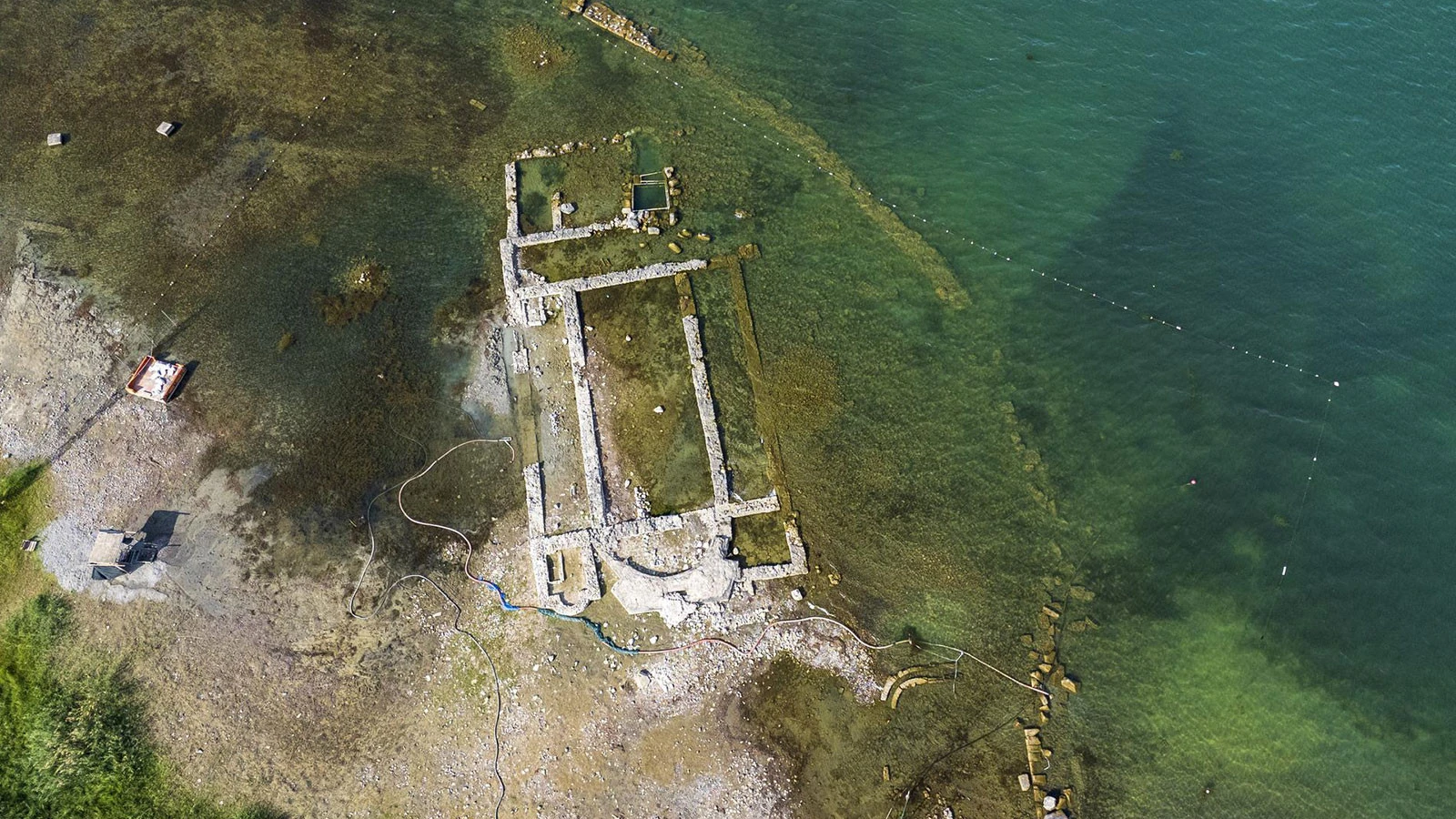
Aerial shots taken at Iznik Lake in 2014 revealed traces of a huge structure under the water. The ruins of a basilica with three naves and an apse, located outside the walls, bore the traces of a religious center that had been lost for centuries. The mystery grew even larger with underwater excavations that started in 2015. Because the history of the area where this building is located goes back much further than the time when the church was built.
IS THERE A PAGAN TEMPLE UNDER THE CHRISTIAN CHURCH?
The most striking possibility is hidden under the basilica. Researchers estimate that the church may have risen on the site of an ancient temple dedicated to Apollo. During the excavations, coins, offering containers, oil lamps and architectural pieces from the Roman period were found. Although these works point to the pre-Christian use of the area, the foundations of the Temple of Apollo have not yet been precisely determined.
THE LOST ADDRESS OF THE 1700-YEAR-OLD COUNCIL!
In 325 AD, the clergy gathered in Iznik upon the call of the Roman Emperor Constantine and made historical decisions on the fundamental beliefs of Christianity. However, the exact structure in which the First Council of Nicaea was held is still debated. The area where the basilica on the lake is located is one of the possible addresses. While some researchers argue that the first sessions may have been held here, others put forward the view that the meeting took place in the imperial palace.
100 COINS, 450 CERAMIC PIECES AND MYSTERIOUS TOMBS!
Excavations at the bottom of the lake showed that the basilica had a much more complex history than previously known. In 2021 alone, nearly 100 coins, 450 ceramic pieces, metal and wooden artifacts were found. Many graves were unearthed inside the structure. In fact, it was determined that the basilica was reduced in size and continued to be used as a burial church after a major destruction. Another striking finding was the well-like structure, which is thought to be related to the sacred water source mentioned in historical sources.
