
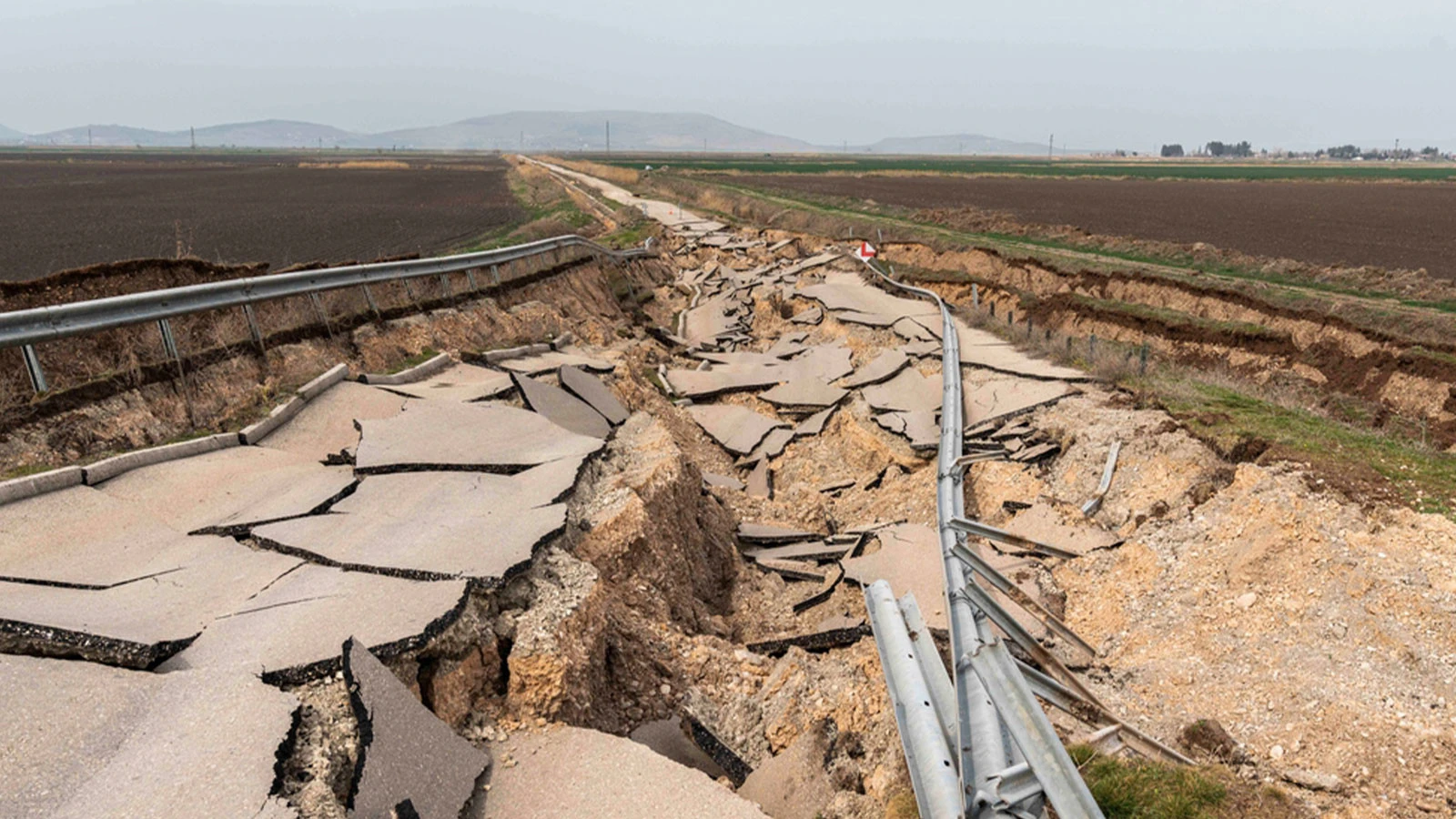
The small-scale earthquakes that occurred in the Marmara Sea in the last two weeks have brought seismic activity in the region back to the agenda. The last earthquake occurred at 05.15 this morning off the coast of Bursa’s Karacabey district. AFAD announced the magnitude of the earthquake as 3.1 and the epicenter as the Marmara Sea, 7.22 kilometers away from Karacabey. After the last earthquake, all eyes once again turned to the risk on the Marmara Sea floor.
CONSECUTIVE SHAKES
While a 3.2 magnitude earthquake was recorded off Armutlu on 26 August, a 1.6 magnitude earthquake occurred off Şarköy on 29 August, and a 1.7 magnitude earthquake occurred off Çınarcık on 30 August. In the same period, small-scale earthquakes were recorded off the coasts of Marmara Ereğlisi and Erdek. On September 1, a 1.7 magnitude earthquake occurred approximately 22 kilometers off Büyükçekmece. The activity in the region also attracted attention with the series of earthquakes off the coast of the Islands in the second half of August. According to the analysis of Dokuz Eylül University Earthquake Research and Application Center, 185 earthquakes with magnitudes ranging from 1.4 to 3.2 were recorded in the Marmara Sea between 18-20 August.
STRESS ACCUMULATES IN THE SOUTH ARM
In the examination, it was stated that these earthquakes did not occur directly on the main fault segment, which was considered to be locked, but on the secondary branches around the Adalar Fault. While experts emphasize that the movement in question should not be considered as a harbinger of a major earthquake on its own, Prof. spoke to Haberglobal.com. Dr. Osman Bektaş said that the earthquake risk in the Marmara Sea accumulates in the southern branch. Geological Engineer Prof. Dr. While drawing attention to the stress accumulation in the İznik-Mekece line, Bektaş said: “The İznik-Mekece segment, which is one of the important parts of the southern part of the North Anatolian Fault System in Marmara, It extends from Pamukova to the south of Lake Iznik. This line has been silent for a long time. There has been an accumulation of tension for approximately 91 years since 1935. When the stress transfer of the 1999 Izmit earthquake to the west is added to this, we can say that the energy accumulation in the southern branch has increased significantly. “It is not right to focus only on the northern branch when evaluating the Marmara.”
MUST BE FOLLOWED
“Just because the fault is silent does not mean that the danger has disappeared,” said Prof. Dr. Bektaş also warned, “On the contrary, the stress accumulated in the segments that have not been broken for a long time should be closely monitored. While there is a sharing of stress between the northern and southern branches, the Middle Marmara Ridge between the Çınarcık Pit and the Kumburgaz Pit is among the regions that stand out in terms of stress accumulation.”
BURSA AND GEMLIK WARNING
Earthquake Expert Prof. Dr. Şerif Barış is one of the experts who draws attention to the risk in the southern branch. “The Anatolian plate is squeezed between the Eurasian plate and the African and Arabian plates,” said Prof. Dr. Barış said, “For an earthquake to be a precursor, earthquakes of the same size must occur a few days apart, followed by a larger earthquake. North There has been no foreshock in the Anatolian fault zone since 1900. In our opinion, the risk of a possible major Marmara earthquake is concentrated in the line we call the middle and southern branches.. “The middle and southern branch extends to the north of Iznik, Gemlik and Bursa,” he said.
