

The Turkish economy entered the last week of April not only with the interest rate decision, but also with global energy prices, the Strait of Hormuz crisis, deteriorating inflation expectations and signals of slowdown in the real sector. While the Central Bank kept the policy rate constant at 37 percent and the overnight lending rate constant at 40 percent, the main attention in the markets was turned to the messages given in the text rather than the level of the decision. In the decision text, it was stated that the main trend of inflation decreased in March, but preliminary data indicated a limited increase in April. It was emphasized that the high course and volatility in energy prices affected the inflation outlook through both the cost channel and economic activity.
NEW STEPS FOR INFLATION
The statement “in case a significant and permanent deterioration in the inflation outlook is foreseen, the monetary policy stance will be tightened” in the Central Bank’s decision text is interpreted as new steps may come to the agenda in market circles. It is stated that the secondary effects that may occur, especially on oil prices, exchange rate outlook, expectations and company costs, may narrow the Central Bank’s decision area in the coming period.
INFLATION EXPECTATIONS DOUBLED
According to economic circles, the Strait of Hormuz is at the center of this risk line. While US President Donald Trump’s announcement that the ceasefire with Iran has been extended created a short-term relief in the market, it is considered that the real issue for energy markets is whether the Hormuz crossings will be opened permanently and safely, rather than whether the war is over or not. Fatih Birol, President of the International Energy Agency; That’s why his warning about a daily supply loss of 13 million barrels is closely watched in the markets.
IT BECOME PERMANENT
While the increase in energy costs affects the pricing behavior of producers, the risk of this pressure becoming permanent increases if inflation expectations deteriorate. As a matter of fact, the Central Bank’s sectoral inflation expectations data for April reveal that this fragility has strengthened. Accordingly While the annual inflation expectation after 12 months increased to 23.39 percent for market participants, 33.70 percent for the real sector and 51.56 percent for households, the rate of households expecting inflation to decrease in the next 12 months decreased to 14.57 percent.
SHAKING THE CURRENT ACCOUNT BALANCE
The analysis indicates that monetary policy now has to manage not only the current inflation but also the perception of inflation. The widening gap between market participants and household expectations indicates that pricing behavior may become more resilient. On the real sector side, expectations exceeding 33 percent increases the risk of cost increases being reflected in producer pricing. For this reason, the Central Bank’s emphasis on “secondary effects” in the decision text is considered a critical warning in economic circles. According to economic experts tonThe increase in energy prices not only increases the import bill; It also affects production costs, exporters’ competitiveness and current account balance outlook.
TIGHTENING MAY BE ON THE AGENDA
Economic Expert-Economist Barlas Yurtsever, while touching on the situation and risks, says, “While the direct effect of the energy shock is seen in fuel and transportation costs in the first stage, there is a risk of spreading to food, rent, services, industrial products and wage expectations in the second stage. The increase in oil prices is not an area that the Central Bank can control alone. However, if this increase disrupts inflation expectations and is permanently embedded in pricing behavior, monetary policy may have to be drawn to a tighter line.”
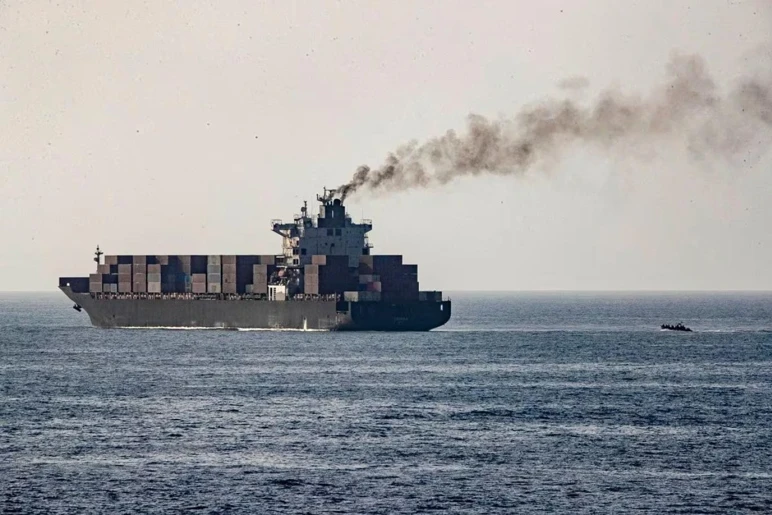
HORmuz Stalemate
Public opinion researcher Volkan Tebrizcik points out that the direction of the Turkish economy in the coming period will not only be determined by the interest rate corridor of the Central Bank. According to Tabrizcik, the number of tankers passing through Hormuz, the level of Brent oil, jet fuel supply, flight cancellations in Europe, global bankruptcy expectations, the course of reserves, the rate of non-performing loans and the inflation perception of households should be read together as parts of the same picture.
(email protected)
