
Updated April 4, 2026 – 8:26 a.mReading time: 4 minutes

The Kremlin is profiting from the chaos in the Middle East, but the structural problems of the Russian economy are becoming increasingly visible. Even Vladimir Putin now admits that the economy is collapsing and has to ask for money.
Vladimir Putin has long cultivated the image of a stable war economy. Sanctions? Tolerable. Break-ins? Temporary. The war against Ukraine should remain economically manageable, and a large part of the Russian population should not notice much of it.
But in the fifth year of the war the situation changed.
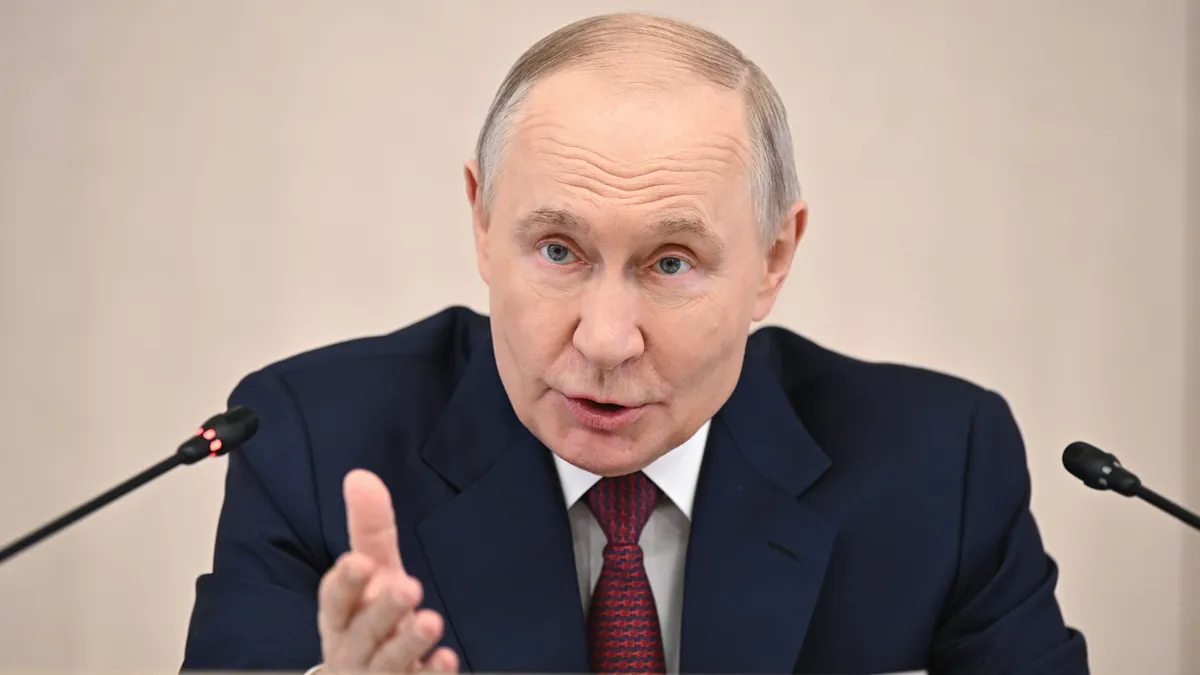
The Kremlin is now talking openly about economic problems. The gross domestic product has fallen, as has industrial production. Putin said at a government meeting: “In January this year, Russia’s gross domestic product was 2.1 percent lower than a year ago.” This is more than a snapshot. It’s an admission.
Because Russia was able to conceal the consequences of the sanctions for a long time. The massive rearmament stabilized growth, and government spending artificially kept the economy running. But this effect evaporates.
Now the structural weaknesses are becoming apparent. Putin’s war economy only works as long as the state pumps more and more money into the system. This is exactly what is becoming a problem now. Because revenues are coming under pressure while the costs of the war remain high.
The numbers tell a clear story: falling growth, increasing burdens, a national budget under pressure. The Organization for Economic Cooperation and Development (OECD) expects growth of only 0.6 percent for 2026, after already weak previous years. At the same time, central sources of income are disappearing. Oil and gas are the backbone of Russia’s state finances. And that’s exactly where Ukraine comes in.
Ukrainian drone attacks on refineries, pipelines and export ports hit the most vulnerable part of the Russian economy. Tank traffic in the Baltic Sea has almost collapsed. “We are talking about individual ships here,” Mikko Hirvi, head of maritime security at the Finnish Border Guard Agency, told Reuters.
The financial consequences are dramatic. Bank of Finland economist Laura Solanko told Reuters the outages resulted in “daily revenue losses of over $70 to $75 million.”
Even more serious: around 40 percent of Russia’s oil export infrastructure is temporarily out of operation. These are precisely the systems with which Russia processes, transports and sells its oil abroad.
