
Accident in the ride
Compensation dispute after attending Oktoberfest
09/08/2026 – 12:26 p.mReading time: 2 minutes

He was looking for a thrill and ended up in the emergency room: an Oktoberfest visitor was injured on the roller coaster, and he then sued for compensation.
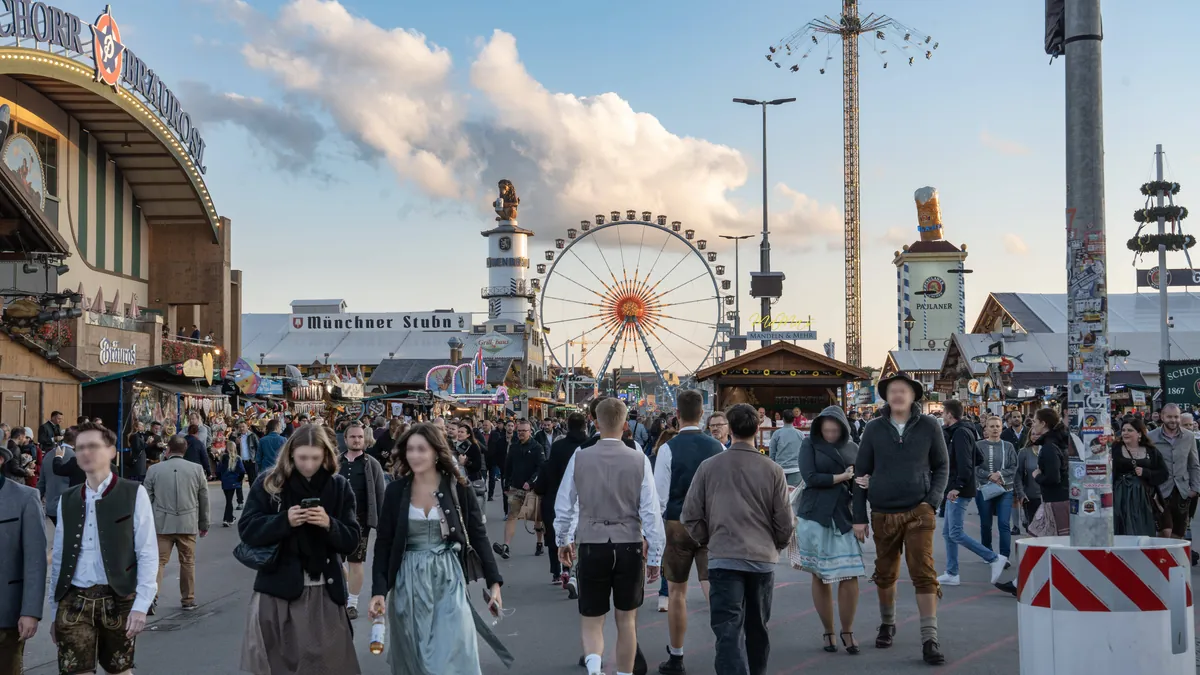
The Munich one begins in a few days Oktoberfest. It will be the 191st time that the celebration will take place on Theresienwiese. In addition to numerous festival tents, over 100 rides also attract customers.
A recent district court ruling shows that the trip is not without risk Munich (Af: 172 C 1019/26). The court had to deal with the question of whether a roller coaster user who was injured while riding was entitled to compensation.
Hands in the air, arm in the cast
The plaintiff visited the Oktoberfest last year with his wife and other friends and decided to take a ride there. During the journey, the man – like other passengers – threw his hands in the air. His right hand hit a steel beam, causing the man to fracture his wrist.
The injured roller coaster rider then demanded compensation of 10,000 euros from the ride operator. His argument: He didn’t see any warning signs on the day of the accident. Even if they did, they only stated that “leaning out of the vehicle, stretching out your arms and legs” was prohibited. However, it cannot be concluded from these prohibitions that raising one’s arms is also prohibited. This behavior is common in rides.
Would you have known?
Roller coasters are one of the main attractions at festivals. The rides in Germany get their name from their original shape: a figure eight. In Austria, roller coasters are better known as high-rise roller coasters because the carriages are pulled mechanically onto a high scaffolding and observers have to look up to watch the ride. The name for roller coasters in other European countries such as Italy, France or Spain seems strange: Russian mountains. A forerunner of today’s roller coaster was created in the Russian Empire. Since the 15th century, high ramps have been doused with water during deep frost, creating steep slides.
Court denies compensation
However, the man was unable to convince the district court with this argument. The operator maintained her system in accordance with regulations – this had only been confirmed by the TÜV a few days earlier. The ride was structurally in perfect condition.
In addition, there were sufficient warnings. These made it unmistakably clear that extending one’s arms was completely prohibited. The question of whether stretching your arms up is common in rides is therefore irrelevant.
The court found that the passenger was not entitled to compensation. However, the judgment is not yet legally binding.
