
The research is based on data obtained from HARPS and ESPRESSO spectrographs located in Chile and developed within the scope of the European Southern Observatory (ESO). These devices are used to detect planets using the “radial velocity” (Doppler) method. The results of the study were published in the journal Astronomy & Astrophysics.
According to scientists, the existence of the planet orbiting the star GJ 887 and first detected in 2020 has been conclusively confirmed with new data. This planet, called GJ 887d, completes its orbit around its star in approximately 50 days. Researchers state that some features of this planet may be similar to planets in the Solar System.
Fabio Del Sordo emphasizes that one of the striking aspects of the system is its remoteness:
“This system is not that far away from us, just 6 light-years further away than Proxima Centauri.”
Within the scope of the research, not only GJ 887d but also other planets orbiting the same star were detected. While scientists discovered another planet with an orbital period of approximately 4 days, they also found traces of another planet that may have a 2-day orbit. Thus, it is evaluated that there are a total of 4 or 5 planets in the system.
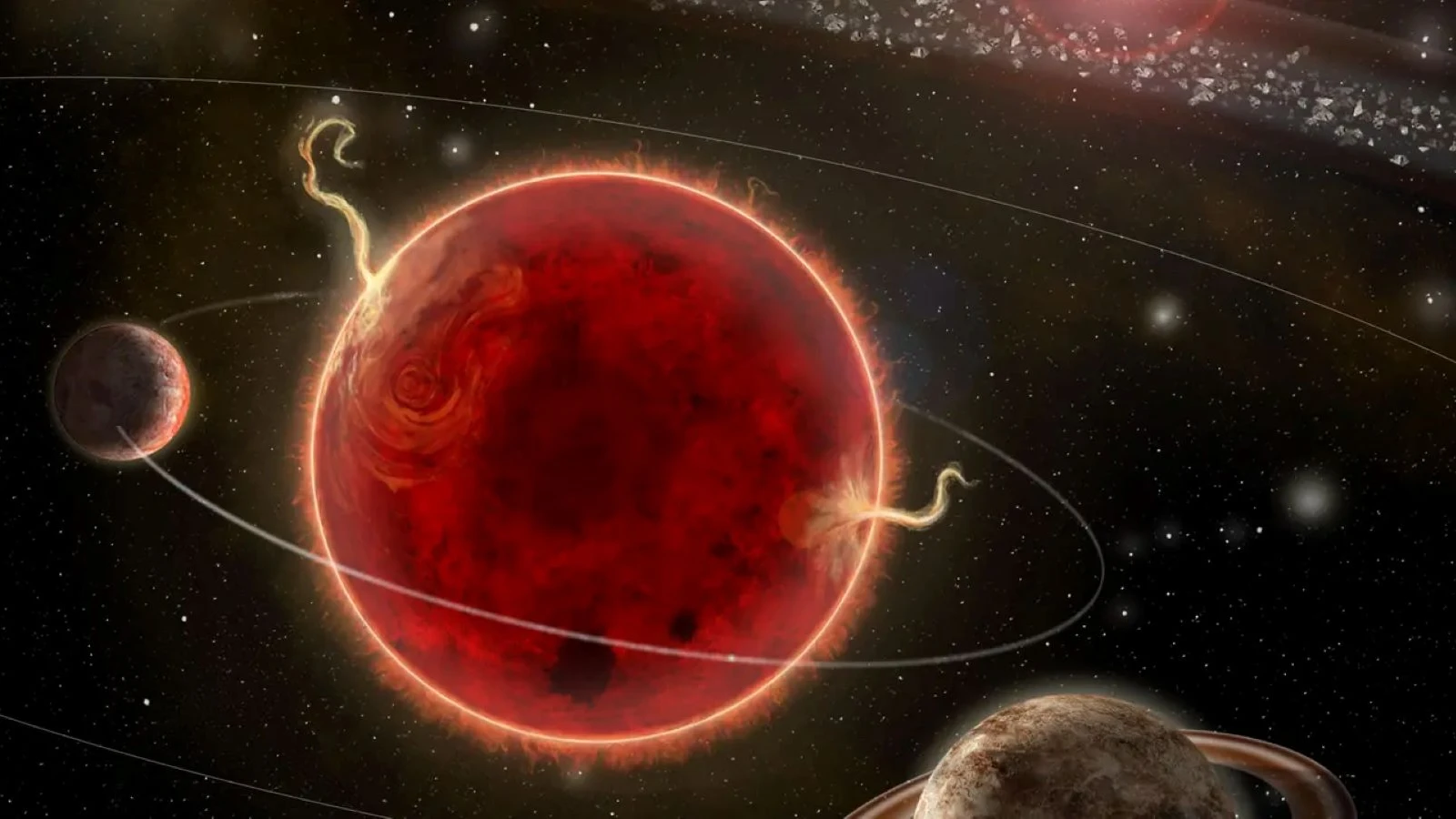
These planets revolve around a “red dwarf” type star, which is smaller and cooler than the Sun. The star GJ 887 is particularly interesting, according to scientists, because it does not have high magnetic activity like Proxima Centauri. This reduces the risk of planets being exposed to excessive radiation and increases the chances of life.
One of the most important features that makes GJ 887d special is that it is located in the “livable zone”. This region represents the ideal distance at which liquid water is likely to exist on the surface of a planet. Theoretically, liquid water could exist on this planet.
But scientists are cautious. According to Del Sordo, the atmospheric structure and actual dimensions of the planet are not yet known. Its mass alone is estimated to be at least six times that of Earth.
Despite all these uncertainties, GJ 887d is considered “one of the most interesting planets ever discovered” because it is one of the closest planets to Earth among the planets in the habitable zone.
