
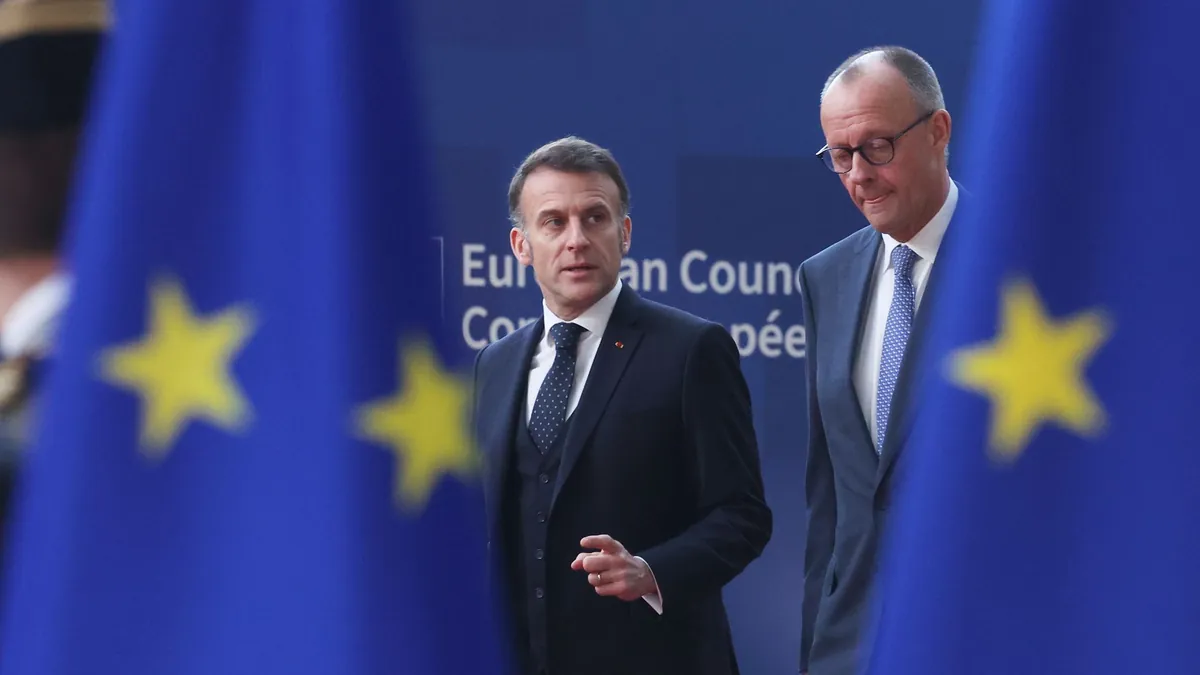
Madrid, as the third project partner, also put pressure on the summit meeting in Nicosia. Prime Minister Pedro Sánchez warned that his country wanted the project to finally move forward. There are probably difficulties in starting this cooperation, but “Spain is certainly not the problem.”
Beyond all industrial policy aspects, the project also has a strategic dimension. And there is a world of difference between Germany and France.
Security expert Celia Burgdorff recently described the fundamental problem in two words in an essay for the Institut Montaigne in Paris: Autonomy is opposed to responsibility.
Burgdorff’s thesis: France is striving for a system that ensures it extensive autonomy and also enables it to go it alone, for example in Africa. Germany relies on responsibility and defense in Europe. Very simplified and applied to the FCAS, this means: France wants a fighter jet that can also land on an aircraft carrier. Germany needs one military plane to reach the NATO eastern border.
Burgdorff noted the different perspectives: “While France sees Europe more as a multiplier of sovereignty or even as an extension of its national power, Germany has a more pragmatic relationship with the European Union.”
With the Cyprus decision and the order to their defense ministers, Merz and Macron have bought themselves a little time. But the fundamental strategic difference remains. Time for a European solution. As Merz said in Cyprus: “It remains true that we have to do a lot more for our own security.
