
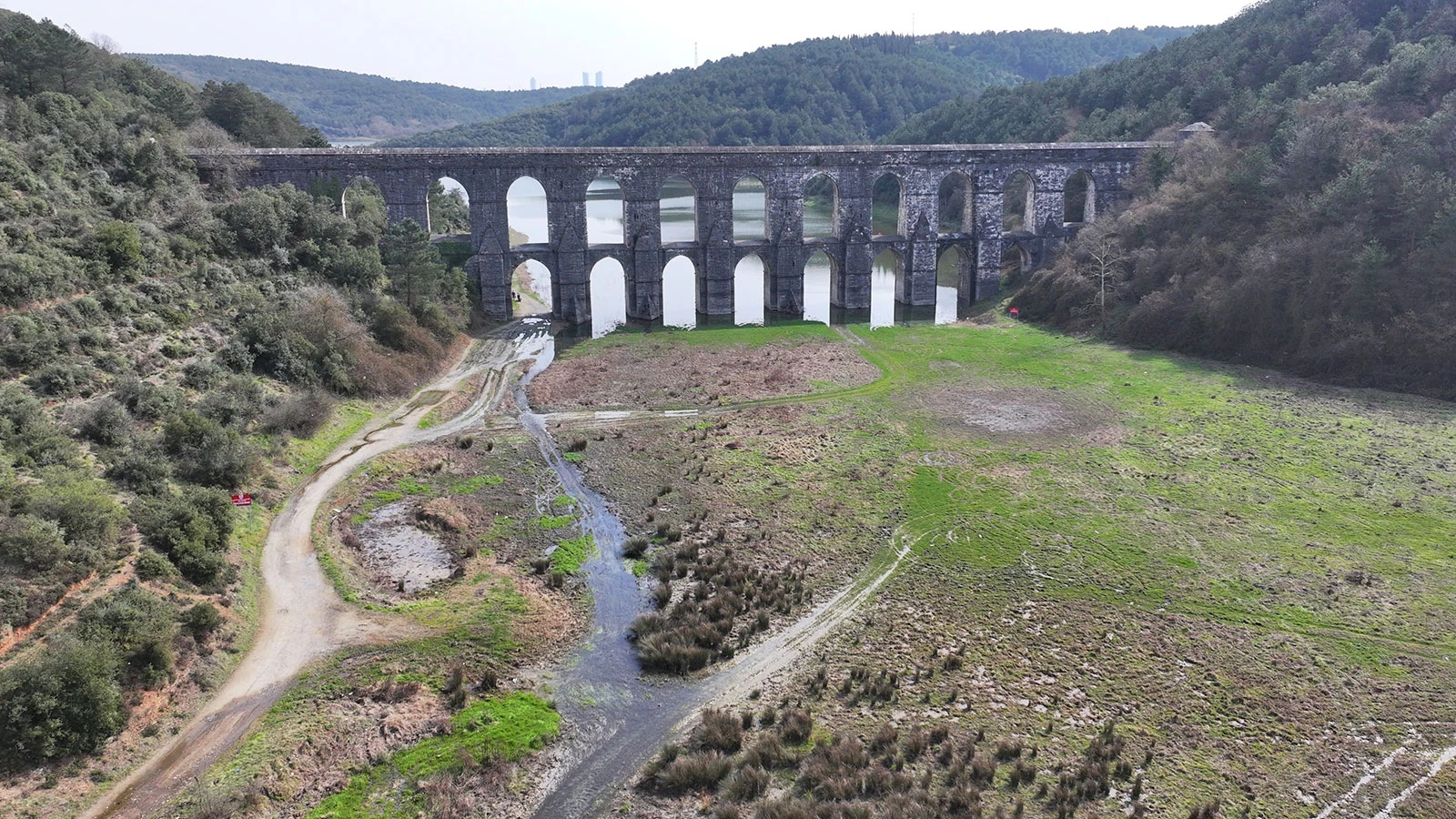
Türkiye entered the month of May with two different photos under the title of water and climate. On the one hand, there is a significant recovery in Istanbul and Ankara dams compared to last year; On the other hand, as mid-May approaches, shower warnings in many parts of the country and images of snow in higher areas have come to the fore. Although the rise in dams means a short-term breather for cities, long-term drought risk, increased consumption and evaporation pressure in the summer months still remain critical issues.
EUROPEAN SIDE IS HALF
The most striking picture in terms of May data is seen in Istanbul. According to the latest data of İSKİ, the average occupancy rate in Istanbul dams increased to 72.05 percent. While Ömerli rose above 95 percent, Elmalı rose above 95 percent, and Darlık rose above 91 percent; Terkos remained at 59 percent, Büyükçekmece at 56 percent, Sazlıdere at 45 percent, and Istrancalar at 43 percent. Although Istanbul seems to be relieved on average, there is a significant difference between the dams. The water security of the megacity will be shaped not only by the total occupancy rate, but also by which basin the water is collected, how summer temperatures will progress and how much daily consumption will increase.
WATER STRESS CONTINUES IN ANKARA
In Ankara, there is a strong recovery compared to last year as of the beginning of May. According to ASKİ’s latest 2026 data, the total occupancy rate increased to 44.22 percent. In the same period last year, this rate was 30.29 percent. The active usable water rate increased from 19.32 percent to 37.73 percent. Amount of water coming to dams While it exceeded 41 million 450 thousand cubic meters in May 2026, the total daily amount of water supplied to the city was recorded at 1 million 360 thousand cubic meters. This data shows that dams are getting stronger in the capital; On the other hand, it shows that consumption pressure remains high.
SHOWERS ARE COMING
The second striking headline of May is the sharp oscillation in weather events. According to the evaluation of the General Directorate of Meteorology, local showers and thunderstorms are expected in the next 10 days in Istanbul, Kocaeli, Edirne, Kırklareli, Bilecik, Sakarya, most of Central Anatolia, as well as the inner parts of the Western Black Sea, the Central and Eastern Black Sea, the north of Eastern Anatolia and Hakkari, Bitlis, Bingöl and Muş. It is estimated that air temperatures will be above seasonal norms in the eastern parts and around normal in other regions.
HIGHEST RAINFALL IN 38 YEARS
According to MGM’s 6-month water year report covering the period of October 1, 2025-March 31, 2026, an average of 468.8 millimeters of precipitation was recorded across Türkiye. This value is 25 percent higher than the normal of 374.3 millimeters and 87 percent higher than the same period last year. 6-month water year rainfall throughout Türkiye has reached the highest level in the last 38 years. While rainfall was above normal in all regions, the highest increase was seen in Southeastern Anatolia with 39 percent.
DROUGHT RISK CONTINUES
However, dam relief in early May and strong water year data do not mean that the drought risk is completely eliminated. The last official update to MGM’s drought analysis is for March 2026. These maps show that short-term rainfall allows the soil and dams to breathe; On the other hand, it shows that the long-term drought memory of 12 and 24 months persists in some regions. Long-term stress, especially in Marmara, Thrace, Inner Aegean, some basins of Central Anatolia and the Southeast, stand out as fragile areas that need to be monitored in terms of agricultural irrigation, groundwater and drinking water safety in the summer months.
RISK IS GROWING IN ANTALYA
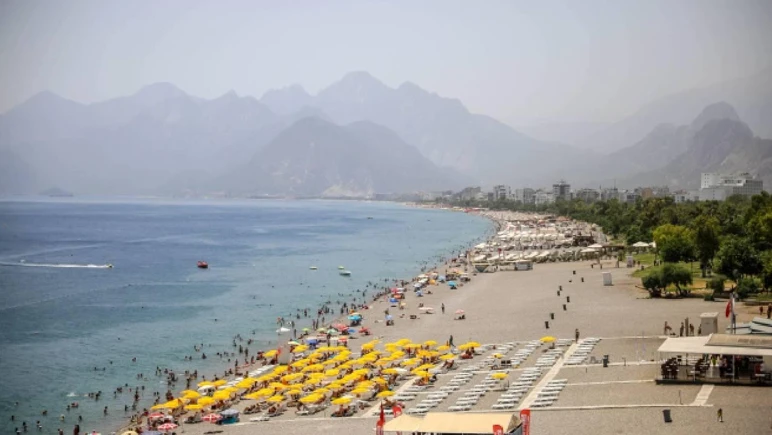
On the other hand, one of the most vulnerable areas in Türkiye’s water and climate table stands out as the Antalya Basin. Projections for Antalya, which will host COP31, show that a hotter, drier and more challenging climate in terms of living conditions is on the way towards the end of the century. So that; According to studies conducted jointly by scientists from Kastamonu and Hiroshima universities, the Antalya Basin will experience a significant transformation in terms of temperature, humidity and climate comfort by the end of the century. The research states that the biggest change will occur in coastal regions. The coastline, which is considered attractive in terms of tourism today, will not be as suitable as before due to excessive heat, decreasing humidity balance and decreasing climate comfort in the coming years.
TERRIBLE WARM-UP
One of the most striking findings of the study concerns temperature increases. Today, average annual temperatures in approximately 30 percent of the Antalya Basin are in the range of 10-12 degrees. However, even in the optimistic scenario in which emissions begin to decrease, these temperatures are predicted to rise to 14-16 degrees by the end of the century. In a more negative scenario, where emissions continue to increase, it is calculated that annual average temperatures in the same regions may reach the 18-20 degree band.
(email protected)
