
Iran war
Iran threatens retaliation after Trump ultimatum
Updated March 23, 2026 – 8:18 a.mReading time: 3 minutes

Trump escalates his threats towards Tehran. Will Iran actually open the Strait of Hormuz by Tuesday – or is there a risk of another spiral of violence?
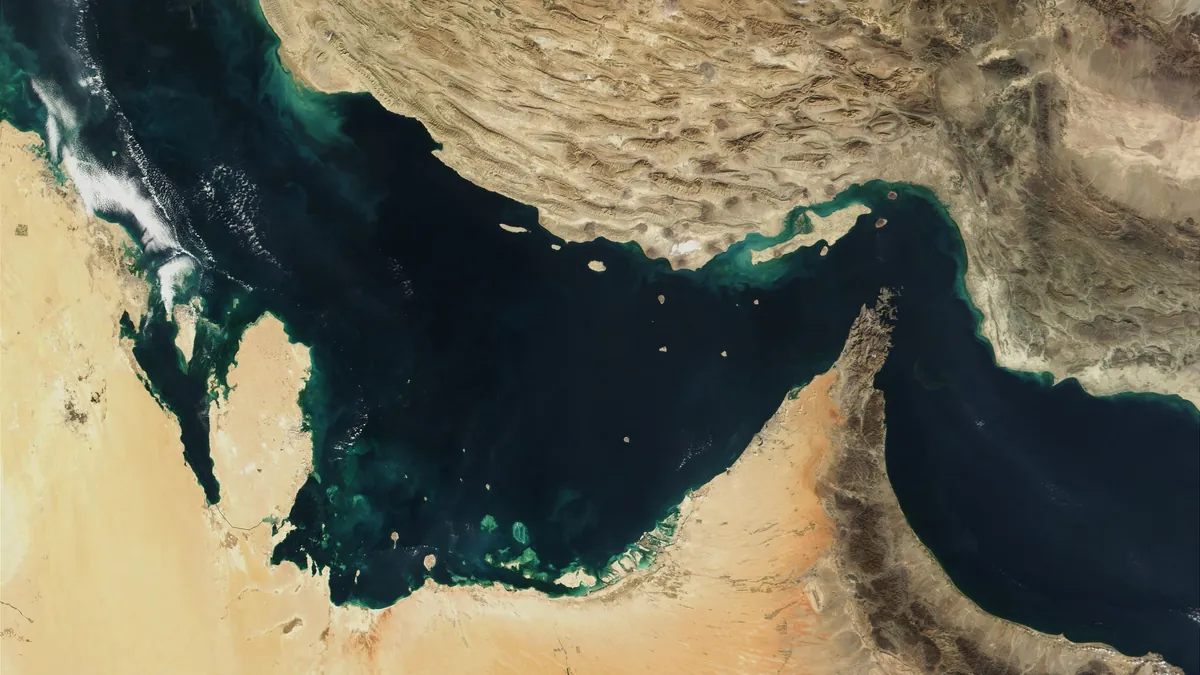
Following an ultimatum from US President Donald Trump, Iran is threatening to completely close the Strait of Hormuz if the US attacks Iranian power plants. The strait, which is important for global oil trade, will then be completely closed and only reopened when the destroyed power plants have been rebuilt, the Iranian Revolutionary Guards announced on state broadcaster Irib.
Since the beginning of the war, Iran, which has been attacked by the United States and Israel, has repeatedly radioed ships in the Strait of Hormuz not to pass through. Since then, Tehran has repeatedly attacked ships in the region. Individual ships also pass through the strait.
Trump threatened Iran on Sunday night (CET) with the destruction of its energy facilities if the country did not open the Strait of Hormuz completely and “without threats” within 48 hours. Otherwise, the US would attack and destroy Iran’s power plants, “starting with the largest!” Trump wrote on his Truth Social platform.
In return, Iran had already announced that it would target all energy infrastructure and desalination plants with ties to the USA throughout the Gulf region. Now the Revolutionary Guards are also threatening to attack all of Israel’s power plants, energy infrastructure and information and communications technology – and “all comparable companies in the region with US shareholders.”
This threatens to further escalate the war that began three weeks ago between the USA and Israel – with unforeseeable consequences for the region and the global economy. The conflict over the Strait of Hormuz is already having an enormous impact on global markets.
The strait is the only connection between the Persian Gulf and the world’s oceans and is considered one of the most important shipping routes in the world. Around a fifth of the world’s oil demand is transported through the passage. Most of it goes to China, India and other Asian countries. About 20 percent of the world’s liquefied natural gas trade also passes through the strait.
People in Germany are feeling the effects of the de facto blockade, among other things, when refueling because the prices for gasoline and diesel have risen sharply. Experts suspect that food could also become more expensive.
After the Iranian missile attack on the US-British base at Diego Garcia, Israeli Prime Minister Benjamin Netanyahu urged other countries to join the fight against Iran. “What more proof do you need that this regime that threatens the entire world needs to be stopped?” he asked during a visit to the Israeli desert city of Arad. It is time “for the heads of state and government of the other countries to join in,” said Netanyahu, without naming specific states.
