
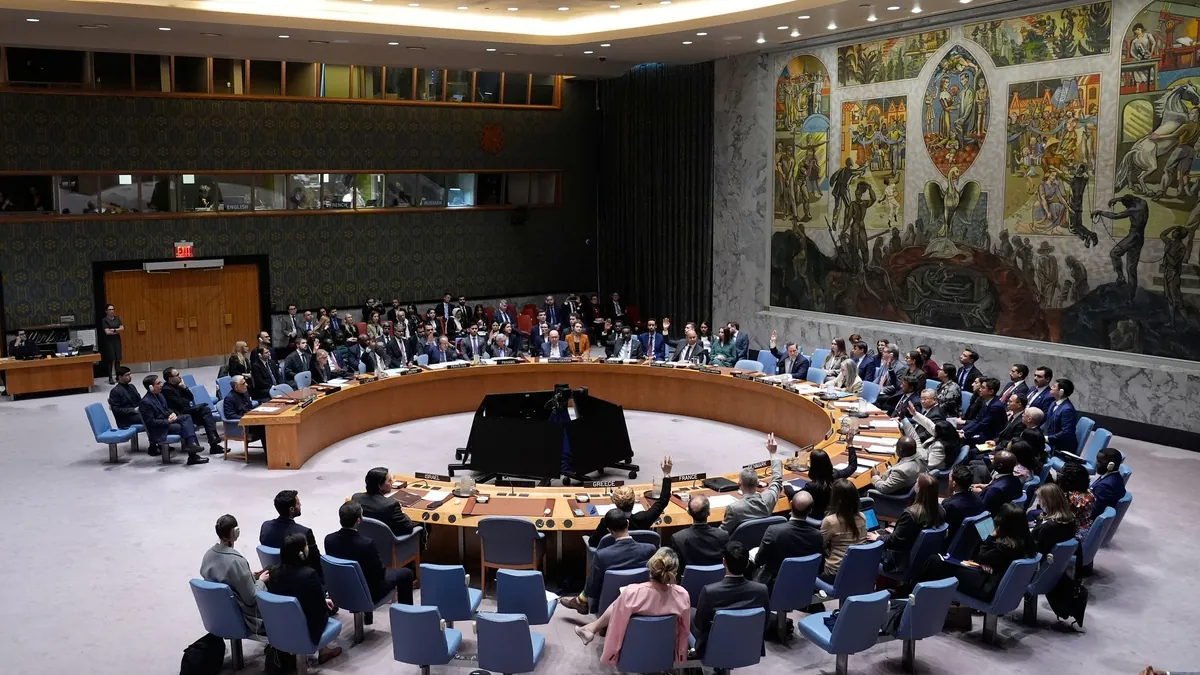
It is claimed that there is no such thing as vote buying. At the same time, however, it is already admitted that mutual agreements are being relied upon. According to the motto: If you help me get into the Security Council, we will help you fill another coveted position.
The horse’s foot: Because it is a secret election, in the end no one can understand whether the countries have kept their promises. In the end, there is a loss rate for such commitments of 10 to 15 percent, say UN experts.
What can be decided in the Security Council?
The Security Council can, for example, impose sanctions, decide on arms embargoes, send peacekeepers (so-called blue helmets) or authorize military operations. The prerequisite is that none of the five permanent members use their veto right. The Council is therefore often blocked, particularly in conflicts in which major powers are directly involved or want to protect allies. Russia has repeatedly stopped resolutions on Syria and Ukraine, and the USA has vetoed resolutions on Gaza.

What does Germany expect from the seat?
More diplomatic influence and visibility. Government spokesman Stefan Kornelius said Germany stands for rule-based action, predictability and legal compliance – all things “that are valuable in these times.” Wadephul said: “When people talk about global crises, Germany wants to throw its weight behind it. That’s appropriate for the world’s third-largest economy.”
What happens if the Federal Republic loses?
If Germany loses in the election, one could theoretically run for the following two-year period 2028/29. Because of the long lead time, there are already candidates for the vacant position who have been campaigning for votes for years – and might be disappointed if Germany throws its hat into the ring again.
And what responsibility would the Chancellor have for a failure?
That can hardly be said concretely. Spokesmen for the Chancellor and Foreign Minister (motto: foreign policy from a single source) emphasize that both have been campaigning for the election for months and are holding discussions about it.
The opposition in particular is likely to raise Merz’s responsibility in the event of failure. Even in the Union ranks, incomprehension was expressed behind closed doors that the Sauerlander, otherwise known as the Foreign Chancellor, did not fly to the UN general debate in New York last September. There, the criticism went, he could have done an excellent job of promoting the German candidacy.
