
Merz in London
German-British friendship agreement signed
Updated on July 17th, 2025 – 3:55 p.m.Reading time: 3 min.

Stronger armaments cooperation, containment of irregular migration, but also concrete trips and a rail connection – this is how German -British friendship is to be renewed.
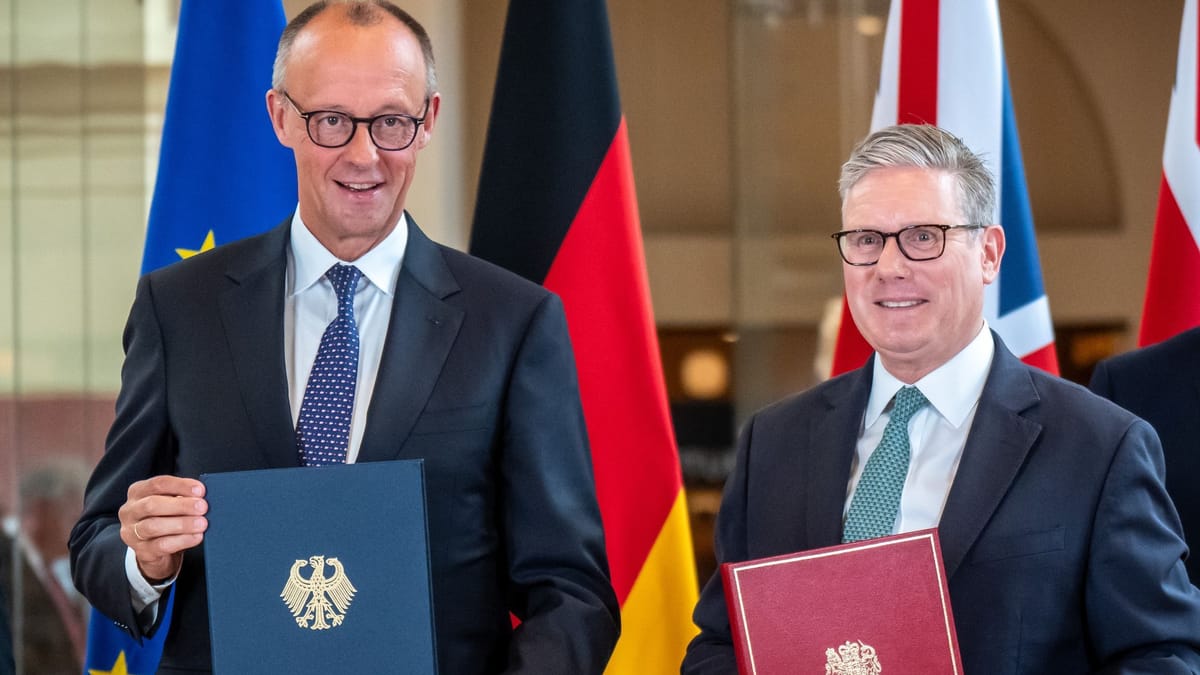
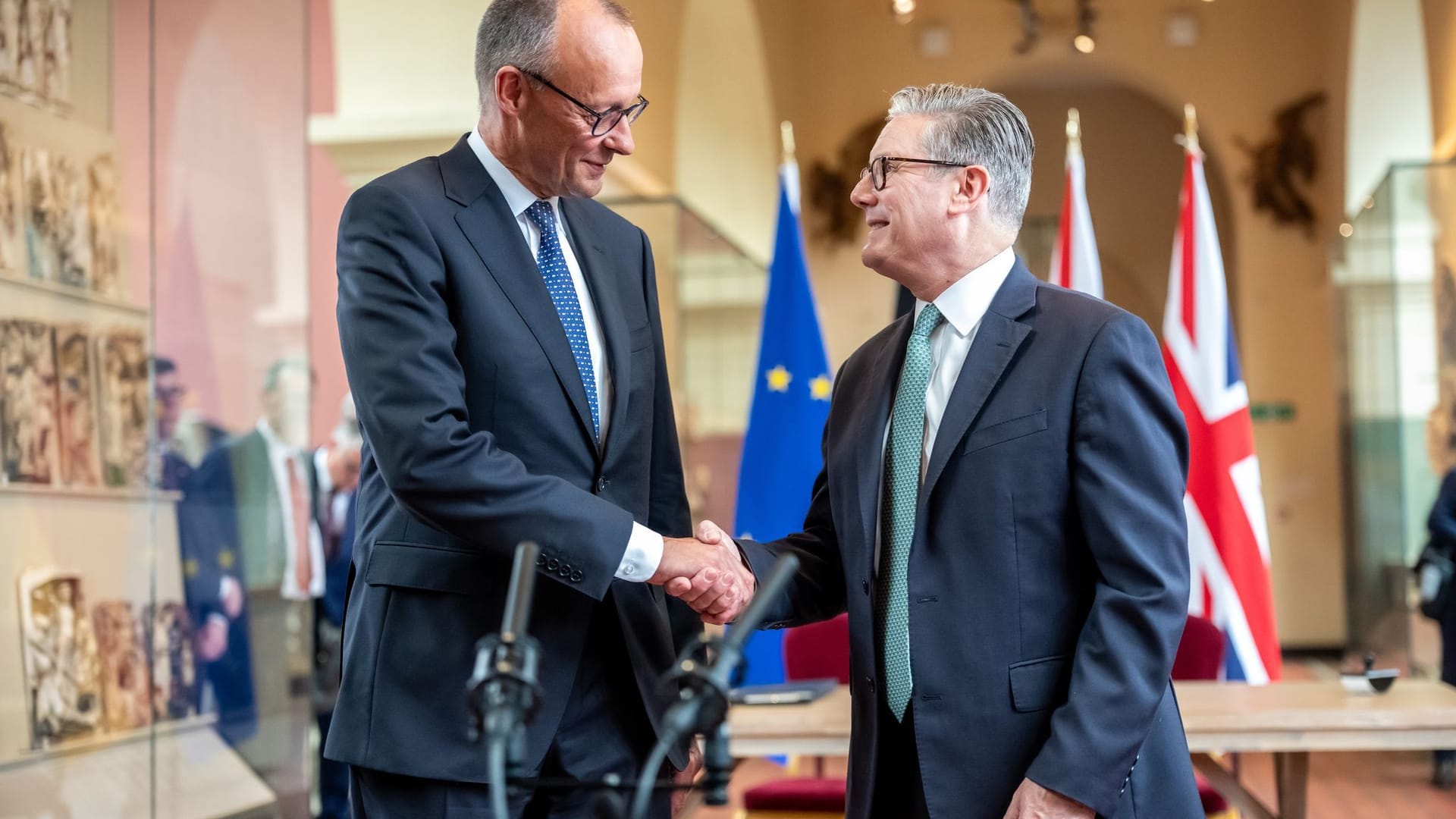
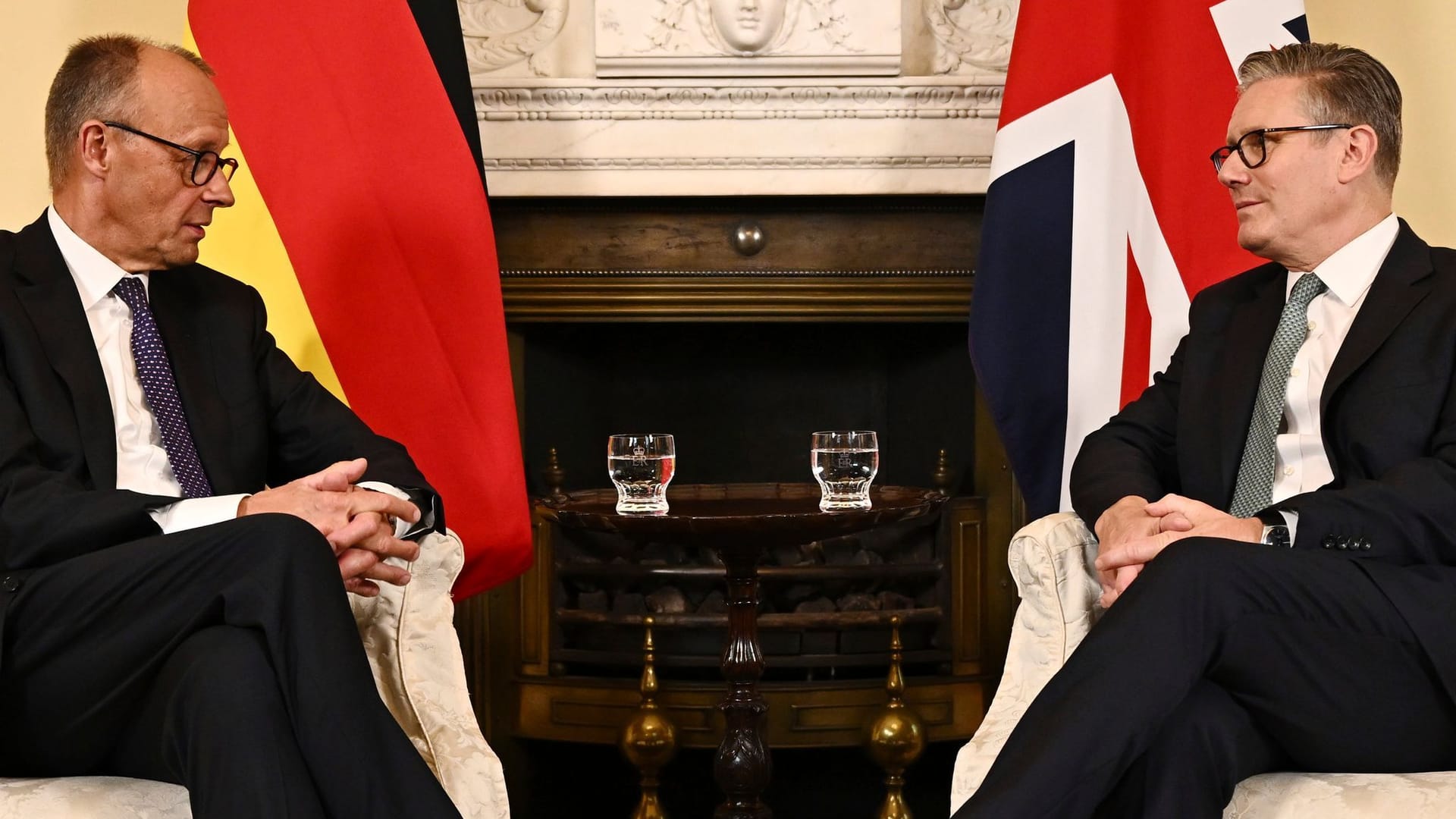
Five years after Brexit, Germany and Great Britain have put their relationships on a new basis with a comprehensive friendship contract. Chancellor Friedrich Merz and the British Prime Minister Keir Strander signed the 27 -page document, which was flanked by an action plan with 17 points, at a ceremonial ceremony in the Victoria and Albert Museum in London.
“This is a historical day for German-British relations,” said Merz. “It is overdue that we conclude such a contract with each other.” There are “so many areas in which the United Kingdom and we can work closely together, even narrower than in the past”.
The contract is intended to deepen the cooperation in defense and economic policy, the containment of irregular migration and combating cross-border crime. However, concrete travel easements such as visa -freeness for school trips from school groups are also planned and a direct rail connection between the two countries.
Both countries are “guided by the desire to bundle their powers in view of fundamental changes in the geopolitical environment in order to offer their citizens and their open, democratic societies a future characterized by prosperity, security and sustainability,” says the contract. Great Britain had left the EU in 2020 and is now trying to strengthen the connection to individual Member States through bilateral agreements.
These are the most important points from the contract and action plan with Germany:
Visafness for German student groups who travel to Great Britain on a school trip should apply from the end of the year. Problems, for example, cause that pupils without a German passport – for example from Syria or Afghanistan – have to apply for a visa for Great Britain, which is often difficult. In order not to effectively exclude these children from the school trip, some schools are currently completely avoiding the Great Britain exchange.
In addition, an expert group should search for solutions for further “mobility problems” created by Brexit – especially for the areas of education, science and culture as well as for political organizations.
In ten years, the first trains should roll directly from Germany to Great Britain – under the English Channel. So far, due to the necessary passport control, this is only possible with changeover. A task force is used to implement the rail connection.
From the end of August, the first British travelers should be able to use automated border control points (e-gates). The use of these systems should then be expanded as quickly as the technical possibilities give.
Defense: support and armaments cooperation
The two countries underline the military duty of assistance in the event of an attack that already existed by their NATO membership. Last but not least, it is important because Great Britain is a nuclear power.
Within a decade, a European weapon system with the participation of both countries is to be developed with which goals can be hit at 2,000 kilometers away. So far there is no such system from European production. Russia has medium -range missiles. With weapons, Europeans want to make a balance in the event of a deterrent and defense ability.
The export of jointly produced armaments is also to be made easier. So far, Germany has been on the brake due to very strict rules. The British hope for additional exports to billions of billions.
