
The maritime jurisdiction dispute between Türkiye and Greece in the Eastern Mediterranean, which has been going on for years, has come to the fore again with the recently published NAVTEX announcements and marine research activities. However, the economic dimension of the developments in the region reveals a different picture beyond diplomatic and military tension. While differences of opinion continue between Turkey, Greece and the Greek Cypriot Administration of Southern Cyprus (GCASC) regarding the delimitation of maritime jurisdictions, the projects undertaken by French companies in the fields of electricity transmission infrastructure, natural gas exploration and production and defense industry stand out.
1.94 BILLION EUROS
At the center of the latest developments in the region is the Great Sea Interconnector (GSI) Project, which aims to establish a submarine electrical connection between the Greek Cypriot Island of Crete and the Greek Cypriot Administration of Southern Cyprus. The investment size of the project, which is planned to be approximately 486 nautical miles long and have an electricity transmission capacity of 1,000 megawatts, is announced as 1.94 billion euros. The European Union also provides grant support of approximately 660 million euros to the project. While the project aims to connect the electricity networks in the Eastern Mediterranean, it is also the subject of jurisdictional disputes between Türkiye and Greece due to the sea areas through which its route passes.
THEY OWN 66 PERCENT
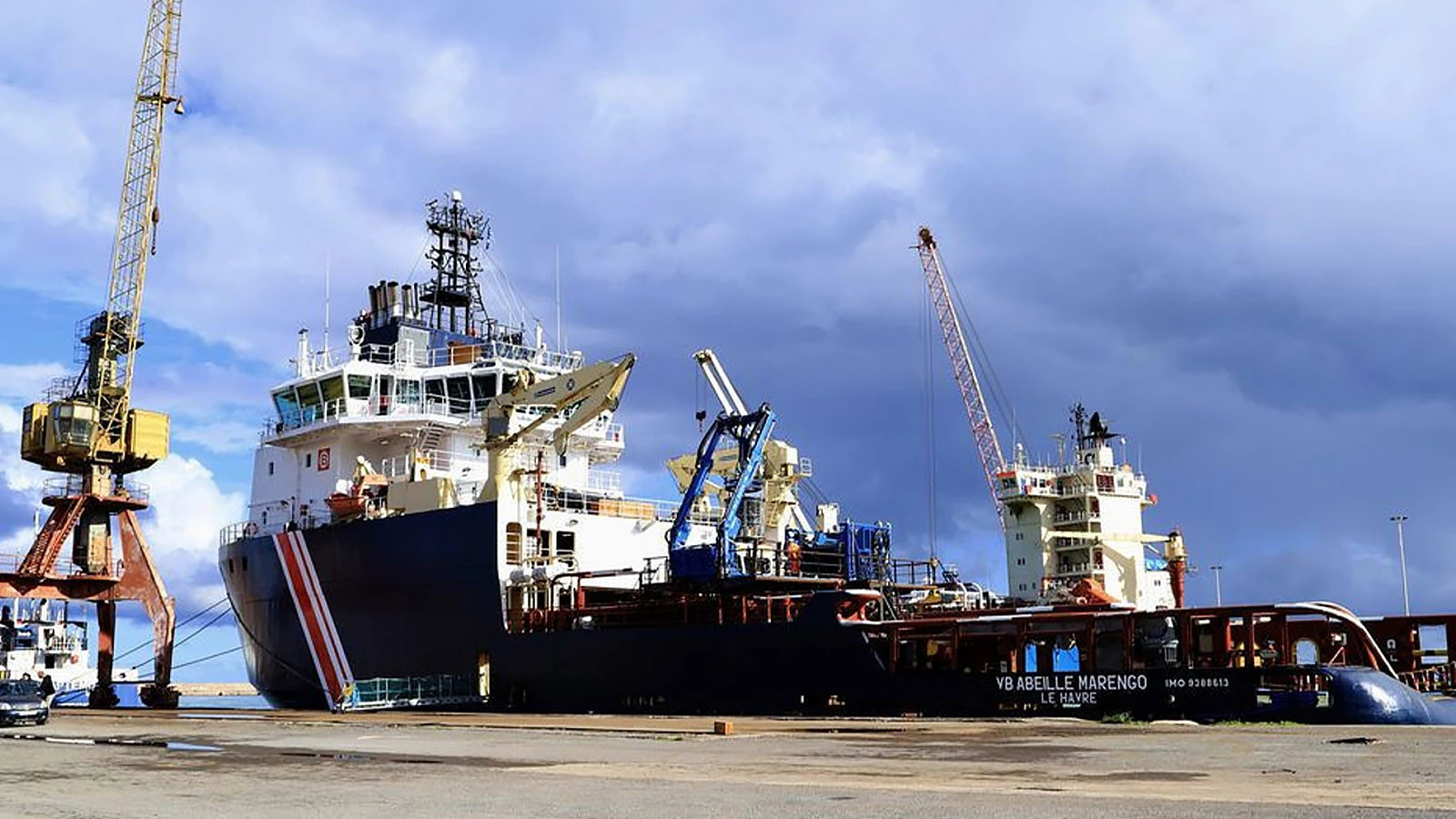
French companies are in a decisive position in the economic structure of the project. France-based investment group Meridiam took over 66 percent of the shares of the Great Sea Interconnector project company with the agreement signed on August 5, 2026. The remaining 34 percent share is held by IPTO/ADMIE, Greece’s electricity transmission system operator. Another French company involved in the project is Nexans, which operates in the field of high voltage submarine cables. While the company is responsible for the design and supply of the cable system, it is also involved in the processes related to seabed research. On the other hand Meridiam’s Chairman and CEO, Thierry Déau, says at every opportunity that French President Emmanuel Macron gives strong support to the project.
FRENCH PARTNERSHIP
The activities of French capital in the Eastern Mediterranean are not limited to electricity connections. France-based energy company TotalEnergies has different partnership structures with Italian Eni in hydrocarbon blocks 6, 7, 8 and 11 in the offshore areas licensed by the Greek Cypriot Administration of Southern Cyprus. One of the most concrete examples of these activities is the Cronos natural gas field located in block 6 in the southwest of Cyprus. TotalEnergies and Eni took the final investment decision for the development of the Cronos field on 28 July 2026. Production in the project, in which two companies have equal shares, is aimed to start in 2028. The natural gas to be extracted from the field is planned to be transported to Egypt via submarine pipeline, where it will be liquefied and delivered to the European market.
DEFENSE COOPERATION
Another pillar of France’s economic relations in the region is the defense industry. French Naval Group, the main contractor of the Greek Navy’s FDI class frigate program, signed 10 new contracts and two research and development agreements with Greek companies at the Euronaval defense fair in Paris on November 4, 2026. Five of the contracts cover parts and systems to be used in the production of frigates, and the other five cover maintenance, technical support and various services.
CODES OF THE EQUATION
The analysis points out that France’s energy investments in the region should be evaluated together with the geopolitical goals of the Paris administration. The announcement of Macron’s support for the GSI electricity connection project by the French company Meridiam is seen as one of the most concrete examples of this relationship. According to analysts, the French presence, shaped through Meridiam, Nexans, TotalEnergies and Naval Group, connects the fields of energy, technology and defense.
