
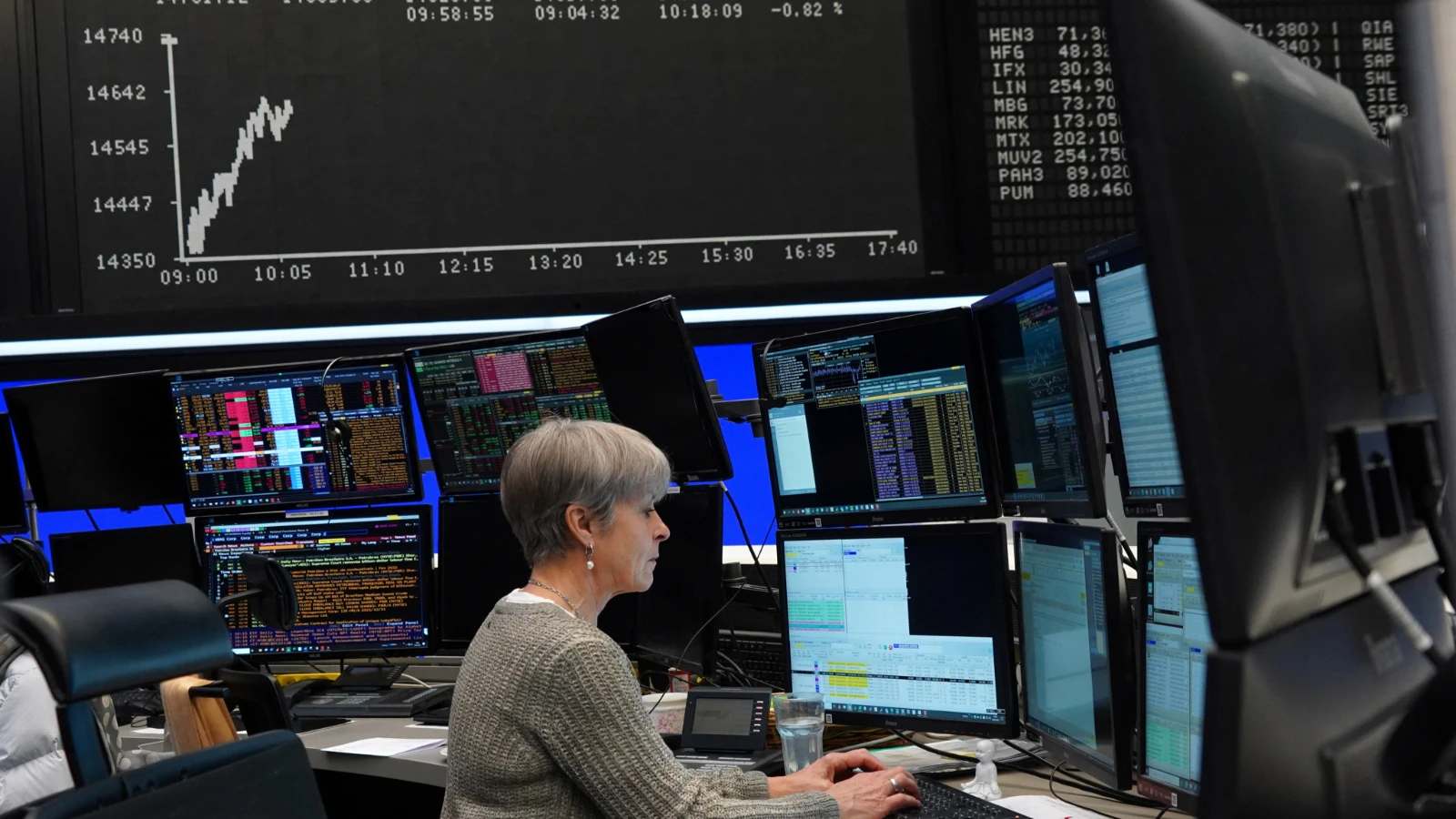
European stock markets are mixed as investors in the region remain cautious despite the positive impact of the US’s statements that it will support the passage of ships belonging to neutral countries stuck in the Strait of Hormuz.
The tension between the USA, Israel and Iran, which has not yet fully ended, continues to be the main factor determining pricing in the markets.
Despite the high tension in the Middle East, the search for an agreement between the parties and the slight decrease in the risks regarding the Strait of Hormuz have a positive impact on the markets.
US President Donald Trump’s announcement that they will support the passage of ships belonging to “neutral” countries that are stuck in the strait and have nothing to do with the crisis in the Middle East has reduced concerns about oil supply.
As of 10.15 in European markets, the Stoxx Europe 600 indicator index is at 612 points, with a 0.1 percent increase.
In Germany, the DAX 40 index is at 24,323 points with a 0.1 percent gain in value, in Italy the FTSE MIB 30 index is at 48,350 points with a 0.2 percent premium, in France the CAC 40 index is at 8,099 points with a 0.2 percent decrease, and in Spain the IBEX 35 index is at 17,781 points with a flat course. In the UK, transactions are not carried out due to holidays.
AUTOMOTIVE SHARES FALL AFTER TRUMP’S AUTOMOBILE TARIFFS DECISION
In addition to geopolitical developments, Trump announced on Friday that the customs duty applied to cars and trucks originating from the European Union (EU) will be increased to 25 percent, on the grounds that they do not comply with the trade agreement.
Pointing out that it was agreed that no tariffs would be applied if cars and trucks are produced in factories in the USA, Trump stated that the construction of many car and truck factories is currently continuing, more than 100 billion dollars have been invested in this process, and this is a “record” in the history of car and truck production.
Following these developments, automotive stocks in the region started the week with sales.
Analysts said that in the rest of the day, developments in the Middle East and energy prices, as well as US factory orders, durable goods orders and Eurozone manufacturing industry Purchasing Managers Index (PMI) data will be followed.
