
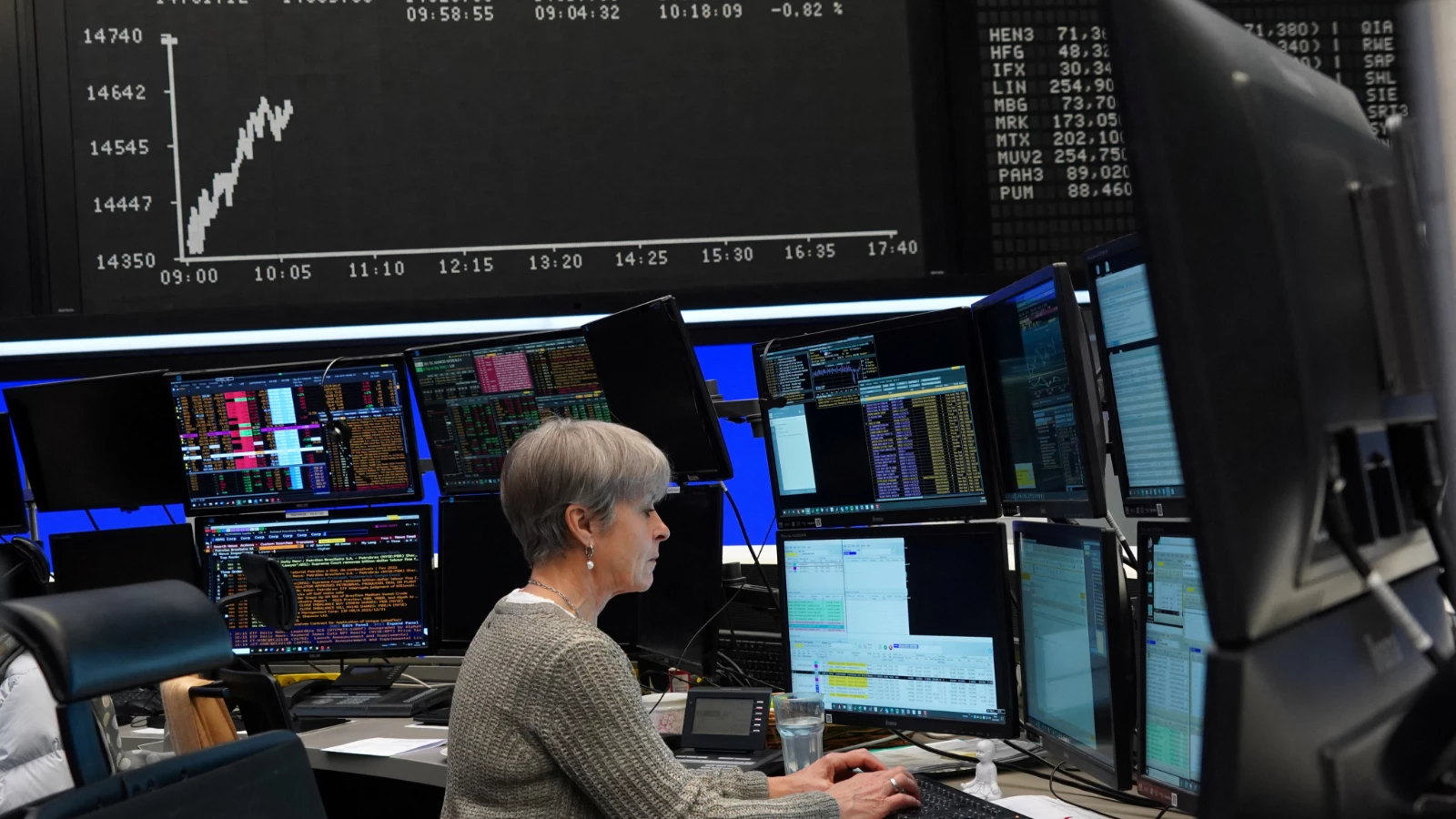
European stock markets are negative, except for the UK, as risks in the Middle East rise again and energy prices increase.
As of 10.20 in European markets, the Stoxx Europe 600 indicator index is trading at 574.9 points, with a 0.1 percent decrease, and the FTSE 100 index in the UK is trading at 9,981 points, with a 0.2 percent increase.
In Germany, the DAX 40 index is priced at 22,263 points, with a 0.2 percent decrease in value, in Italy, the FTSE MIB 30 index is priced at 43,330 points, with a 0.1 percent decrease, in France, the CAC 40 index is priced at 7,695 points, with a 0.1 percent loss, and in Spain, the IBEX 35 index is priced at 16,825 points, with a 0.1 percent decrease.
As the US and Israel’s attacks on Iran enter their 5th week, the decline in hopes that the attacks will end continues to negatively affect the stock markets.
While the perception of risk continues in global markets due to predictions that energy prices may continue to remain relatively high, investors remain cautious due to concerns that high oil prices may negatively affect global economic growth.
“IT IS STILL TOO EARLY TO DISCUSS THE TIMING OF INTEREST RATE INCREASES”
While the reflection of increasing energy costs on the regional economies is being closely followed, the statements of the European Central Bank (ECB) officials are being followed closely.
In his interview published today, the President of the Bank of France (Banque de France), Francois Villeroy de Galhau, stated that the ECB is determined to prevent the inflation resulting from the increase in energy prices from spreading to the general public, and said, “However, it is too early to discuss the timing of interest rate increases.” made his assessment.
On the other hand, the German Institute for Labor Market and Occupational Research (IAB) stated in its report published on Friday that the escalating tension in the Middle East and increasing energy costs continue to put pressure on the German labor market.
EU ANNOUNCED THAT IT IS IN SOLIDARITY WITH THE GULF COUNTRIES
While the news flow regarding the conflicts in the Middle East is also closely followed, President of the European Union (EU) Council Antonio Costa spoke on the phone with the President of the United Arab Emirates (UAE) Sheikh Mohammed bin Zayed Al Nahyan yesterday.
In his statement after the phone call, Costa emphasized that attacks against the Gulf countries should stop immediately and stated that the EU is in solidarity with the Gulf Cooperation Council countries. Antonio Costa continued his call for the parties to give diplomacy a chance.
Analysts noted that for the rest of the day, geopolitical and political developments in the region and oil prices, as well as US Federal Reserve (Fed) Chairman Jerome Powell’s statements, inflation in Germany and the consumer confidence index in the Eurozone will be followed.
