
Russia’s war of aggression
Easter ceasefire and prisoner exchange in the Ukraine war
Updated April 11, 2026 – 3:58 p.mReading time: 4 minutes

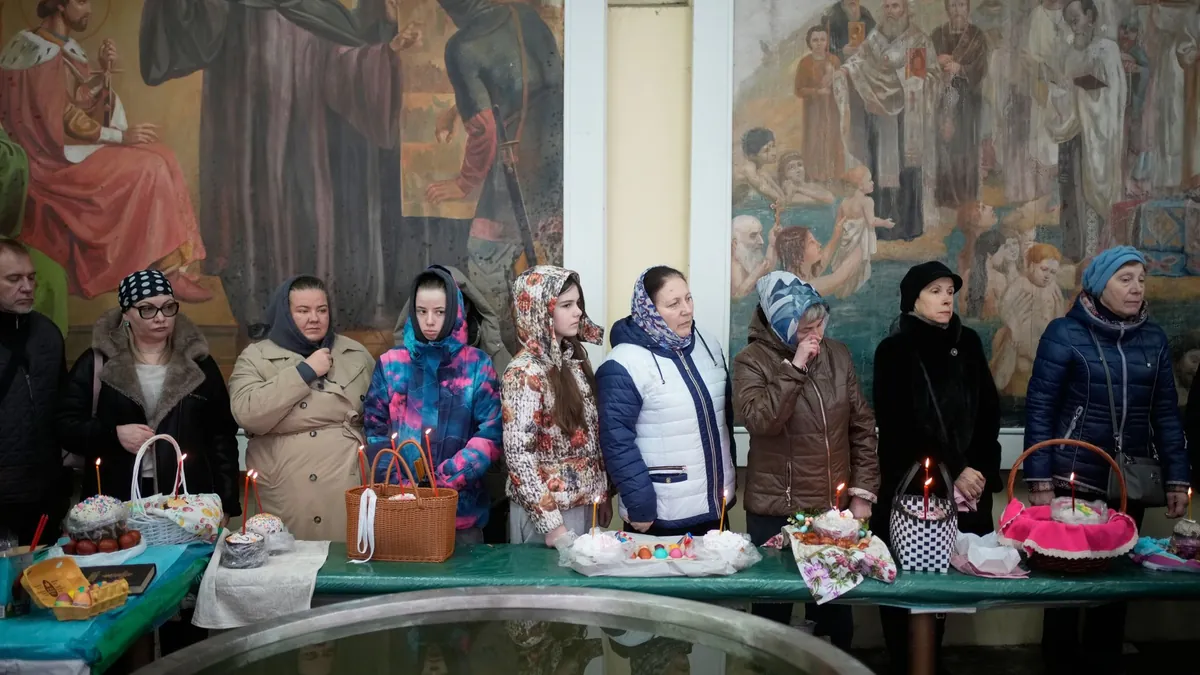
For the Easter celebrations of Orthodox Christians in Ukraine and Russia, the weapons are now to be silent for 32 hours during the war. Will the ceasefire in Moscow’s war of aggression last – unlike the last few times?
In Russia’s war of aggression against Ukraine, a short-term ceasefire has officially come into force on the occasion of Orthodox Easter. Russian President Vladimir Putin scheduled it for a total of 32 hours – from Saturday afternoon at 4:00 p.m. local time (3:00 p.m. CEST) to midnight on Sunday (11:00 p.m. CEST). The Kremlin spoke of a humanitarian gesture because the holiday has central meaning for the people of both Russia and Ukraine.
Ukrainian President Volodymyr Zelensky had suggested such an Easter ceasefire several times and promptly agreed to it after Putin’s announcement on Thursday evening. However, both sides announced that they would respond to possible violations of the ceasefire. During temporary ceasefires in the past, both sides have always accused each other of numerous violations.
Immediately after the start of the Easter ceasefire there were no complaints of violations – and shortly before that there were both light and shadow. Russia and Ukraine again attacked each other with drone attacks during the night. There were deaths and injuries in Ukraine as well as serious damage to the civilian infrastructure. An oil industry facility caught fire in Russia. In the afternoon, both sides reported a new prisoner exchange.
Russia and Ukraine each released 175 prisoners of war. “In addition, seven citizens of the Russian Federation who were unlawfully detained by the Kiev regime were returned,” the Defense Ministry in Moscow said. These are residents of the Kursk region. The ministry also thanked the United Arab Emirates for arranging the prisoner exchange.
Zelenskyj confirmed the action a little later. “175 soldiers. Armed forces soldiers, members of the National Guard, border guards. Soldiers, non-commissioned officers and officers. And seven civilians,” he said on Telegram. According to the Ukrainian military intelligence service HUR, 25 officers are among the returnees whose release Russia has refused to release for years. Those released were aged 22 to 63.
“Our soldiers defended Ukraine on various fronts: in Mariupol, at the Chernobyl power plant, in the Donetsk, Luhansk, Kharkiv, Kherson, Zaporizhia, Sumy, Kiev and Kursk regions,” Zelensky said. “Among them are the wounded. Most have been in captivity since 2022. And finally – home.”
