
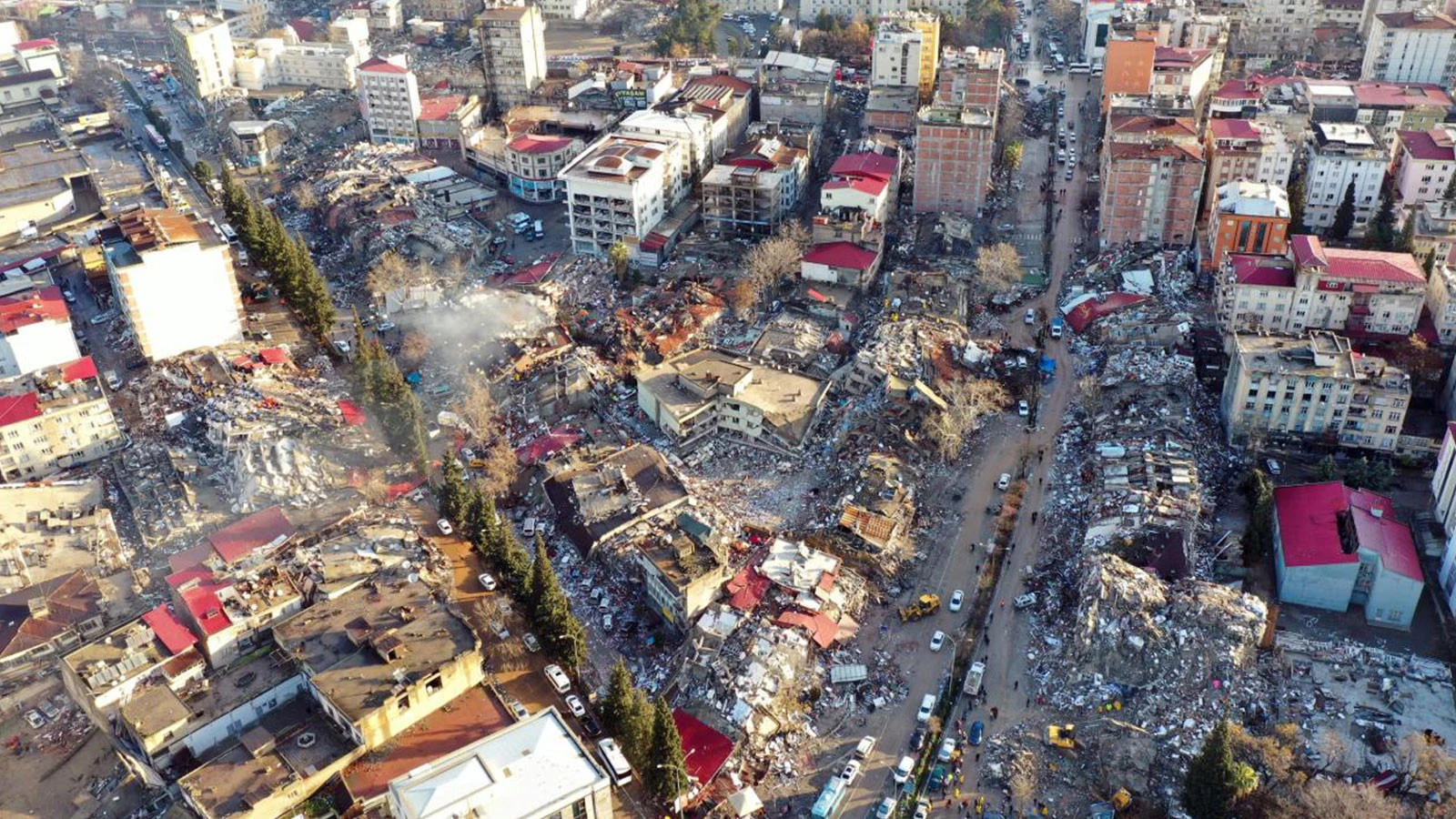
The big earthquake scenario, which has been talked about for years in Marmara, has once again become the center of discussion. Earthquake Scientist Prof. Dr. Following Osman Bektaş’s statements that the Main Marmara Fault is not completely locked and that the energy is discharged by silent creep in some sections, eyes turned to different scientific views. Bektaş stated that the fault should not be considered as a monolithic and homogeneous structure of approximately 125 kilometers and argued that energy discharge occurred especially in the Western and Central Marmara. According to Bektaş, this reduces the possibility of the entire fault breaking at the same time and producing an earthquake greater than magnitude 7.
DEMİRTAŞ JOINED THE DISCUSSION
Prof. Dr. Opposing Bektaş’s statements is Earthquake Expert Dr. It was Ramazan Demirtaş. Demirtaş clearly opposed the assessments that there was creep in the Marmara Sea and therefore there would be no earthquake larger than 6.5. According to Demirtaş, the medium-sized earthquakes that have occurred in the region in recent years do not indicate a loss of energy, but a long-term process moving towards a major rupture. Demirtaş also; He evaluated the earthquakes with a magnitude of 5.1 in 2011, 5.2 in 2012, 5.8 in 2019, 6.2 on April 23, 2025, and 5.0 on October 2, 2025, as parts of the same chain.
“OPINIONS CANNOT BE ACCEPTED”
Demirtaş’s other findings are as follows: “191 microearthquakes occurred around the Adalar-Çınarcık Trench between 18 and 21 August 2026. A total of 4,371 earthquakes with magnitudes ranging from 1 to 6.3 were recorded in the northern branch of the North Anatolian Fault Zone between 17 August 1999 and 21 August 2026. This activity should not be evaluated individually, but as a whole. These are Major These are the preparatory phase earthquakes of the Marmara Earthquake. Opinions such as ‘There is a depression in Marmara, there cannot be an earthquake larger than 6.5, energy is discharged in this way’ are unacceptable.”
DOES ENERGY ACCUMULATE?
On the other hand, recent scientific studies reveal that not all of the Marmara Fault behaves the same way. According to the research published in the Journal of Geophysical Research: Solid Earth in July 2026, some parts of the Main Marmara Fault are crawling slowly and silently, while some parts are locked. While it was stated that the fluids rising from the underground in the Central Marmara region facilitated this silent movement by reducing the friction on the fault, it was noted that the same mechanism was not observed in the eastern part south of Istanbul and the fault continued to accumulate tension there. In the study, it was stated that the accumulation in the locked segment was compatible with an earthquake potential of approximately 7 magnitude.
PROCEEDING EAST!
Another study published in Science magazine in 2026 pointed out that the earthquake activity in the last 15 years has moved eastward, towards Istanbul. Researchers determined that earthquakes with a magnitude above 5 shifted eastward over time, and that the 6.2 magnitude earthquake on April 23, 2025 was one of the important links of this process. According to scientists, the latest seismic activity is approaching the Prince Islands segment, which is thought to be locked in the south of Istanbul, and this segment maintains the potential to produce an earthquake of approximately 7 magnitude.
