
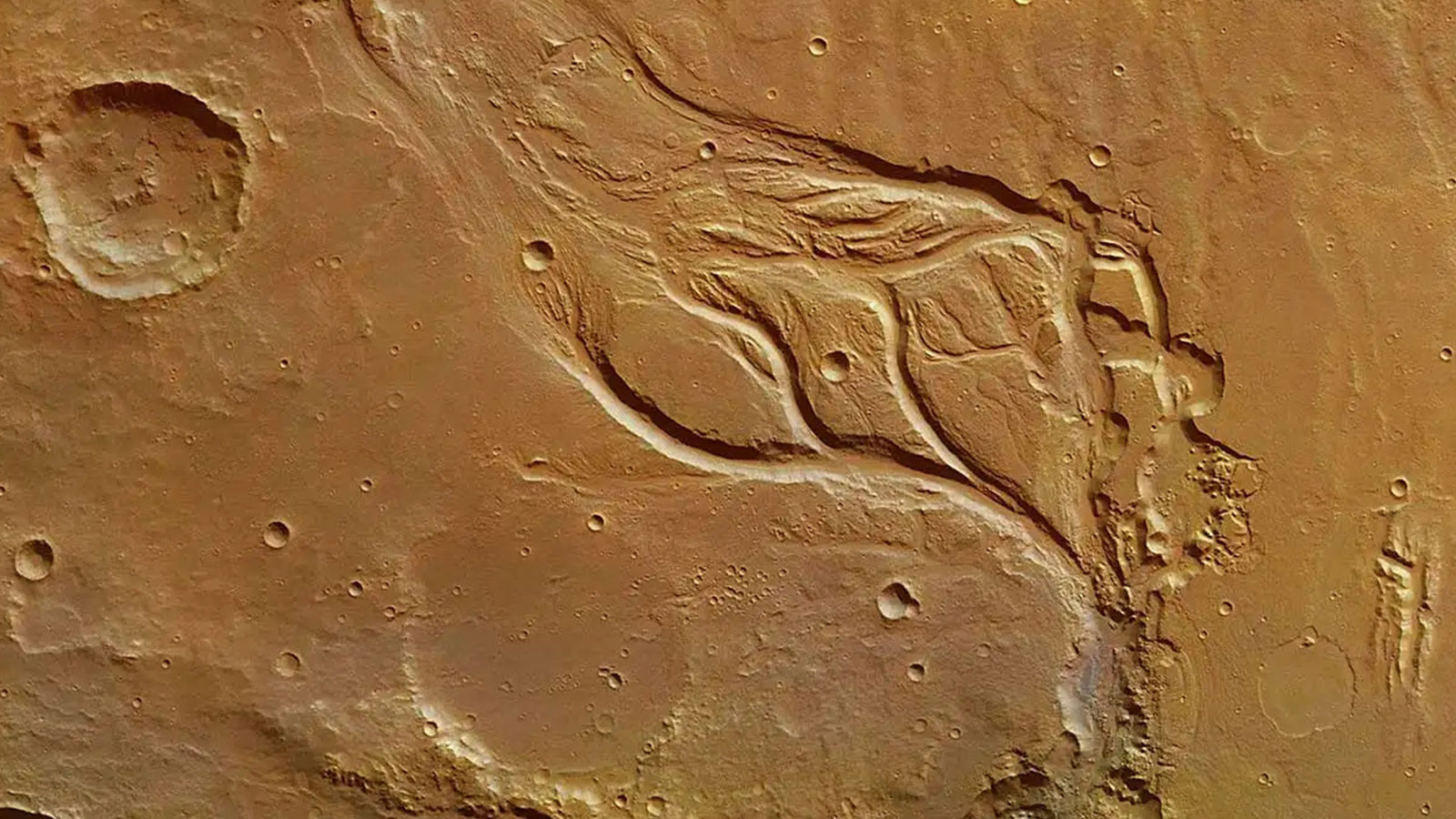
Open University PhD Student Adam Losekoot and his team, NASA’s Mars Reconnaissance Orbiter (MRO) and Mars global Surveyor satellites took the traces of old river deposits in high -resolution images. The area examined, covering a surface of about 10 million square kilometers said.
Researchers traced the geological structures known as ‘Fluvial Sinuöz ridges’ in Mars’s Noachis Terra (Noah’s Lands). These structures are sedimentary layers of ancient river deposits, which are hardened over time and surfaced as the softer floor around it.
Some glacial rivers are a few hundred meters wide and 3-4 kilometers long, while larger buildings can be about 1.6 km wider. In the MRO images, it was observed that some rivers fill into craters and fill these places and then continued to flow by crossing the crater wall.
The discovery shows that Mars has a very different surface than today’s arid face 3.7 billion years ago. At that time, the atmosphere of the planet was thicker and liquid water could be found on the surface. But when Mars’s magnetic field weakened over time, the solar winds eroded the atmosphere and the water has largely fled to space. While these new findings show that the conditions for life on Mars may be more common in the past, it also contributes to better understanding the evolution of water on the planet over time.
