
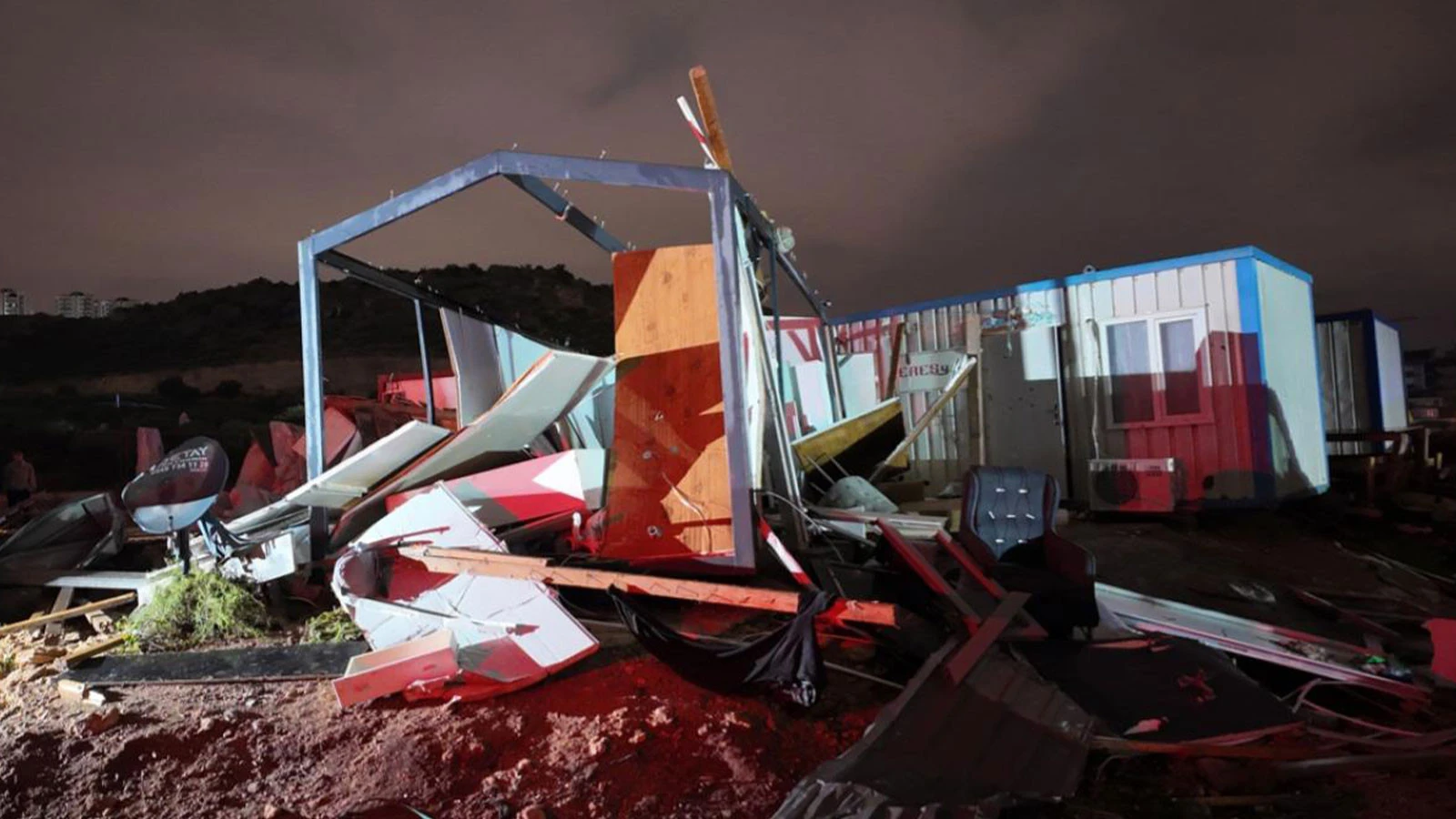
The tornado, which occurred in Antalya’s Kepez district on the night of October 26, brought into question the effects of climate change as well as the measures taken against extreme weather events. The tornado, which hit a construction site in Fevzi Çakmak District, destroyed two containers where workers were staying and caused the tower crane on the construction site to topple. According to the statement of Antalya Governorship, four workers lost their lives and one worker was injured. The remarkable aspect of the incident was that the tornado was effective in a very narrow area. Antalya Governor Hulusi Şahin announced that there was no tornado report from any other part of the city, and the buildings right next to the construction site were not damaged.
METEOROLOGY WARNED IN ADVANCE
The General Directorate of Meteorology had issued a heavy rain warning for Antalya and the Southern Aegean one day before the disaster. In the warning announced with a yellow code, it was stated that 30 to 75 kilograms of precipitation per square meter was expected in the west of Antalya, and the risk of floods, hail and tornadoes on the coasts were also clearly listed. Although it is not possible to determine in advance at which point the tornado will form, the danger in the region was announced a day before. Evaluating the issue for the Climate Desk, Kırşehir Ahi Evran University Geography Department Lecturer Assoc. Dr. Doğukan Doğu Yavaşlı pointed out that the real issue is whether people at risk were protected after the warning was issued.
TEMPERATURE IS INCREASING IN THE MEDITERRANEAN
Scientific research reveals that tornadoes are not only seen in Türkiye during the summer months. According to the study, which examined 385 tornadoes recorded between 1818 and 2013, tornadoes occur most frequently in May and June, while October and November constitute the second peak period. The fact that the Mediterranean Sea maintains its warmth in autumn can create conditions suitable for the development of strong thunderstorms when it encounters cold air coming from the upper atmosphere. According to meteorological data, the average sea water temperature in October on the Mediterranean coast reaches 24.6 degrees. It is also noteworthy that the annual average sea water temperature along the Turkish coast, which was 21.1 degrees in the 1981-1991 period, increased to 22.3 degrees in the 2014-2025 period.
Yavaşlı emphasizes that the warming Mediterranean can feed heavy rains by transferring more moisture and energy to the atmosphere, but a single tornado cannot be directly attributed to climate change. Low pressure systems, wind conditions, land-sea interaction and landforms can be determining factors in the formation of tornadoes. Meteorological investigations will clarify whether the tornado in Kepez formed in the sea and moved to land, or whether it developed directly on land.
12 LOSSES IN TWO WEEKS
The disaster in Antalya also brought to the fore the loss of life due to extreme weather events experienced in recent weeks. According to Climate Desk, a total of 12 people lost their lives in two weeks, eight in Istanbul and Kocaeli on October 14, and four in Antalya on October 26. Yavaşlı states that lightweight worker containers are among the most fragile shelters against strong winds and tornadoes. It is not yet known whether the meteorological warning reached the workers at the construction site and whether there is a safe shelter area. Fixing temporary shelters resistant to wind, directing workers to safe areas in risky weather conditions, and implementing evacuation plans in high-risk warnings are among the measures that can prevent similar casualties.
CRITICAL WARNING BEFORE COP31
Antalya is preparing to host the United Nations Climate Change Conference COP31 between 9-20 November. Adaptation to climate change, extreme weather events and the losses and damages they cause will be discussed at the summit. According to Yavaşlı, the disaster in Kepez concretely reveals the importance of these topics for Türkiye. The expert states that adaptation to the climate crisis does not only mean making meteorological warnings, but also delivering these warnings to the most vulnerable and turning them into measures that will protect people.
