

Indicators in the Turkish economy began to deteriorate due to the impact of the war in the Middle East. In particular, the jump in oil prices, the blockage in the Strait of Hormuz, the contraction in the Gulf market and the increasingly sensitive “exchange rate, interest, policy” balance within the country point to a more difficult period in terms of both prices, production and external balance in the coming period. Along with the war, one of the most sensitive topics in the market is the foreign exchange balance. According to Tigin Capital Partners analysis, the fact that the exchange rate has been kept relatively calm for a long time and TL interest rates remain higher than foreign currency interest rates have led companies to take foreign currency loans. Due to the emerging situation in the market, the expectation that the Central Bank will have to increase the interest rate by 300 basis points on April 22 in order to maintain the balance is getting stronger.
CREDIT CHANNEL IS Narrowing
According to analysts, the rise in energy prices will continue to be directly reflected in fuel, transportation, industry, food and consumer prices until the end of the first half of the year. The fact that there is no more space in the diesel mobile system on the diesel side means that future increases will be directly reflected at the pump. Experts underline that fuel prices react very sharply not only to the price of crude oil, but also to refinery margins and the European diesel market. Another risky indicator in the economy comes from the domestic demand front. While average card spending will decrease to 11 percent in the first quarter of 2026 According to analysts, the contraction in the credit channel increases the pressure on the economy.
EXPORTS DECREASED
Foreign trade data also attracts attention. While exports decreased by 6.4 percent in March, it was seen that the most significant effect of this decrease came from the Gulf region. While sales to 112 of the 231 countries and regions to which Türkiye exports in the January-March 2026 period decreased in terms of amount; The share of countries with export losses in total exports was calculated as 33 percent. Another development that increased the burden on exporters was on the real exchange rate front. Real Effective Exchange Rate Index increased by 1.83 points to 104.61 on a CPI basis and 2.33 points to 102.03 on a PPI basis in March.
RESERVES ARE DECREASING
One of the most critical topics of the impact of the war on the economy is reserves. Although the Central Bank’s gross reserves appeared to be at 155.3 billion dollars, there was a decrease of 54.9 billion dollars in the period between 27 February and 27 March. While net reserves excluding swaps decreased to 20.2 billion dollars, a loss of 58.6 billion dollars was recorded in the same period. According to experts, the external shock caused by the war, energy costs and the increase in foreign exchange demand erode not only the current account balance but also the defense capacity of the Central Bank. While this decline in reserves makes the cost of the controlled exchange rate policy more visible, it also explains that the expectation of a new interest rate increase in the market has become stronger.
ACCESS TO FINANCE
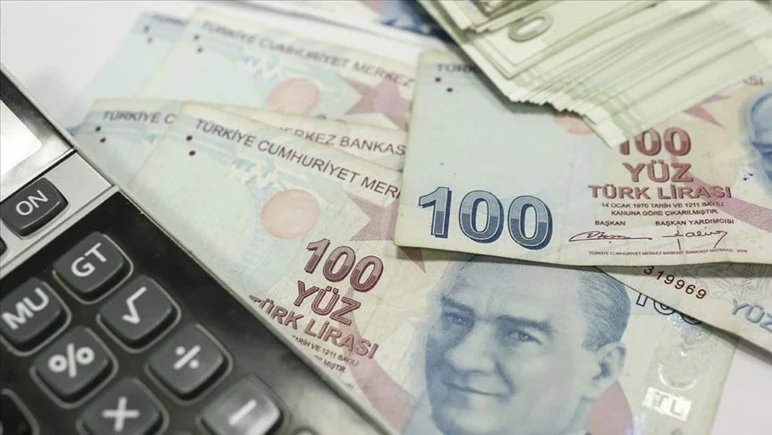
Institutional Economics Expert Gülsev Duran said, regarding the economic balances shaken by the attacks on Iran, “Banks are being more cautious when giving loans to companies, and companies are finding it much more difficult to access financing than before. “While the Turkish economy is trying to cool down with tight credit conditions that suppress domestic demand, on the other hand, it is facing a new wave of costs due to the energy, logistics and foreign demand shock triggered by the war,” he says.
HERALD OF A DIFFICULT TIME
Underlining that energy prices will remain high if the war is prolonged, Duran said, “In this case, the pressure on the current framework of monetary policy will increase even more. A possible interest rate increase by the Central Bank may give the market a temporary breather, but it may not be enough on its own. It seems that the figures, which seem calm for now, may herald a more difficult period in the coming months. “As a matter of fact, the 25 percent increase in electricity and natural gas prices last week showed that the cost pressure has entered a new phase,” he said.
(email protected)
