
According to Xinhua, China Manned Space Program Agency (CMSA) Spokesperson Cang Cingbo announced the 3-person team that will be sent into orbit with the “Shincou-24” space shuttle at the press conference.
Cang stated that Chinese astronauts Tang Hongbo and Vu Yi and Pakistani Muhammad Zishan Ali will take part in the 12th manned expedition to the space station.
The “Shincou-24” shuttle, which will carry the astronaut team that will serve in the space station, will be launched from the Ciuchuen Satellite Center in the northwest of the country tomorrow at 08.18 local time.
51-year-old Tang Hongbo, who will pilot the space shuttle, was among the astronaut team serving at the Tiengong space station in the “Shincou-12” missions in 2021 and “Shincou-17” missions in 2023.
39-year-old Vu Yi, who will serve as a flight engineer, is participating in a human space mission for the first time.
– The first foreign astronaut in China’s manned space program
40-year-old Ali, who will join the expedition as a loading specialist, will be the first foreign astronaut in China’s manned space program and the first Pakistani citizen to orbit the Earth.
With the agreement signed between CMSA and the Pakistan Space and Upper Atmosphere Research Commission (SUPARCO) in February 2025, it was decided that a group of Pakistani astronauts would be selected and trained in China for the space mission.
In its statement in April, CMSA announced that Pakistani candidates Muhammed Zişan Ali and Hürrem Davud were successful in the auditions at different stages of astronaut training and were entitled to receive space flight training in China, and that one of the candidates who will receive space flight training in the next stage will participate in the manned expedition to be organized by China to the space station.
Ali, who will fly to the space station with Chinese taikonauts, will return to Earth with the Shincou-23 team currently serving on the station, after the change of duty there.
– Chinese astronaut will stay in space for 1 year
On the other hand, astronaut Cu Yangcu from the Shincou-23 team, who has been working at the space station for 6 months, will continue his duty with the new team and will complete 1 year at the space station.
Cu will be the subject of the research examining the effects of long-term space expeditions on the human body.
Long-term stay in space can lead to effects such as decreased bone density in the human body, muscle loss, sleep disturbance, and physical and psychological fatigue due to low gravity and radiation.
Russian astronaut Valeri Polyakov, who stayed at the Mir Space Station for 437 days (about 14 months) in 1994-1995, still holds the record for the longest stay in space.
– China’s space station “Tiengong”
China built its own space station in Earth orbit as the United States banned cooperation in space exploration and blocked its participation in the International Space Station (ISS) program.
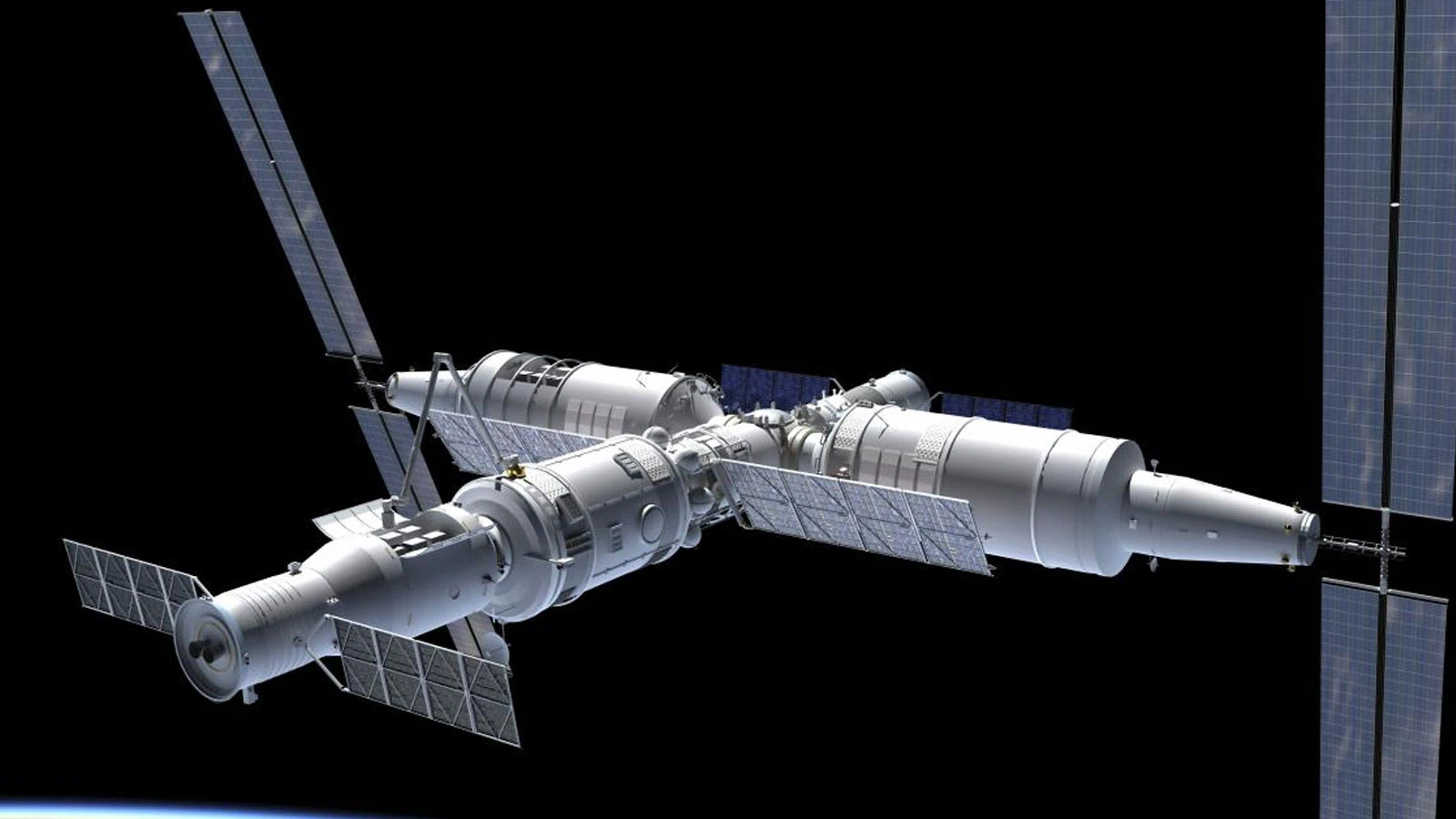
The “Tiengong” (Sky Palace) Station, which consists of a core module, two laboratory modules and is planned to include a space telescope, was built on the model of Russia’s Mir Space Station, which is no longer active.
The main part of the station, the core module called “Tienhı” (Celestial Harmony), was launched on April 29, 2021, the first laboratory module “Vıntien” (Seeking the Skies) was launched on July 24, 2022, and the second laboratory module “Mıngtien” (Dreaming the Skies) was launched on October 31, 2022.
With the installation of the “T” shaped main frame completed with the addition of laboratory modules to the core module, the station moved into the “application and development phase”.
The space telescope called “Şüntien” (Wandering the Skies) is also planned to be added to the station as a separate module.
Personnel are transported by “Şıncou” (Holy Ship) shuttles, and supplies are transported by “Tiencou” (Sky Ship) shuttles to the station, where a three-person taikonaut team rotates.
