
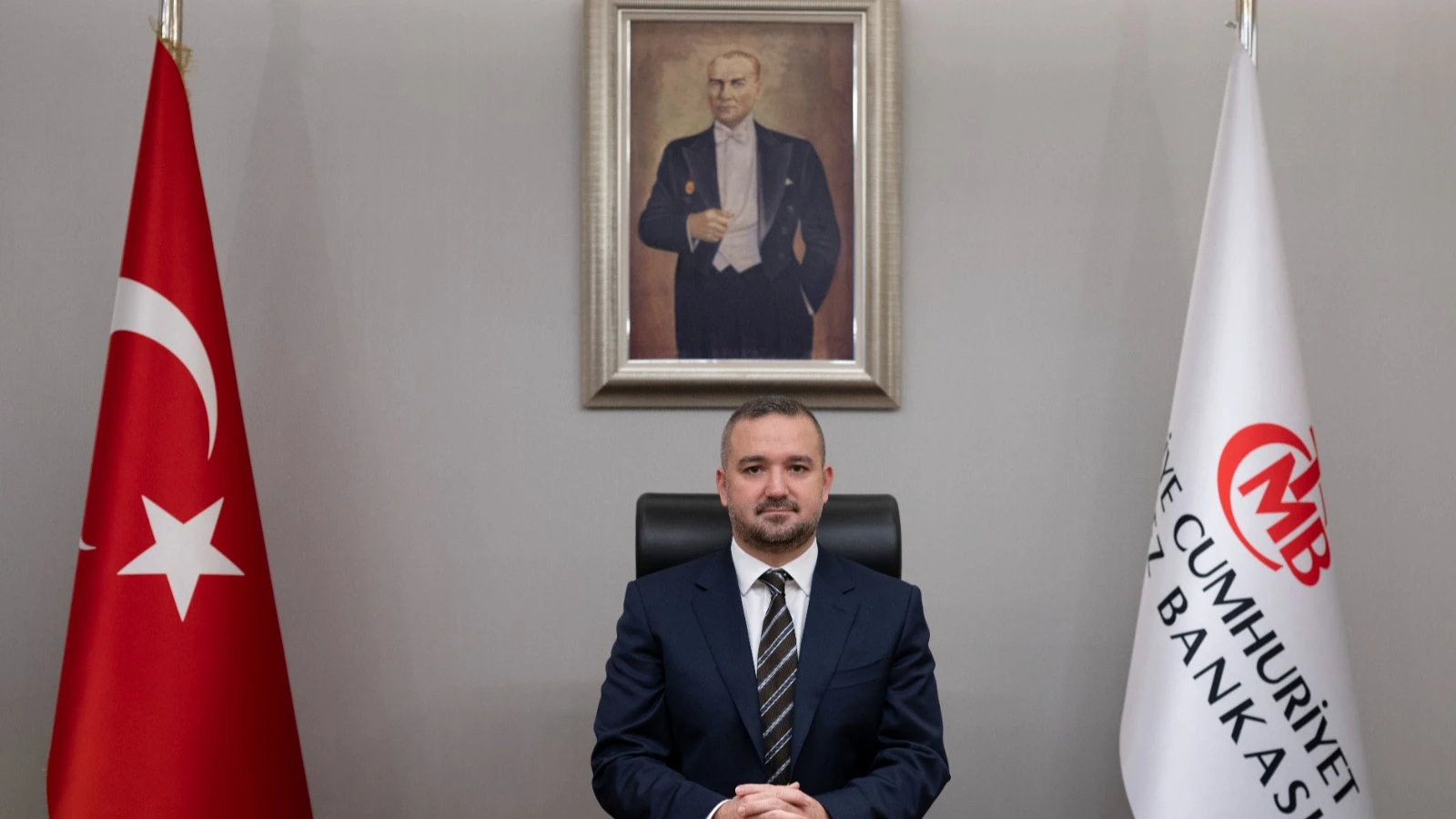
Fatih Karahan, President of the Central Bank of the Republic of Turkey (CBRT), stated that household demand for foreign currency remains limited and said, “Household demand for Turkish lira continues to remain strong.” he said.
Karahan made a presentation titled “Inflation and Macroeconomic Outlook” at the JP Morgan Türkiye Economy Forum held in Istanbul.
Stating that annual inflation decreased to 32.1 percent in June, Karahan stated that supply shocks pushed headline inflation up.
Karahan said, “The decrease in rigidity in rent and education supports disinflation in the service sector.” made his assessment.
Stating that core goods inflation has been strong recently, Karahan emphasized that price pressures are expected to decrease.
Karahan stated that the recent acceleration in inflation poses upward risks for short-term inflation.
Stating that the deterioration in inflation expectations remains limited, Karahan noted that the distribution of household and real sector inflation expectations has improved.
Karahan stated that capacity utilization remained below historical averages and that demand indicators pointed to a slowdown in economic activity.
Stating that credit growth slowed down, Karahan emphasized that the trade deficit narrowed in the second quarter of the year.
Karahan stated that the effects on tourism remained limited.
BALANCE OF PAYMENTS STAYS MODERATE COMPARED TO HISTORICAL AVERAGES
Stating that the balance of payments is at a moderate level compared to its historical average, Karahan said, “Household demand for foreign currency remained limited. Household demand for Turkish lira continues to remain strong.” he said.
Karahan noted that reserves are at a strong level.
Stating that the conflicts in the Middle East caused a delay in the disinflation process, Karahan stated that the slowdown in economic activity continued with tight financial conditions.
Karahan used the following statements:
“The tight monetary policy stance, which will be maintained until price stability is achieved, will strengthen the disinflation process through demand, exchange rate and expectation channels. The Monetary Policy Committee will determine the steps to be taken regarding the policy rate, taking into account inflation realizations, main trend and expectations, in line with the intermediate targets and ensuring the tightness required by disinflation.”
Stating that monetary policy decisions are taken with an inflation outlook-oriented, meeting-based and cautious approach, Karahan emphasized that the monetary policy stance will be tightened if the inflation outlook deviates significantly from the intermediate targets.
