
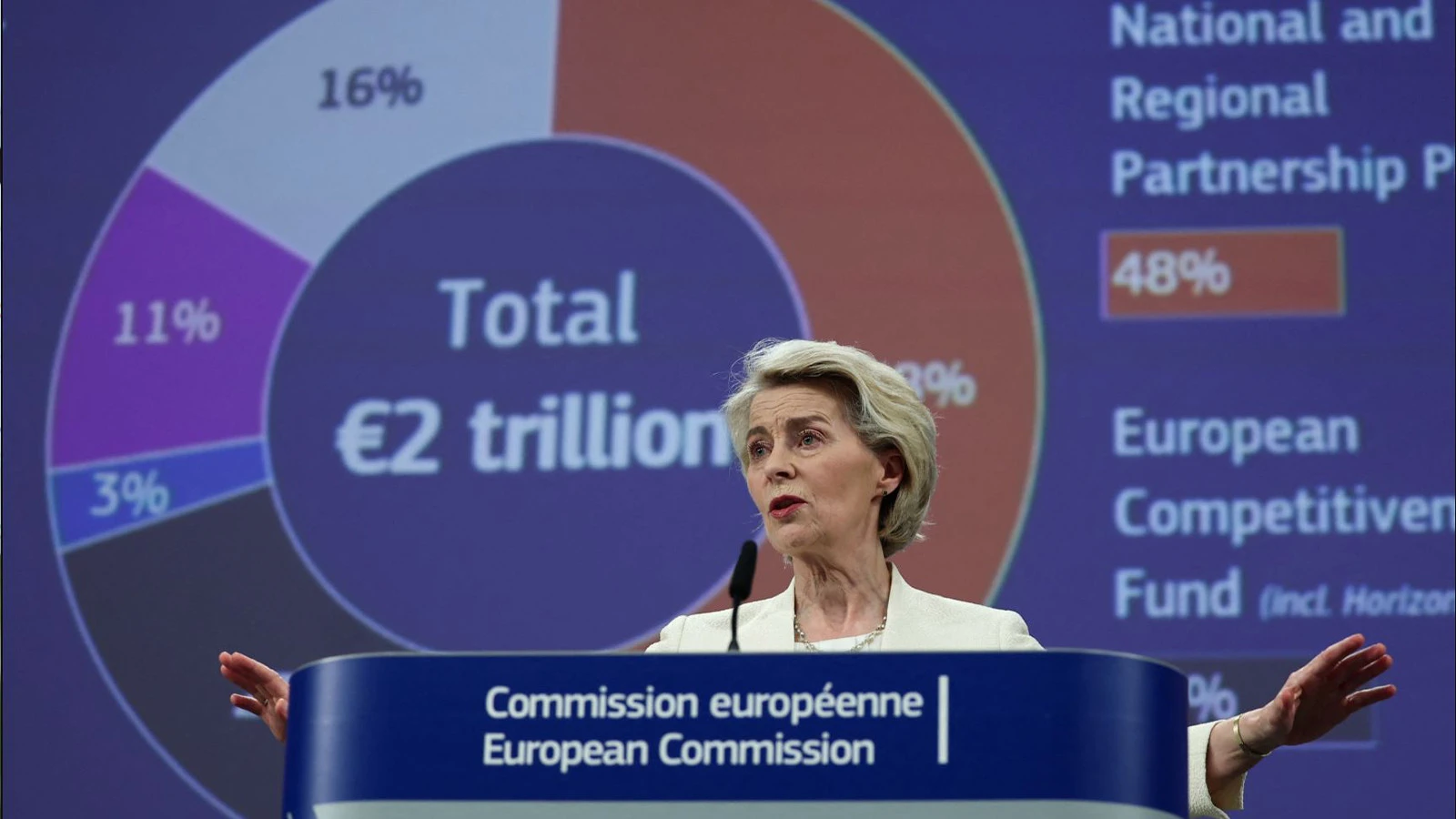
The Brussels summit, attended by 27 members of the EU and planned to last two days, ended yesterday after 14 hours of negotiations. Although European Council President Antonio Costa reduced the European Commission’s budget proposal from 1 trillion 985 billion euros to 1 trillion 781 billion euros, he could not reach a consensus. Leaders of seven countries seeking further cuts also refused to attend small group meetings held by Costa. Defense shares, Ukraine’s financing and new taxes were the main items on which agreement could not be reached.
GERMANY WANTS A CUT
The group, consisting of Germany, Austria, Belgium, Denmark, Finland, the Netherlands and Sweden, wants to limit the resources they transfer from their national budgets to the EU. German Chancellor Friedrich Merz stated that his country finances about a quarter of the EU budget, but receives only 8 percent of the funds directly. According to the German press, Berlin wants a cut of approximately 400 billion euros from the initial budget proposal. While Germany opposes new joint debt, it advocates preserving defense spending and support for Ukraine.
POOR REGIONS IN DANGER
The Friends of Harmony group, consisting of 17 countries including Italy, Spain, Poland, Romania, Greece and Portugal, opposes reducing regional development and agricultural funds. Italian Prime Minister Giorgia Meloni announced that his country would not accept receiving less funding while contributing more to the budget. According to Corriere della Sera’s calculation, the current proposal could create a financial loss of approximately 3 billion euros for Italy in seven years. The Baltic countries, on the other hand, oppose the proposed 39 billion euro cut in defense spending. EU leaders could not agree on the budget at the summit in October due to similar disagreements.
FRANCE AND GERMANY FACE TO FACE
French President Emmanuel Macron described the 204 billion euro cut as a strategic mistake and argued that Europe could lose its economic competitiveness against the USA and China. Paris wants big tech companies to be taxed instead of increasing national contributions. Ireland opposes this tax. The new 45 billion euro loan planned to be provided to Ukraine was also stuck in budget disputes. While Hungary, Slovakia and the Czech Republic oppose participating in the loan, Germany demands that the financing burden be shared by all members.
IS THERE A RISK OF DISSOLVENCY OF THE EU?
Speaking to Deutsche Welle, Brussels-based Bruegel Institute economist Jacob Funk Kirkegaard stated that similar crises have occurred in past budget negotiations and that the current dispute is not a sign of dissolution on its own. In the Euronews analysis, it was emphasized that the separation between France and Germany, as well as the 2027 election calendar, will make reconciliation difficult. In France, far-right Marine Le Pen advocates limiting her country’s annual contribution to the EU budget to 5 billion euros and stopping aid to Ukraine. For this reason, Macron wants the negotiations to be completed by the end of the year. The adoption of the new budget requires unanimity of 27 members and the approval of the European Parliament. The next summit will be held on December 17-18.
