
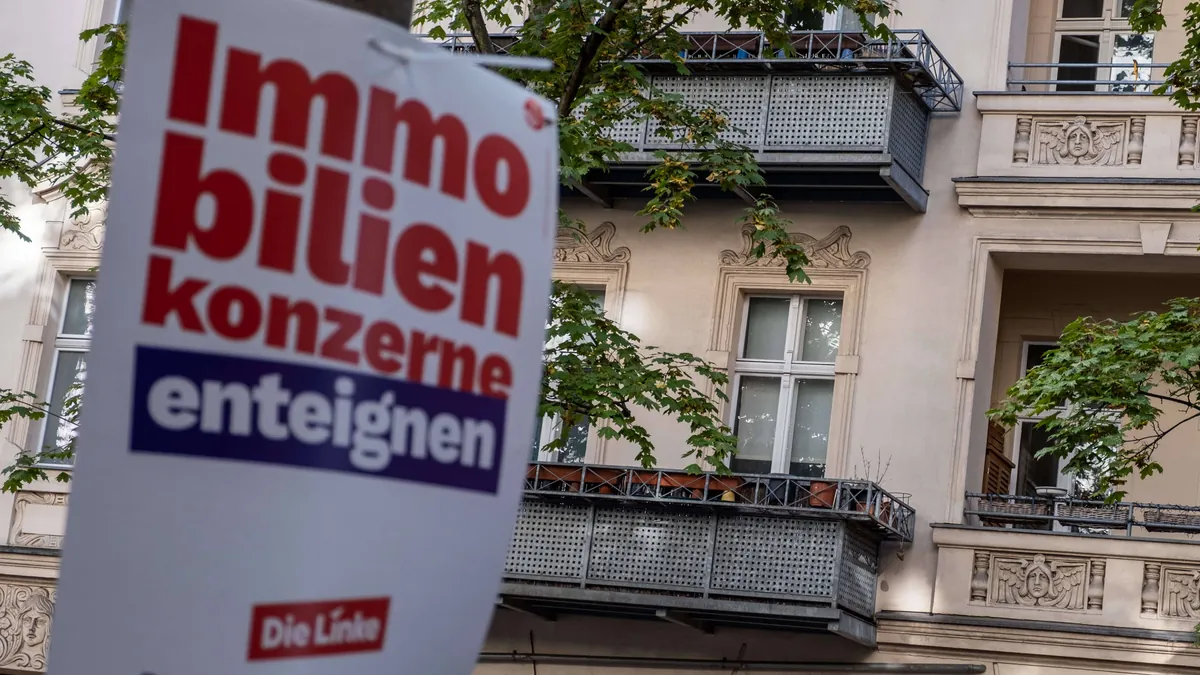
Study on the socialization of large housing groups
In this way, Berlin’s billion-dollar project could be financed
09/25/2026 – 1:31 p.mReading time: 2 minutes

When it comes to the socialization plans of the Left Party in Berlin, the question of their financial viability always arises. A study now shows which factors are important.
Lower risks without a new housing facility
The researchers estimate the compensation for the transfer of around 210,000 apartments to be around 13.5 billion euros. With clever design, this can be financed without the new building suffering or there being cuts in the Berlin state budget. The authors recommend transferring the apartments to the six existing state-owned housing companies.
- Expropriation or socialization: The difference is big
- Affordable apartments in Berlin: Can the federal government effectively ban socialization?
“A transfer of housing stock from private housing companies can help to increase the stock of public housing more quickly than through new construction and therefore have a stronger and faster influence on the rental market as a whole,” write the authors in the study.
This is how socialization could be financed
According to the analysis, with an equity ratio of 30 percent, the country would have to provide equity capital of around four billion euros. The housing companies would finance the remaining approximately 9.5 billion euros through borrowed capital. Despite permanent rent controls, the public sector could achieve an annual net income of 543 million euros from the socialized apartments and would have to pay debt servicing of 345 million euros. The economists emphasized that interest payments and repayments for all loans taken out would be secured in the long term.
The legal basis for socialization is Article 15 of the Basic Law. A majority of an expert commission appointed by the Berlin Senate came to the conclusion that socialization is generally legally permissible. In Berlin in 2021, a majority of voters voted in favor of the expropriation of large housing companies in a referendum. The housing issue has become a central social issue in many major German cities, as low- and middle-income households in particular can hardly afford the rising rents.
