
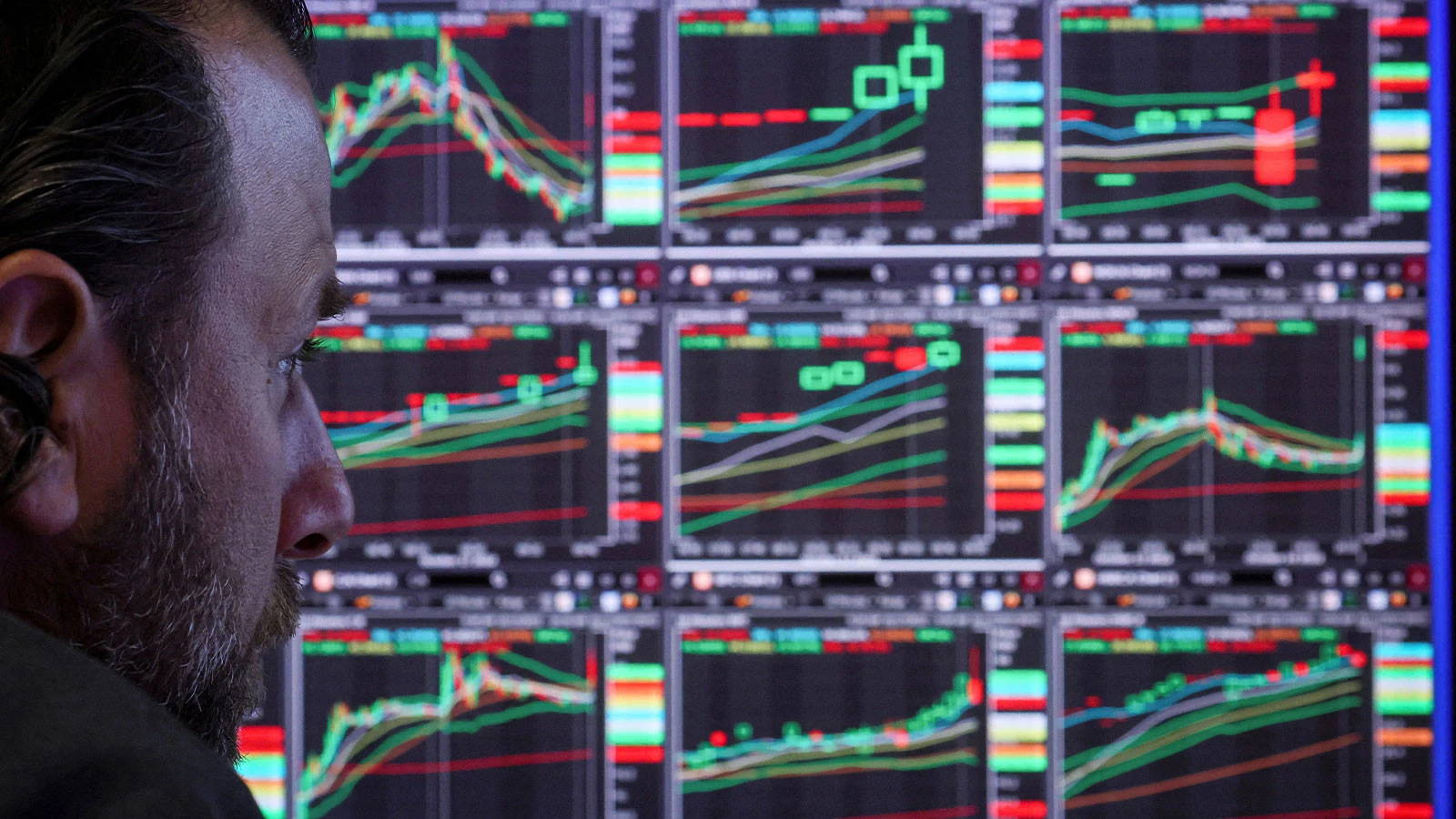
While there is a negative trend in global markets before the results of the midterm elections in the US, Democrats are expected to win the House of Representatives and gain a majority in the Senate, according to uncertain results.
The results of the Congressional midterm elections held in the USA are closely followed by investors. While it is expected that there may be changes in the economic and geopolitical policies of the USA according to the election results, this situation is also expected to affect asset prices.
It is estimated that if Democrats take control of Congress in the USA, the policies implemented by President Donald Trump’s administration may be disrupted. It is considered that if the Republicans lose both wings, Trump’s political space for action may narrow.
In this regard, the elections in the USA will give important signals about the course of the next period in geopolitically and economically important topics. Investors consider the Democrats’ election success as a downside risk for stock markets and the dollar, with the expectation that regulatory controls may tighten, especially for technology and artificial intelligence companies with high growth potential.
According to the preliminary results, the Democrats’ success in the midterm elections strengthened the expectation that they would be able to capture the majority in both wings. Accordingly, as the election results began to become clear, there were sharp declines in index futures contracts in the USA, and it was observed that the risk appetite decreased significantly on the Asian side.
While the dollar index decreased by 0.5 percent to 101.3, the euro/dollar parity increased by 0.6 percent to 1.1250.
The expectation that the Democrats’ victory could limit the Trump administration’s ability to implement tax cuts and expansionary fiscal policies weakened predictions that the US budget deficit would grow further.
As this situation increased the demand for US bonds, the country’s 10-year bond interest rate decreased by 7 basis points to 4.90 percent. The ounce price of gold increased by 0.9 percent to 3 thousand 954 dollars due to political uncertainty and safe haven demand.
Analysts stated that expectations that it may become difficult for the Trump administration to implement its current policies once the election results become clear have an impact on asset pricing, and that volatility in the markets may increase.
While uncertainties regarding the ability of the Trump administration to implement economic policies increase with the election results in the USA, strong economic activity and the continuation of inflationary pressures cause the possibilities of the US Federal Reserve (Fed) to increase interest rates to remain high.
According to the pricing in the money markets, the probability that the Fed will increase the policy rate by 25 basis points at the December meeting has increased to 80 percent. On the macroeconomic data side, the number of JOLTS job vacancies in the USA increased by 333 thousand in September compared to the previous month, reaching 7 million 523 thousand, exceeding market expectations.
The ADP private sector employment data to be announced today in the country is expected to provide more information about the labor market. On the other hand, oil prices continue to decline with the expectation that diplomatic initiatives to end the war between the USA and Iran may reduce tensions in the Middle East and ease concerns about oil supply in the region. The barrel price of January delivery Brent oil decreased by 0.7 percent to 102.8 dollars.
While the financial results of the companies continue to be in the focus of investors, the shares of Apple, one of the leading technology companies in the USA, which announced its balance sheet yesterday, lost 1.9 percent in value. Although Apple increased its net profit, the company’s warning that rising memory chip costs would put pressure on its gross profit margin led to sales in its shares.
With these developments, the S&P 500 index in the New York Stock Exchange increased by 0.36 percent, the Nasdaq index increased by 0.83 percent, and the Dow Jones index decreased by 0.38 percent.
While European stock markets showed a negative trend yesterday, led by mining and energy companies, all eyes in the region turned to the results of the midterm elections in the USA and the inflation data of the Eurozone.
Following the first results of the election process in the USA, index futures contracts are on the rise in the regional markets. The US attack on an Iranian island during the election period raised questions about whether the tensions in the region could end.
On the other hand, while the completion of the US midterm elections is expected to eliminate significant uncertainty in the stock market, expectations of strict supervision for artificial intelligence and technology companies lead investors to act cautiously in the short term.
While company financials are also being followed during the accelerating balance sheet season in the region, German pharmaceutical and chemical company Bayer managed to exceed market expectations in the third quarter thanks to the strong performance of its pharmaceutical segment, despite the weakness in the agricultural division. The shares of the company, which revised its year-end targets upwards, finished the day with a 4.5 percent increase after making a premium of over 7 percent during the day.
On the other hand, sportswear brand Adidas closed the day with a 2.3 percent loss, with sales coming after UBS analysts reduced their investment recommendation from “neutral” to “sell”.
In the aviation sector, Lufthansa achieved a turnover of 12.2 billion euros in the third quarter, performing above expectations, despite rising fuel costs. Shares of the airline company, which announced that there will be significant increases in ticket prices next year, gained 4 percent in value. Another important player in the sector, aircraft engine manufacturer MTU, lost 3.1 percent of its value after Bank of America withdrew its investment recommendation.
With these developments, the FTSE 100 index in England decreased by 1.14 percent, the DAX 40 index in Germany decreased by 0.45 percent and the CAC 40 index in France decreased by 0.34 percent. In Italy, the FTSE MIB 30 index remained flat.
A negative trend is observed in Asian stock markets on the new trading day, except for Hong Kong.
While the US election process is being followed in the region, concerns about the reflection of political uncertainties on foreign policy negatively affect risk appetite.
On the other hand, the People’s Bank of China (PBoC) announced that applications made by banks to the stock purchase loan program exceeded 200 billion yuan ($30 billion).
According to the data released in the region today, the Caixin service sector Purchasing Managers Index (PMI) in China decreased to 50.8 and the composite PMI decreased to 52.
With these developments, near the closing, the Nikkei 225 index in Japan decreased by 2.9 percent, the Shanghai composite index in China decreased by 0.1 percent, the Kospi index in South Korea decreased by 1.2 percent, and the Hang Seng index in Hong Kong increased by 0.2 percent.
BIST 100 index at Borsa Istanbul, which followed a buying-oriented trend yesterday, closed the day at 11,023.55 points, gaining 0.56 percent in value.
The December futures contract based on the BIST 30 index in the Borsa Istanbul Futures and Options Market (VIOP) fell by 0.24 percent in the evening session last night compared to the normal session closing.
While Dollar/TL closed yesterday at 49.9820, today it is traded at 50.0190 at the opening of the interbank market, 0.1 percent above the previous closing.
Analysts stated that the real effective exchange rate in the country and the intense data agenda abroad, especially inflation in the Eurozone, ADP private sector employment in the USA and foreign trade balance, will be followed today, and noted that technically, 11,200 and 11,300 points in the BIST 100 index are resistance, while 10,900 and 10,700 points are support.
