
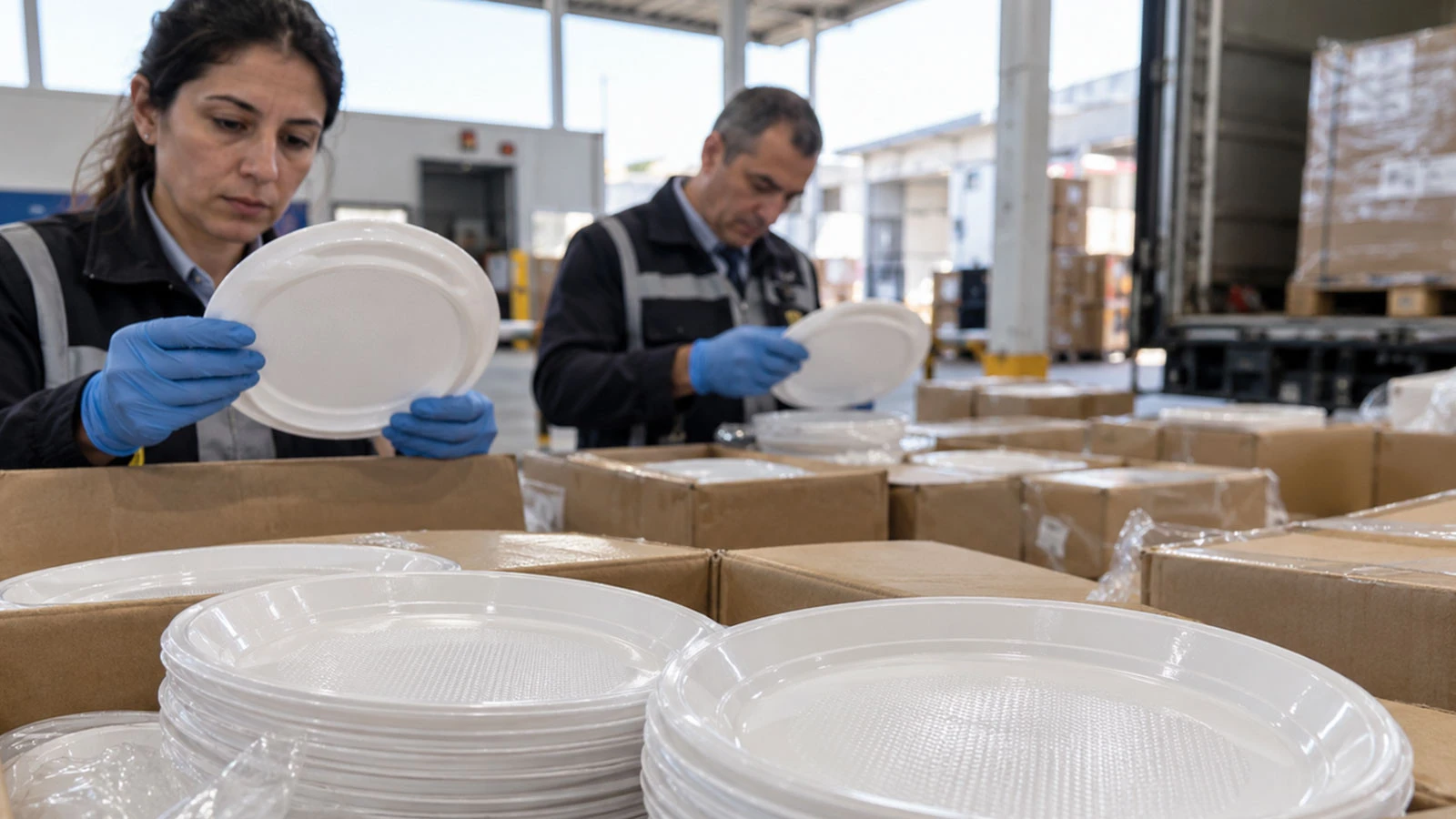
A new topic has been added to the discussions regarding food safety in Türkiye’s exports to European Union countries. Following previous notifications about pesticide residues, aflatoxins and harmful microorganisms detected in various agricultural and food products, this time plastic plates used in kitchens were subject to scrutiny. Records reflected in the European Union’s Rapid Alert System for Food and Feed (RASFF) revealed that the transfer of substances to food in some plastic plates originating from Turkey was well above the permissible levels.
STUNNING RESULT IN THE TEST IN SPAIN
In the notification made by the Spanish authorities on September 22, 2026, it was stated that the total migration limit was exceeded in the plastic plates sent from Türkiye. In laboratory examinations carried out using 3 percent acetic acid solution, the total amount of substance passing from the plastic material into the test liquid was measured as 104.5 mg/dm².. The upper limit for this value in the European Union legislation is 10 mg/dm². Thus, it was understood that the measured amount reached 10.45 times the legal limit.
PRODUCTS COULD NOT ENTER THE EUROPEAN MARKET
In the notification sent by Spain to the RASFF system, the risk that the detected non-compliance could pose was evaluated in the “potentially serious” category. While the shipment, which was stopped at border control, was not allowed to enter the European market, it was decided to destroy the plastic plates in question.
A SIMILAR WARNING CAME FROM ITALY
Non-compliance with plastic plates was not limited to inspections in Spain. In Italy’s notification dated 21 September 2026, It was noted that total migration values in reusable polypropylene plates imported from Türkiye exceeded legal limits.. The situation revealed during the official controls carried out by the Italian authorities in the market was reported to the RASFF system. While the risk was considered potentially serious in that record, unlike the examination in Spain, the numerical value for the amount of substance measured was not shared.
DANGER IN PLASTIC PLATE
Plastic materials that come into contact with food can transfer some substances in their structure to food, depending on the conditions of use. In this process, scientifically called “migration”, the total amount of substance passing from the plastic to the test liquid representing food is measured under certain laboratory conditions. European Union regulations also impose certain limits on this transition in order to protect consumers. A high value in the total migration test does not alone prove that a particular chemical causes direct harm to human health. However, exceeding legal limits indicates that the material produced for contact with food does not comply with safety standards. Notifications from Spain and Italy once again brought to the agenda the importance of inspecting not only the consumed products but also the kitchen utensils that food comes into contact with in food safety.
