
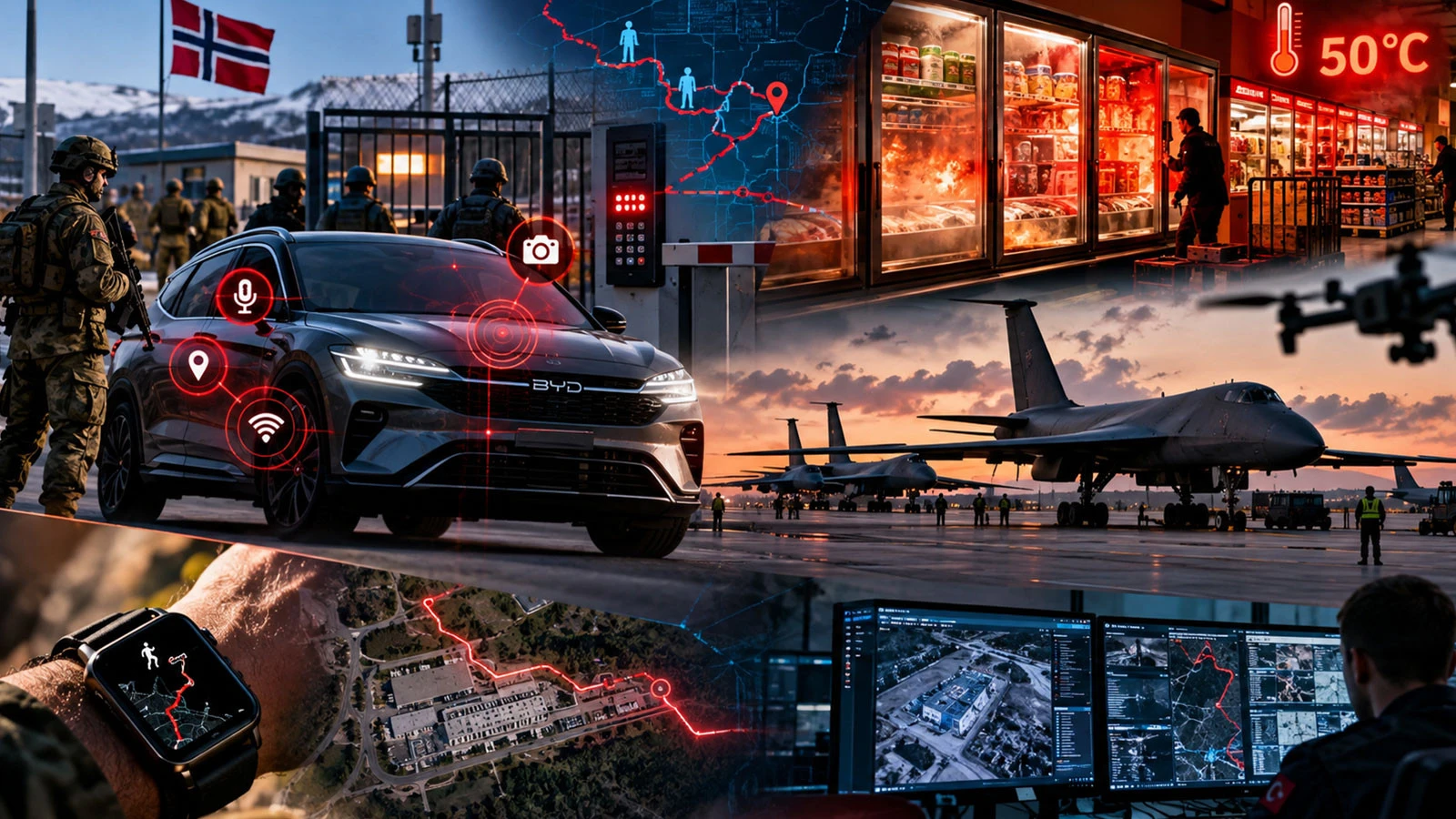
Cars recording military secrets in Norway, refrigerators whose temperature was increased to 50 degrees in France, a UAV attack plan allegedly targeting 12 American bombers in England… Successive events have opened the door to a new era in electronic intelligence and cyber warfare. Cameras, microphones, sensors and GPS systems turn ordinary devices of daily life into potential intelligence tools. The fact that ASELSAN, ROKETSAN, HAVELSAN and TEI closed their doors to foreign electric cars in Türkiye also revealed the extent of the growing danger.
HE SAVED THE PASSWORDS OF THE BASE
The security gap revealed in the military exercise organized by the Norwegian army in September showed the point that modern intelligence wars have reached. It was determined that the Chinese rental cars used in the exercise to protect Oslo Airport under war conditions recorded all the movements of the soldiers. The vehicles’ memories included where the personnel went, who they carried, how long they stayed at which points, and the security codes used at the entrance gates of military facilities. Lieutenant Fredrik Blanck, who participated in the exercise, said that the level of detail of the records was a big surprise for them.
BANNED BY FOUR INSTITUTIONS
The scandal in Norway has a striking repercussion for Türkiye. TUSAŞ Engine Industry (TEI) General Manager Prof. Dr. Mahmut Faruk Akşit, in his statement made public on October 11 ASELSAN, ROKETSAN, HAVELSAN and TEI announced that foreign electric cars are not allowed into their campuses. Stating that many cameras and sensors in vehicles can map the facilities, Akşit emphasized that the main problem is that the institutions do not have control over the software. In addition to Türkiye, Poland also took action due to similar security concerns. In February 2026, the Polish General Staff banned vehicles produced in China from entering protected military facilities.
IT REACHED 50 DEGREES
The cyber attack in France revealed that digital threats are not limited to gathering information. Cyber hackers intervened in the internet-connected cooling systems of hundreds of supermarkets, increasing the temperature of refrigerators and freezers by up to 50 degrees.
In England, the importance of military intelligence came to the fore once again. Following intelligence obtained about a possible UAV attack on RAF Fairford Air Base, it was reported that the USA evacuated 12 B-1 strategic bombers stationed there.. While the British government claimed that the Iranian Revolutionary Guards were behind the preparations for the attack, Tehran denied the accusations.
RUNNING ROUTE GIVEN
One of the striking examples of electronic intelligence risk occurred in 2018. In the global activity map published by the sports application Strava, the running routes of American soldiers in countries such as Syria and Afghanistan became visible. GPS data obtained from smart watches and mobile phones enabled the location of some military facilities not disclosed to the public and the movement patterns of personnel to be determined.
CYBER ATTACK RISK
According to analysts, the digital security threat for Türkiye extends far beyond defense industry organizations. Military bases, radar facilities, ports, airports, power plants and natural gas lines are also among the potential targets of cyber attacks. The attack in France showed that digital interventions can turn into physical harm, while the incident in Norway showed that even an ordinary car can record sensitive military information. According to experts, in addition to confidential documents, digital traces left by vehicle location records, smart watches and security cameras are also important in modern espionage. This data collected from different sources can reveal critical information, from the locations of military facilities to personnel movements.
