
Baby Boomer Homes
Why they won’t save the housing market
Updated 10/16/2026 – 5:44 p.mReading time: 2 minutes

The “Silver Tsunami” was supposed to save the housing market. A new study shows why this hope has come to nothing in most major German cities.
From the perspective of the Association of Sparda Banks, the aging of society alone cannot solve the housing shortage in Germany. Although there are around 5.3 million owner households aged 65 and over in this country, there are an equally large number of renter households between the ages of 30 and 44, according to a new study by the association with the German Economic Institute (IW). But behind this lies a “significant regional imbalance”.
The calculation that a large number of properties will one day be sold or inherited and thus solve the housing shortage in Germany does not add up.
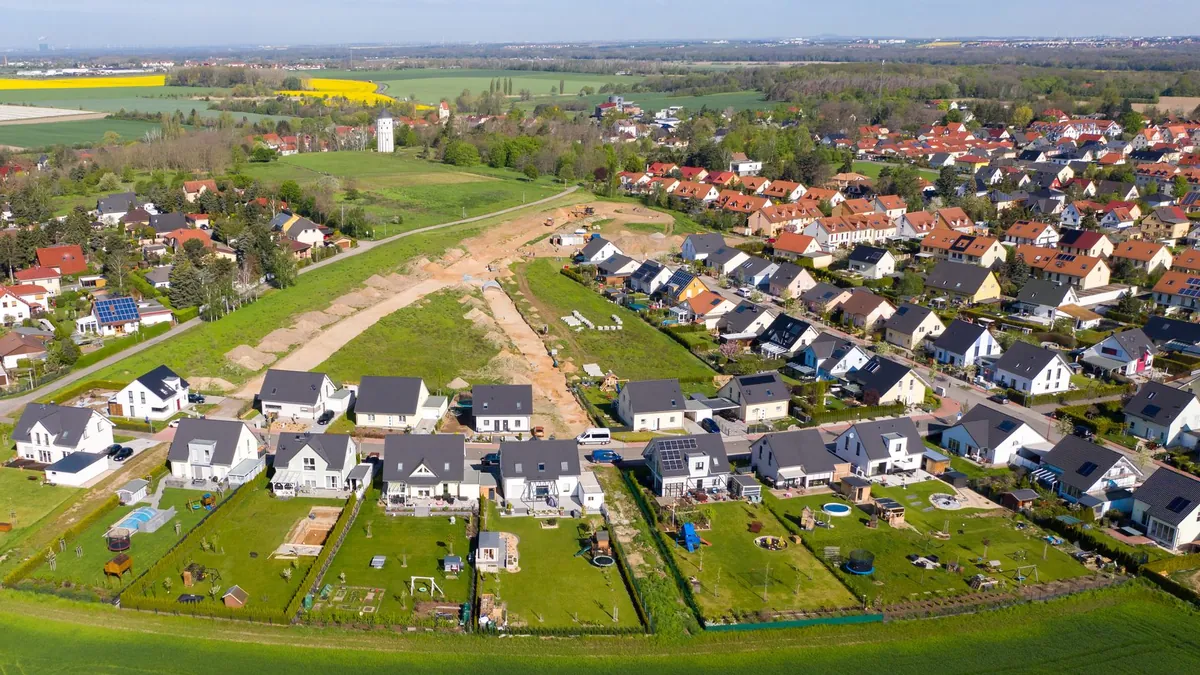
The possible consequences of a “silver tsunami” have been discussed in the real estate industry for a long time. This refers to the phenomenon in which the baby boomers retire and, due to their age, move out of their homes, inherit them or sell them. This could reduce housing prices and eliminate the estimated shortage of over a million apartments in Germany.
The study contradicts this: “The expectation that the generational change among the baby boomers will trigger a massive wave of available real estate and solve Germany’s housing problems on its own falls short.”
Vacancy in rural areas versus shortages in metropolitan areas
The basis of the study is an evaluation of the census for all 400 districts and independent cities in Germany. In 300 districts, the number of older owner households exceeds the number of younger renter households. However, the excess supply is often concentrated in smaller and rural regions, while the greatest demand is in metropolitan areas.
“The proportion of owner households aged 65 and over who could potentially part with their properties over the next few decades is around 28 to 32 percent in most federal states,” said IW real estate expert Pekka Sagner to the “Handelsblatt”. But a potentially vacant home in the country does not solve the problem of a young family in the big city. Even if the immediate surrounding area is taken into account, the potential supply in 34 of 70 large cities analyzed is not enough to meet the demand of younger households.
“The hope of a Silver Tsunami is not a housing policy strategy,” says Florian Rentsch, Chairman of the Association of Sparda Banks. Politicians must think beyond individual measures and address the structural obstacles. He mentioned lower additional costs of acquisition, better financing conditions and better use of living space.
Many older people find their apartment too big
In addition to regional differences, the study shows the unequal use of living space. 37 percent of owner households aged 65 and over find their apartment to be too big. At the same time, 35 percent of younger renter households find their apartment to be too small. This creates opportunities, but older people rarely move. High additional costs of employment, a lack of smaller and barrier-free alternatives as well as the connection to a familiar environment made it difficult to change.
“Nobody should have to give up their home,” said Rentsch. “But anyone who wants to voluntarily downsize, share their house or create additional living space should be supported – instead of failing because of costs and bureaucracy.”
