
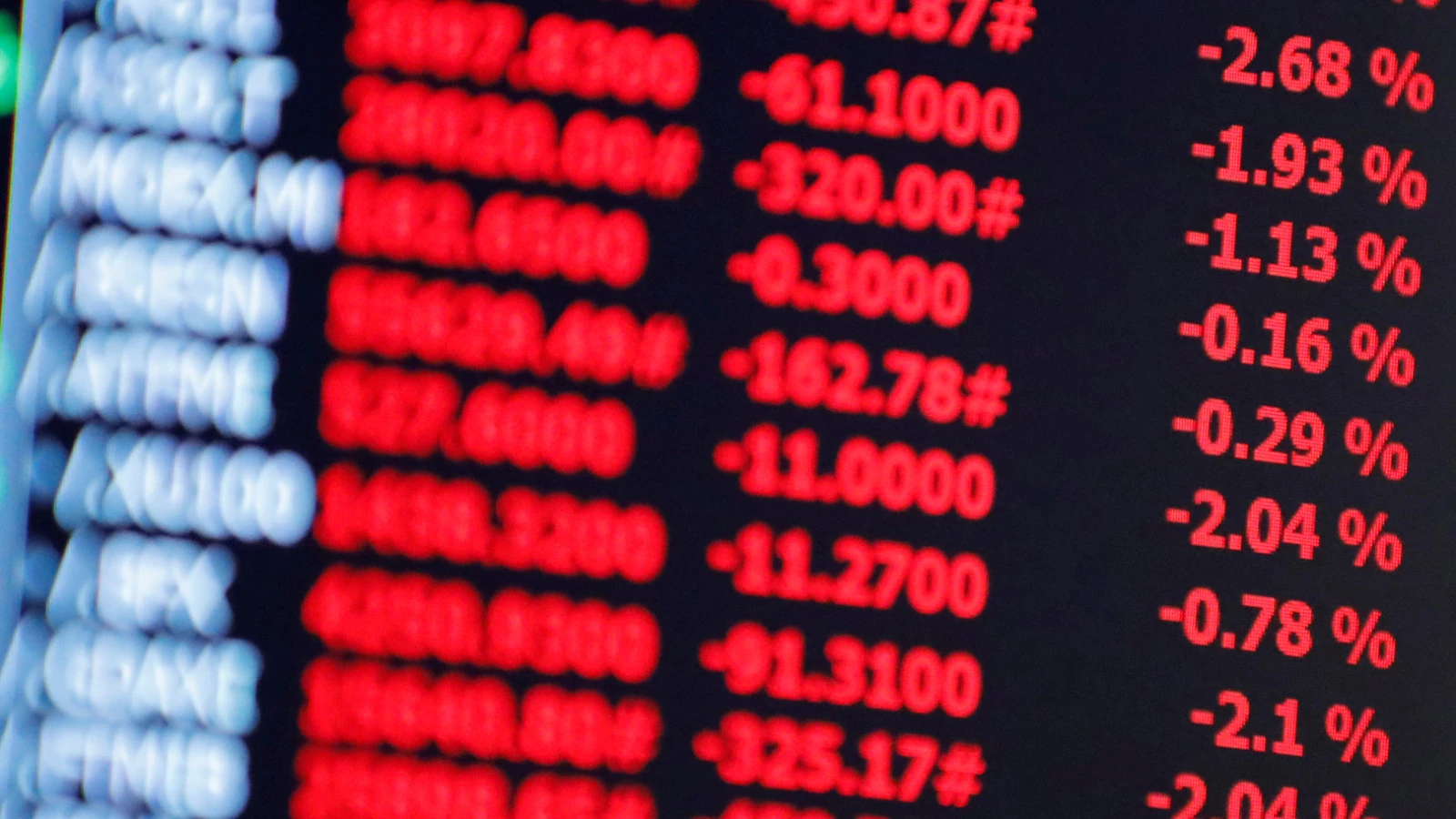
Global markets are mixed due to the increase in geopolitical tensions in the Middle East and the decline in technology stocks.
As concerns about artificial intelligence increase again, geopolitical risks originating from the Middle East and Russia-Ukraine cause a decrease in risk appetite in global markets. Regarding the attacks on Saudi Arabia, US President Donald Trump said, “The Houthis are doing wrong things, very wrong. This situation is not good at all.” made his assessment.
On the other hand, Trump argued that the energy ceasefire agreement reached between Russia and Ukraine was violated “on both sides”, but that the agreement was valid.
News that Chinese chip manufacturer CXMT has made progress in chip development has also caused an increase in sales pressure on technology companies around the world.
In addition to these developments, the statements of the US Federal Reserve (Fed) officials are also closely followed. Cleveland Fed President Beth Hammack said it would be appropriate to adopt a restrictive monetary policy stance to ensure inflation returns to 2 percent.
With these developments, the US 10-year bond interest rate is at 5.20 percent, with a decrease of 4 basis points. Although bond interest rates have decreased recently, interest rates continue to remain high.
Investors will focus on bank balance sheets due this week to see the impact of the recent rise in U.S. bond yields on banks’ loan growth, financing costs and deal activity.
The dollar index, which reached its highest level since April 2025 with 102.6 yesterday, stabilized at 102.4 today.
The barrel price of December delivery Brent oil is at 105.7 dollars, with a decrease of 0.9 percent. Although there is some relaxation in oil prices, prices continue to remain at high levels due to the escalating tensions in the Middle East.
With the slight retreat seen in the dollar index and oil, gold, which is in an upward trend today, is traded at 4 thousand 198 dollars per ounce, with an increase of 0.6 percent.
On the other hand, the International Monetary Fund (IMF) increased its global economic growth forecast from 3 percent to 3.1 percent for this year. The report stated that the Turkish economy is expected to grow by 2.7 percent this year and 3.6 percent next year.
With these developments, a mixed course was observed in the New York stock market yesterday. Micron Technology’s shares lost 4 percent, Nvidia’s shares lost 1.3 percent, Broadcom’s shares lost 1.9 percent and AMD’s shares lost 2.3 percent.
Index futures contracts in the USA started the day mixed.
A positive trend was observed in European stock markets yesterday, with expectations that strong corporate profits could support the markets.
Shares of German Nordex Group rose 3.9 percent after the company’s orders exceeded expectations. While the rise in defense industry shares in Germany attracted attention, Rheinmetall shares gained 2.5 percent and became the most premium share of the day in the DAX index.
German automotive manufacturer Volkswagen reported that its global deliveries decreased by 14.3 percent in the third quarter compared to the same period last year, falling to 1.89 million vehicles. On the other hand, the company’s shares gained 0.6 percent as a result of the decrease in the risk of trade war as the EU and China introduced an annual quota limit of 350 thousand units for hybrid vehicle imports.
With these developments, the DAX 40 index in Germany gained 0.76 percent, the FTSE 100 index in England gained 0.99 percent, the CAC 40 index in France gained 0.38 percent, and the FTSE MIB index in Italy gained 0.58 percent.
Index futures contracts in Europe started the day mixed.
The declines seen in the shares of technology companies in the New York Stock Exchange were also carried over to Asian stock markets.
Shares of South Korean technology companies SK Hynix lost 10.6 percent, shares of Samsung Electronics lost 8.4 percent, and shares of LG Innotek lost 8.6 percent.
On the macroeconomic data side, it was seen that producer inflation slowed down in Japan. While the Producer Price Index (PPI) in the country for September decreased by 0.3 percent monthly, it increased by 6.8 percent annually. While PPI in Japan decreased by 0.2 percent monthly in August, it increased by 7.6 percent annually.
The slowdown in PPI resulted from the strengthening of the yen against the dollar in September.
With these developments, near the closing, the Kospi index in South Korea lost 6.6 percent, the Nikkei 225 index in Japan lost 2.1 percent, the Hang Seng index in Hong Kong lost 0.4 percent and the Shanghai composite index in China lost 0.3 percent.
BIST 100 index at Borsa Istanbul, which followed a sales-oriented trend yesterday, finished the day at 12,150.67 points, losing 0.94 percent of its value.
The October futures contract based on the BIST 30 index in the Borsa Istanbul Futures and Options Market (VIOP) remained flat in the evening session last night compared to the normal session close.
While Dollar/TL completed the day yesterday at 49.2918, just above the previous close, today, at the opening of the interbank market, it is traded at 49.3600, 0.1 percent above the previous close.
Addressing the nation yesterday after the Cabinet Meeting at the Presidential Complex, President Recep Tayyip Erdoğan said that principal payments of up to 1 million liras will begin in October, once the bill on fund investigations is passed by the Parliament.
Erdoğan emphasized that with additional regulations, they will strengthen the structure of the capital markets against such microbes and make their functioning much healthier.
Analysts stated that balance of payments statistics in the country and ADP weekly private sector employment and second-hand house sales in the USA will be followed abroad today, and noted that technically, 12,100 and 12,000 points in the BIST 100 index are in a support position, while 12,300 and 12,400 points are in a resistance position.
Economists participating in the AA Finance Balance of Payments Expectations Survey predicted that the current account would have a surplus of 3 billion 502.9 million dollars in August.
Economists predicted that the current account would have a deficit of $48 billion this year.
