
THE TARGET WAS 450 AIRCRAFT ENGINE
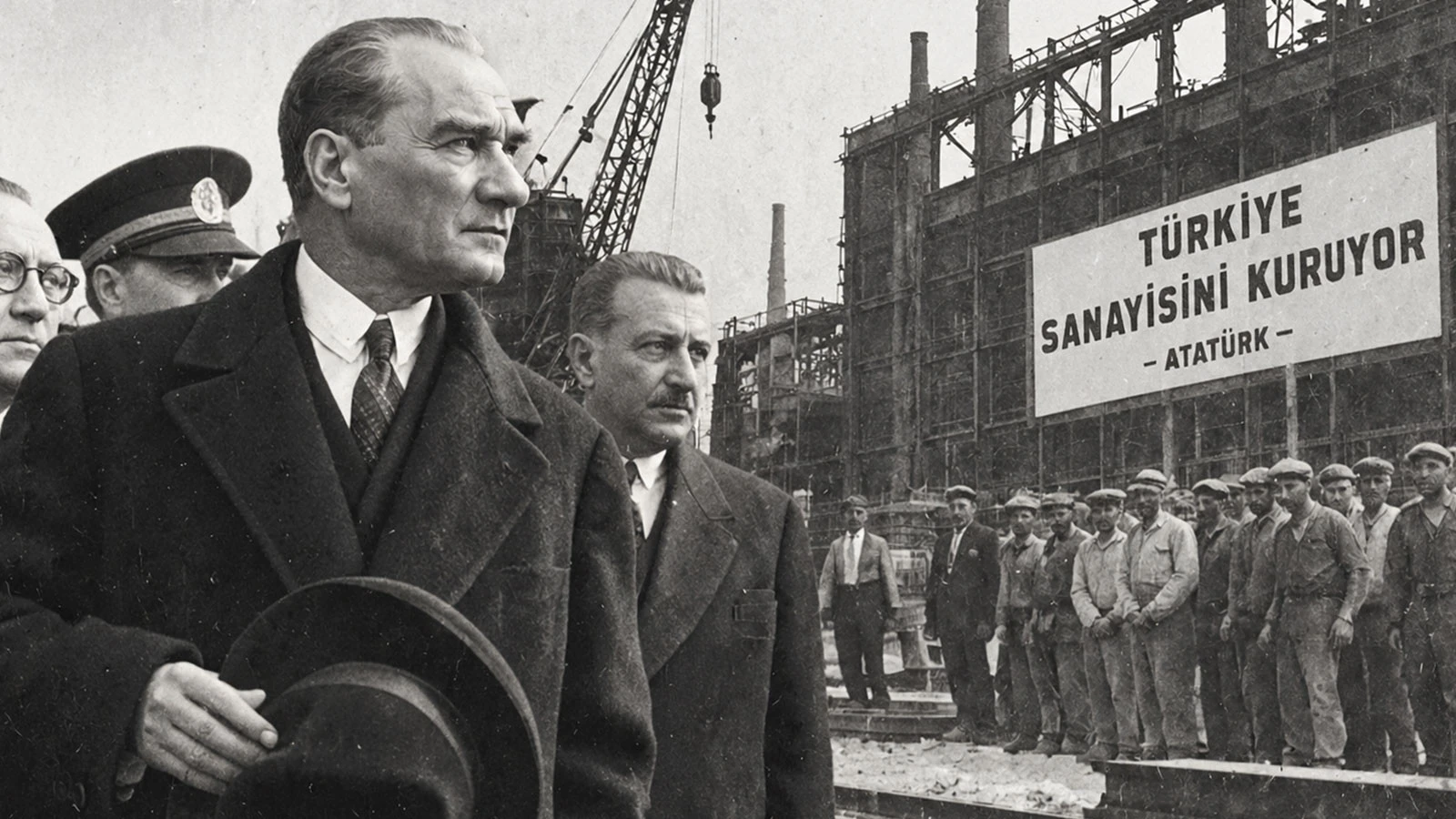
It was planned to produce aircraft engines in Türkiye before the 15th anniversary of the Republic. Within the scope of the Second Industrial Plan, it was aimed to produce 450 aircraft engines. This was a very ambitious initiative, considering the economic and technological conditions of the period. Türkiye did not want to remain a country that only exported agricultural products and imported machinery and industrial products. It was aimed to develop domestic production in the aviation, machinery and defense industries. The aircraft factory established in Kayseri in 1926 was among the first important initiatives of the Republic in the field of aviation.
TRANSITION FROM THREE WHITES TO THREE BLACKS
In the first industrialization move of the Republic, meeting basic needs with domestic production was a priority. This approach, symbolized by flour, sugar and cotton, aimed to reduce imports. But by the mid-1930s the target had grown. In the Second Industrial Plan, strategic resources such as coal, iron and oil came to the fore. Türkiye no longer wanted to produce only consumer goods but also to create a heavy industry infrastructure. Iron and steel, mining, energy and chemical industries have become central to the new development approach. While the processing of underground resources became as important as the extraction of them, the aim was to produce imported industrial products within the country.
BANKS WOULD PRODUCE FACTORIES, NOT CREDITS
In the economic policy of Ataturk’s period, banks were not viewed only as institutions that provided money and credit. Sümerbank and Etibank were among the direct implementers of industrialization. While Sümerbank undertook the establishment of various production facilities, especially textile, Etibank took on important roles in mining and energy investments. The state was leading large investments for which private capital was inadequate. The guided economy approach introduced by Atatürk in 1935 also reflected this approach. The aim was not to nationalize all economic activities, but to determine the direction of development and to include private enterprise in the production process. Thus, it was aimed to establish a strong link between industrial investments, financing and raw material resources.
25 YEARS AGO FROM SOUTH KOREA
One of the most striking evaluations of the academic study published by the Turkish Historical Society is the similarities between Türkiye’s industrialization approach in the 1930s and the development policies implemented by South Korea since the 1960s. The common features of the two models include the state directing the economy, banks supporting industrial investments, identifying strategic sectors and developing export capacity. With such policies in the following years, South Korea became one of the world’s important industrial and technology producers. Türkiye, on the other hand, had put similar tools on its agenda much earlier.
