
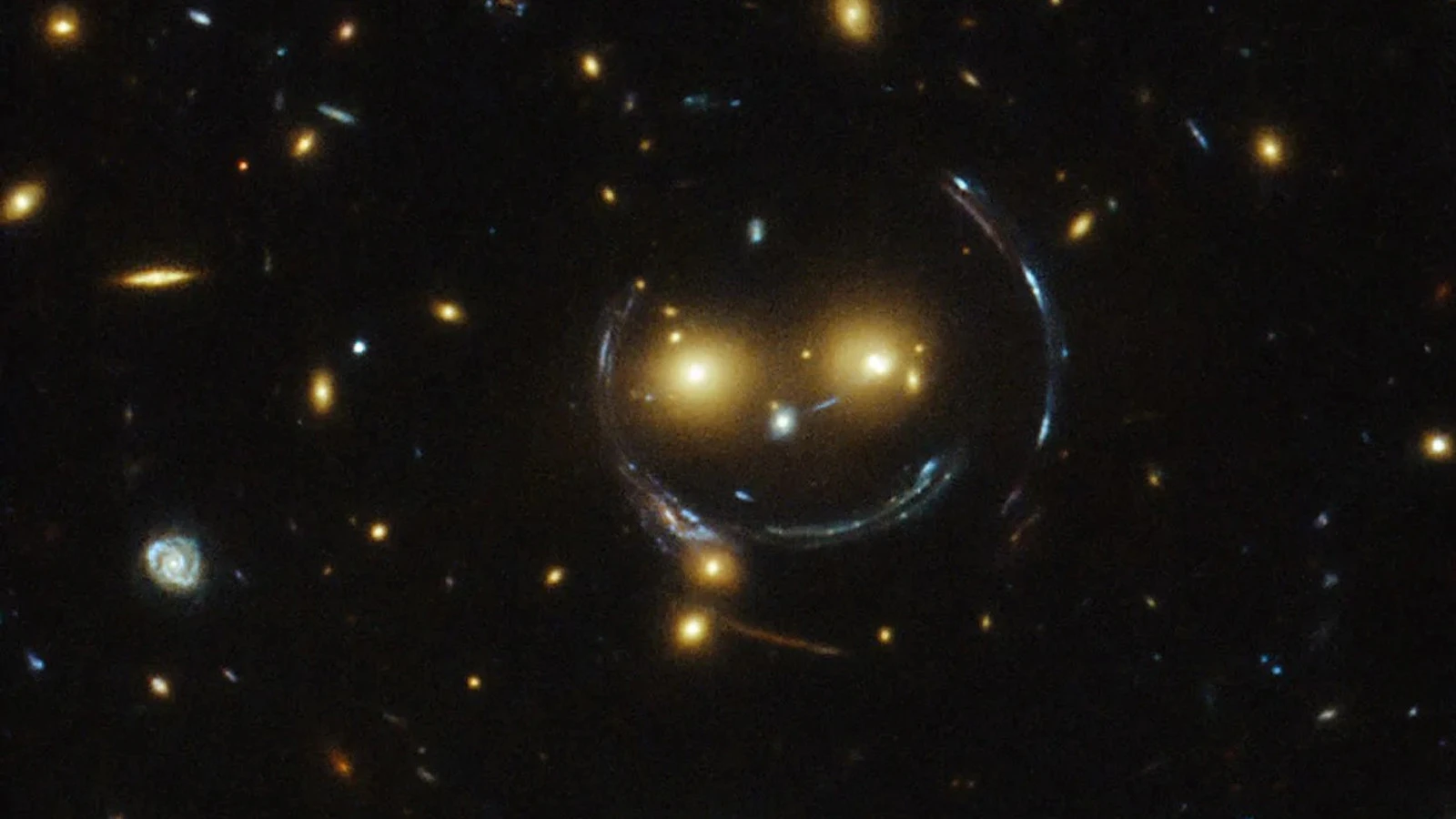
The US Aeronautics and Space Agency (NASA) described this galaxy cluster, called SDSS J1038+4849, as a “smiling galaxy cluster”. The post stated, “While observing the universe, Hubble captured a galaxy cluster smiling at the camera… The lines of this smile consist of arcs created by the effect known as gravitational lensing.”
THE SECRET OF THE “SMILING FACE”: GRAVITATIVE LENSING
Scientists explain the physical process behind this interesting image with the extraordinary gravitational power of galaxy clusters, the largest structures in the universe. Massive structures act like a cosmic lens, bending the space-time around them.
While the “two orange eyes” in the photo consist of bright galaxies; The illusory smile lines represent the arcs formed by the bending of light. This phenomenon, explained by Einstein’s Theory of General Relativity, allows astronomers to examine the early universe more clearly. On the other hand, it was stated that an edited version of the image was submitted by contestant Judy Schmidt to the Hubble’s Hidden Treasures image processing competition.
IMPORTANT STEP FROM JAMES WEBB
Shortly before this remarkable discovery by Hubble, NASA shared a new image of the James Webb Space Telescope on October 9. “Witnessing the formation of baby stars!” In the frame published with the title, stars of different ages behind the dust clouds were revealed using infrared light technology, opening the door to examining the changes of stars over time.
