
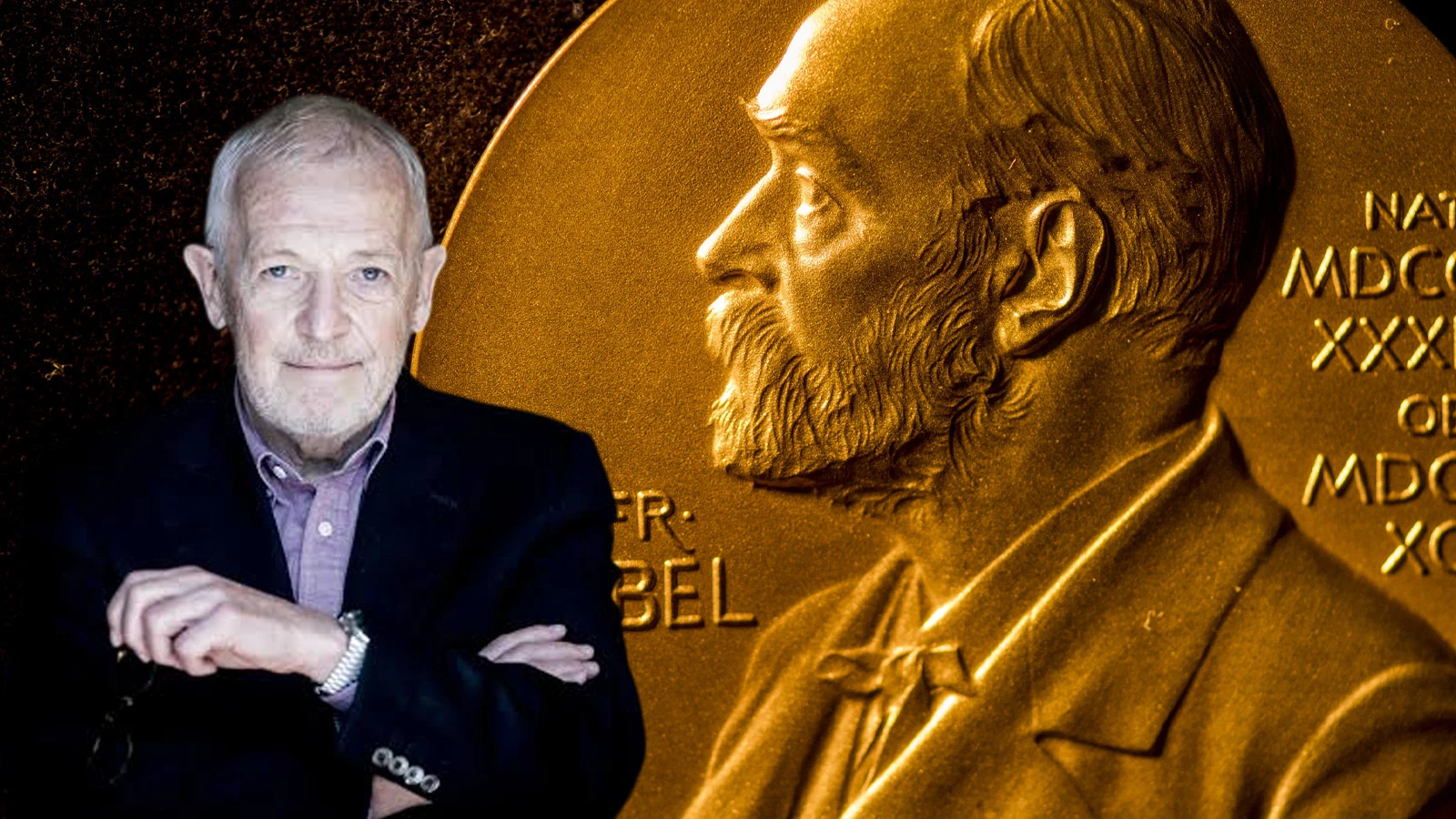
The Royal Swedish Academy of Sciences announced the winner of the 2026 Nobel Prize in Physics. This year’s prestigious award was awarded to Belgian-born American physicist Francis Halzen for his decisive contributions to the IceCube Neutrino Observatory and the discovery of high-energy neutrinos of astrophysical origin.
Neutrinos, which are called “ghost particles” in the scientific world because they hardly interact with matter and have negligible mass, reach the Earth from the most turbulent and energetic regions of the universe. Professor Francis Halzen, who works at the University of Wisconsin-Madison, pioneered the idea of turning the huge ice sheet in Antarctica into the world’s largest detector in order to detect these extremely difficult to capture particles.
The IceCube Neutrino Observatory, where Halzen is the principal investigator, consists of thousands of sensitive light optical sensors placed 1.5 to 2.5 kilometers deep under the ice at the Amundsen-Scott Station at the South Pole. The observatory, which became operational at full capacity in 2010 after years of difficult construction, launched a new era in neutrino astronomy by clearly detecting high-energy cosmic neutrinos coming from outside the Milky Way Galaxy for the first time in 2013. These historical discoveries; It was a groundbreaking step in mapping the universe’s most extreme events, such as supermassive black holes, neutron stars and supernova explosions, and in understanding the origin of cosmic rays.
In its statement, the Royal Swedish Academy of Sciences emphasized that the observation methodology developed by Halzen and the IceCube project he led have radically changed humanity’s perspective on deep space. The committee noted that Halzen’s personal vision, bold engineering approach and determination played a decisive role in laying the foundation of high-energy neutrino astronomy.
