
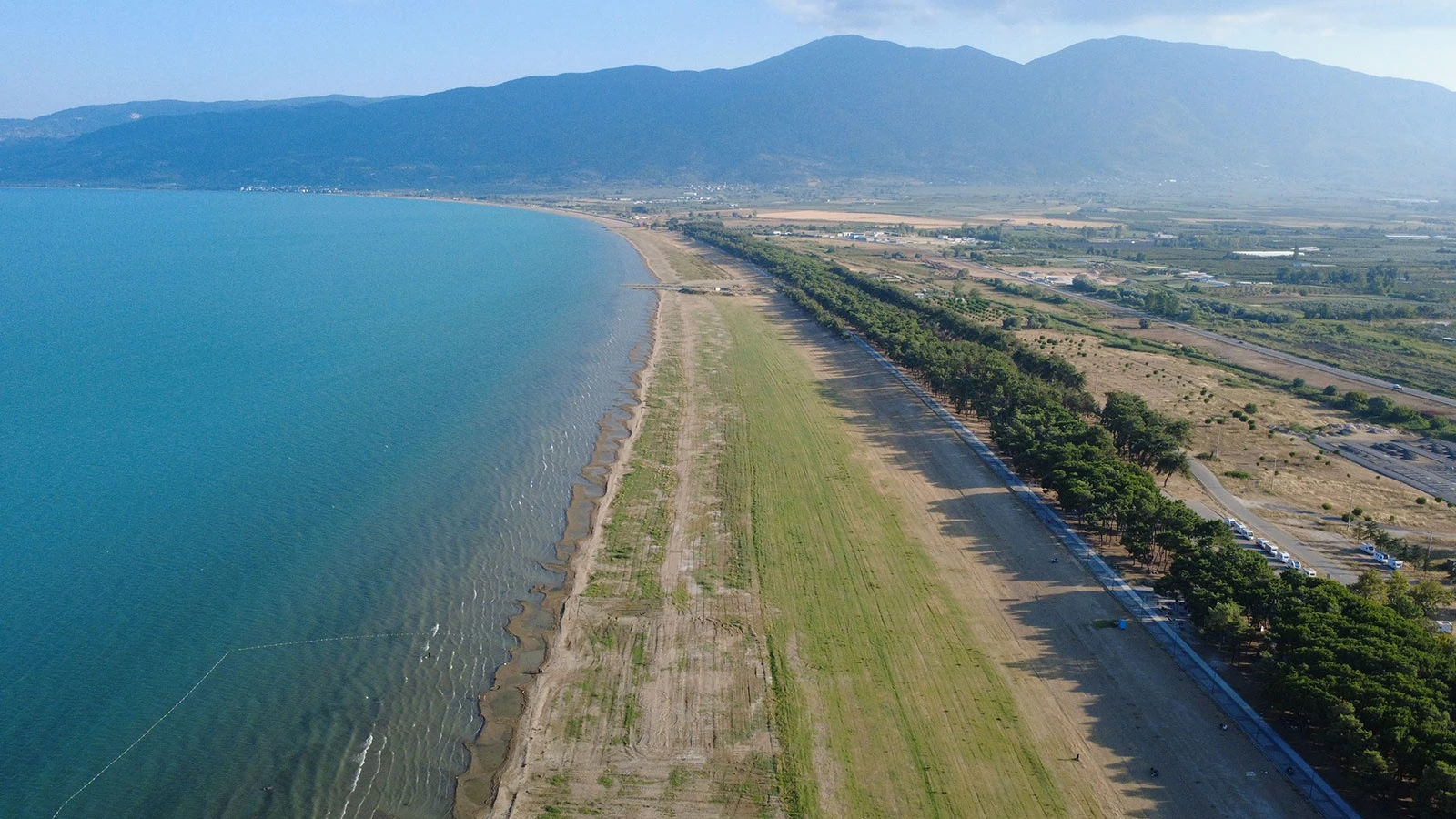
The effects of the climate crisis in Türkiye are becoming more evident in lakes and wetlands. Lake Iznik, the largest natural lake in the Marmara Region and the fifth largest in Türkiye, has entered a critical period due to drought, high temperatures, evaporation and increased water use in recent years. Iznik Lake, which has a surface area of approximately 298 square kilometers, extends approximately 32 kilometers in the east-west direction. The lake is important not only because of its natural beauty. In the records of the Ministry of Agriculture and Forestry, it is stated that Iznik Lake is an extremely important resource for the region in terms of irrigation, industrial water supply, aquaculture production, swimming, amateur fishing and water sports. The lake, which has tectonic origin and fresh water feature, gives a clue about the water future of not only Bursa but also Türkiye. Experts point out that, in addition to temperature increase and evaporation, intensive water use for agricultural and industrial purposes increases the pressure on Iznik Lake.
DROUGHT EFFECT
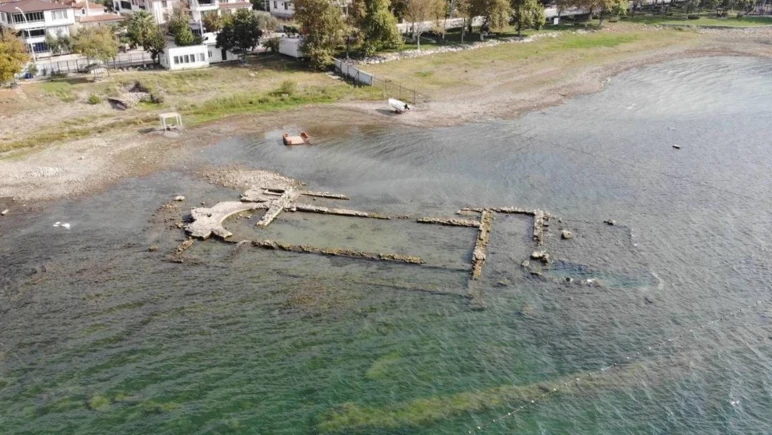
One of the reasons for the withdrawal images that have emerged in Iznik Lake in recent years is the increasing drought pressure. Meteorological data reveal that precipitation is becoming increasingly irregular and temperatures are rising in the Marmara Region, which includes the lake. A similar picture draws attention throughout Türkiye. Accordingly, rainfall in 2025 was 27.6 percent below the normal level and 22.8 percent below the rainfall in 2024. Thus, the annual areal rainfall across Türkiye dropped to the lowest level in the last 61 years. Drought pressure has not completely disappeared in 2026. An average of 23.7 millimeters of precipitation was recorded across Türkiye in June. While the 1991-2020 normal for June was 33.6 millimeters, the amount of precipitation remained 30 percent below normal. Especially in most of the Marmara Region, it was observed that rainfall decreased by more than 80 percent compared to long-term averages. Temperatures also remained high during the same period. While Türkiye’s average temperature in June 2026 was 22.3 degrees, 0.5 degrees above the long-term average, the month was recorded as the 11th hottest June in the last 56 years.
LAKES UNDER PRESSURE
The decrease in precipitation and the increase in temperatures directly affect not only Iznik Lake, but also lakes and wetlands throughout Türkiye. While the surface and underground water resources feeding the lakes are weakening with decreasing precipitation, evaporation increased by high temperatures further accelerates water loss. 350 According to the data shared by Türkiye, 36 lakes in Türkiye have dried up completely in the last 50 years, while 14 lakes are at risk of drying up. The main problem that experts focus on is the fact that drought cannot be explained by the decrease in rainfall alone. Intensive use of surface and groundwater for agricultural irrigation, illegal wells, water withdrawal for industry, construction in basins and increased evaporation all simultaneously affect the water budget of lakes.
THE ECOSYSTEM IS SHAKING
Iznik is also an important bird area. The reeds around the lake provide habitat for many species such as little cormorant, night heron, tern, tawny heron, little egret and gray heron. It also hosts a significant number of waterfowl during the winter months. Water loss in the lake does not only mean a decrease in the amount of water. Low water levels for a long time create a risk that can affect the entire ecological chain, from coastal ecosystems to reed beds, from fish populations to bird habitats..
LAKE WATER IS BEING POLLUTED
Turkish Nature Conservation Association (TTKD) scientific advisor Dr. Erol Kesici pointed out that heavy metal levels should be checked in lettuce and curly leaf salad samples grown in areas irrigated by Iznik Lake and listed the following warnings: “Chemicals from industrial and domestic fuel pollute the lake water. “Especially in the last 15 years, there has been an increase in cyanobacteria in our country’s inland waters and Iznik Lake due to pollution and warming, and this causes fish deaths.” Pointing out that there are more than one factor behind the lake’s retreat, Kesici says, “The decrease in rainfall weakens the surface waters that feed the lake, while the rise in temperature increases evaporation. When water withdrawals for agricultural production in the surrounding area, industrial use and illegal water use are added, the pressure on the natural water balance of the lake increases.”
(email protected)
