
A remarkable find was unearthed during archaeological excavations carried out on Lilla Karlsö Island off the coast of Sweden’s Gotland.
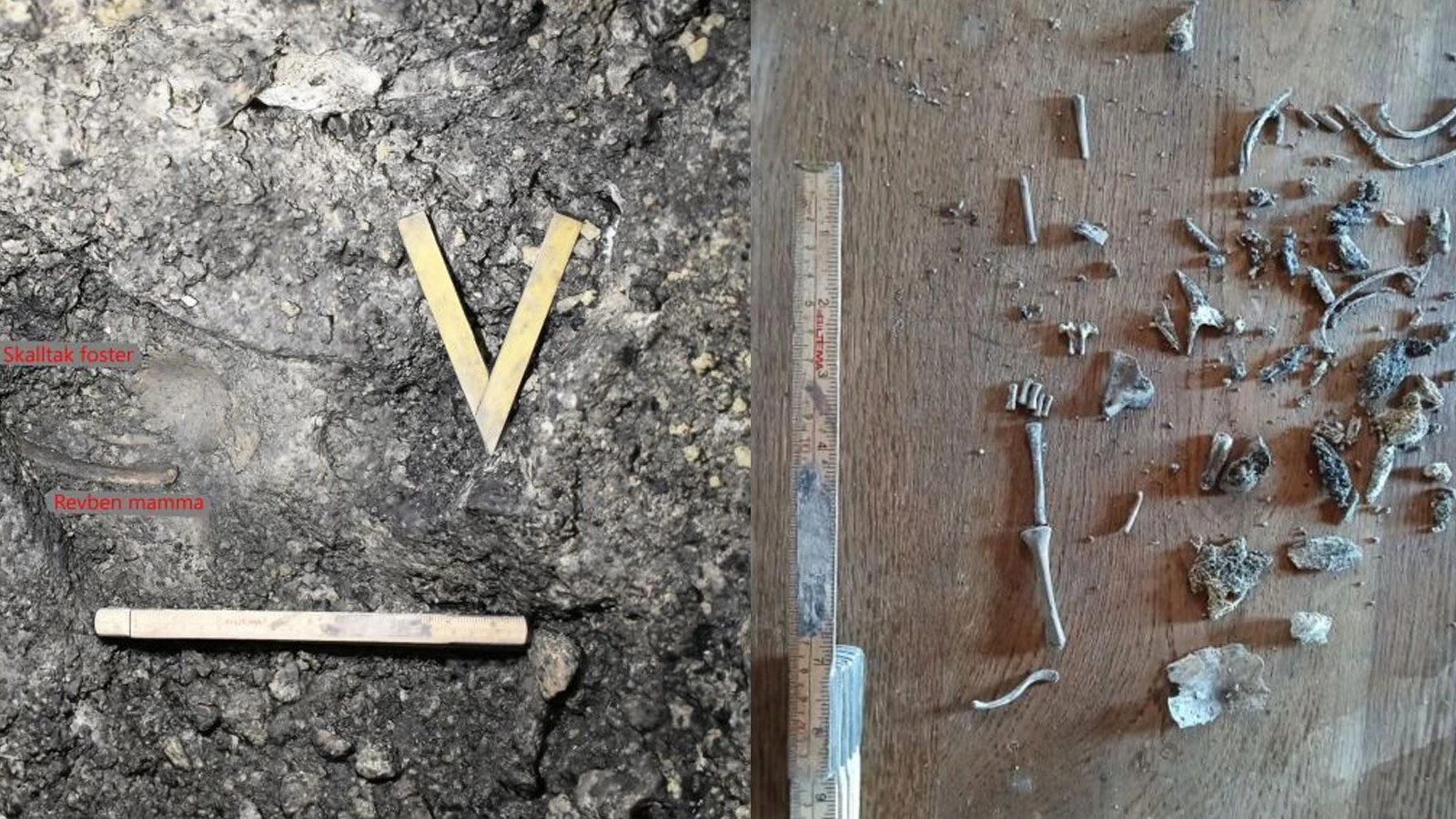
Archaeologists discovered the bones of a young woman and the remains of a fetus at a depth of approximately 5 meters in the cave called Suder Vagnhus.
THEY NOTICED THE SMALL BONES FIRST
Archaeo-osteologists Alexander Sjöstrand and Olivia Bartholdson, who carried out the excavations, first encountered a very small bone.
As the examination progressed, it was understood that the bones found belonged to a fetus. Then, ribs, hips and other skeletal parts belonging to the young woman were unearthed.
It was reported that the skull and neck bone of the fetus were also preserved. Based on researchers’ initial assessment, the fetus is thought to be approximately 32 to 34 weeks old.
IT WAS UNDERSTANDING THAT THE YOUNG WOMAN WAS PREGNANT
The position of the fetal bones relative to the woman’s skeleton led the researchers to an important conclusion. The findings indicate that the young woman was pregnant at the time of her death.
According to preliminary investigations, the woman is estimated to be in her late adolescence.
IT MAY BE 9 THOUSAND 500 YEARS OLD
The exact age of the remains has not yet been determined. The researchers did not directly radiocarbon date the bones.
However, due to the archaeological layer where the remains were found and other finds at the same level, it is estimated that the mother and fetus may date back to 8,000 to 9,500 years ago.
Therefore, the dating of the discovery as approximately 9 thousand years old is a preliminary estimate for now. Radiocarbon dating and ancient DNA analysis are planned.
IT MAY BE ONE OF THE OLDEST EXAMPLES IN SWEDEN
If the estimated date is confirmed, the discovery would be one of the oldest known Stone Age graves of a pregnant woman in Sweden. It is stated that it may be among the oldest archaeological examples in the world where a mother and fetus are found together.
Other human bones, thought to belong to at least one child, were also found in the cave. This raised the possibility that the cave might have been used as a burial site in the Stone Age.
Researchers now aim to obtain more information about the woman’s age, origin and death through dating and DNA analysis.
