
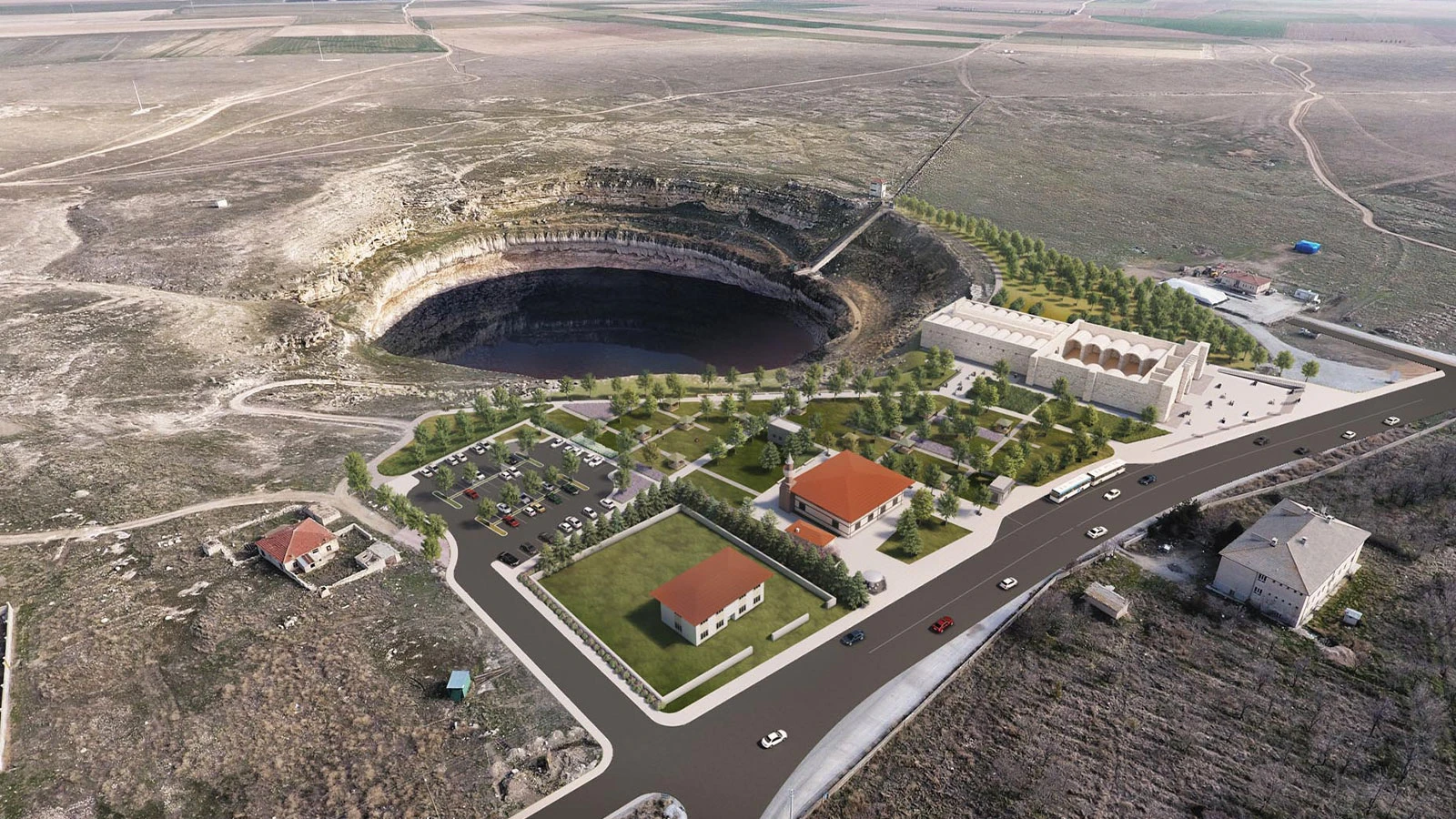
The rapid withdrawal of groundwater in the Konya Closed Basin triggers a process that collapses not only agriculture but also the soil itself. Years of drought, unconscious irrigation and wrong water-based agricultural policies have created a situation in the basin that is becoming increasingly difficult to reverse. While the number of sinkholes formed by the collapse of underground spaces onto the surface has reached 657, the risk spreads to a wide geography of Central Anatolia. One of the main reasons behind this underground fracture is agricultural water consumption. Konya, known as the grain warehouse of Türkiye, continues to be one of the most critical centers of the country’s agriculture with its production volume and cultivation area. However, the deepening drought in recent years, the rapid decrease in groundwater levels and the product pattern in which water-sensitive products predominate are dragging Konya’s agriculture into an increasingly fragile structure.
THE HEART OF AGRICULTURE
Current data reveal that the scale of production should be discussed as well as how and with what resources this scale is maintained. The total agricultural land in Konya is approximately 2.2–2.3 million hectares. 55, 60 percent of this area is considered as dry agriculture and 40, 45 percent is considered as irrigated agriculture. The city, which hosts approximately 8.9 percent of the cultivated agricultural areas throughout Türkiye, produces production at a size approaching the total cultivation area of many countries. This scale brings Konya to a strategic point not only in terms of regional but also national food security.
GRANARY
When looked at on a product basis, the backbone of Konya’s agriculture is grain. Wheat is the product with the largest cultivation area in the city. While the cultivation area exceeds one million hectares, annual production is around 3 million tons. Approximately 10 percent of Türkiye’s wheat production comes from Konya. However, the fact that production is largely based on dry farming causes even the slightest deviation in the rainfall regime to cause sharp fluctuations in the yield. Barley stands out as the second basic grain product after wheat in Konya agriculture. Annual production is around 1.3 million tons.
CORN SINKLETS ARE INCREASING
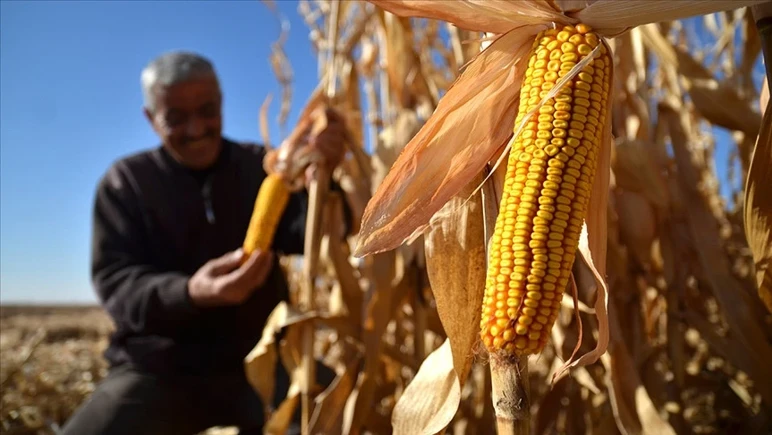
Sugar beet is one of the main products that differentiate Konya throughout Türkiye. While the beet cultivation area in the city is around 200-230 thousand hectares, annual production reaches 7 million tons. With these figures, Konya ranks first in Türkiye’s sugar beet production. A similar picture draws attention in corn production. When grain and silage corn are evaluated together, the annual production in Konya is at the level of 3 million tons. The rapid increase in corn cultivation areas in the last 15 years has increased the share of irrigated agriculture and deepened the dependence on groundwater. According to experts, corn is among the products that increase the risk of sinkhole formation due to its high and regular irrigation need.
WRONG PRODUCT PATTERN
The main problem in Konya stands out as the incompatibility of the product pattern with the water potential of the basin, rather than the amount of production. Despite limited underground water reserves, the expansion of planting areas of high water-consuming crops such as sugar beet, corn and alfalfa accelerates the formation of sinkholes. Climate Analyst Dr., who continues his postdoctoral studies at the University of Nebraska. Gültekin Yılmaz emphasizes that in the Konya Basin, products that consume high water, especially sugar beet, corn and alfalfa, have already exceeded the carrying capacity of the basin. Latest data show that the diversity of bird species in the basin is at risk of extinction by 22 percent and endemic fish species by 61 percent.
DISTRICTS ARE AT RISK
Chamber of Geological Engineers Konya Branch President Şükrü Arslan points out that Konya has become the epicenter of sinkhole formation in Türkiye. Stating that 534 of the 657 sinkholes recorded to date are in Karapınar, Arslan emphasizes that this number is increasing every year. Arslan also said that sinkholes He underlines that it has recently started to be seen in districts such as Ereğli, Halkapınar, Emirgazi, Çumra, Cihanbeyli, Kulu, Yunak, Çeltik and Altınekin.
WATER FLOWS TO WASTE
Defining the resulting picture as “a terrible waste”, Water Policy Association President and former DSI manager Dursun Yıldız states that approximately 60 percent of the water withdrawn from the Konya Closed Basin cannot be used due to network inadequacies. YAccording to Yıldız, 400 million cubic meters of water is wasted annually in the Konya plains. Selçuk University Geological Engineering Department Lecturer Prof. Dr. Fetullah Arık is one of the scientists who pointed out that the number of sinkholes in the basin is much higher than official records. According to Arık, the number of sinkholes formed in the Konya Basin has exceeded 2,500.
(email protected)
