
Tehran’s spiral of violence
Escalation scenario: Iran threatens to attack oil facilities in the Gulf
From t online, afp, Reuters
Updated June 8, 2026 – 1:48 p.mReading time: 2 minutes

Iran launches new missile attacks on Israel. The regime is threatening an escalation of violence in the Gulf – with dramatic consequences for the world.
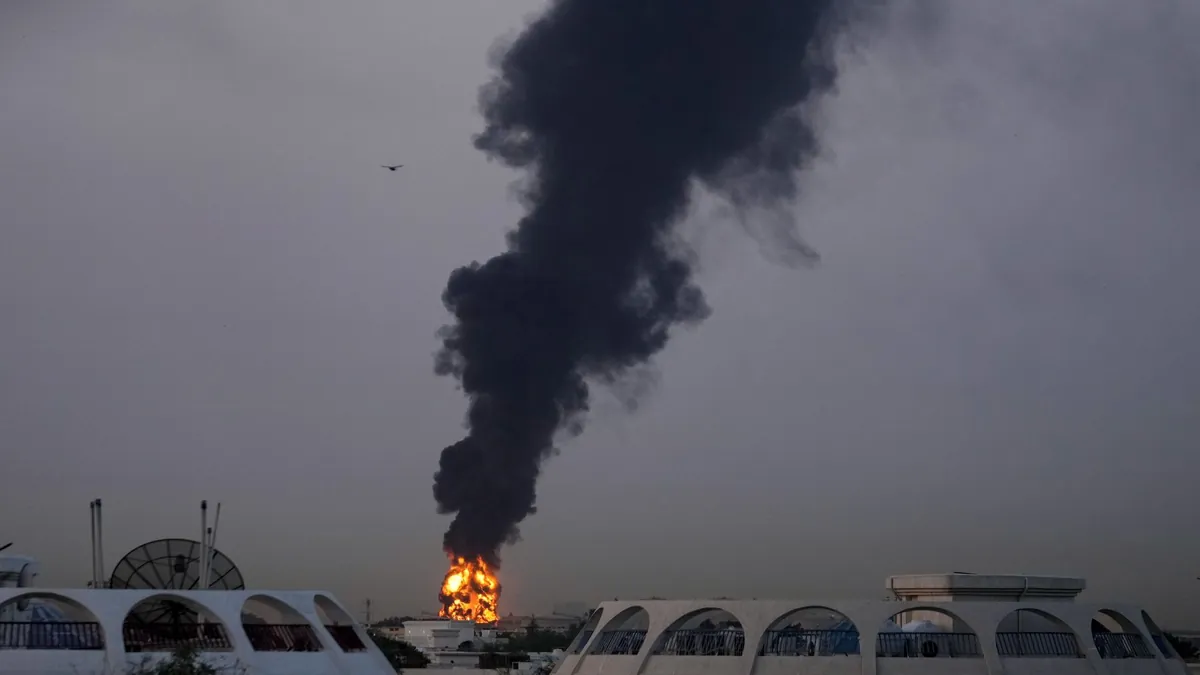
On Monday night, Iran launched new missile attacks on Israel. Benjamin Netanyahu’s government responded with counterattacks. Among other things, an important oil facility in Iran was hit. US President Donald Trump urged both sides to stop the attacks. Now the regime in Tehran is warning of a drastic increase in violence.
The Iranian news agency Fars reported on Monday, citing a high-ranking Iranian military officer, that there would be dramatic consequences if further attacks on the country’s energy infrastructure occurred. Accordingly, “all oil and gas facilities associated with Israel, the USA and their allies – including regional energy facilities – are legitimate targets” of the Iranian army.
- Overview: All developments in the Iran news blog
- Drones: Trump delays deal with Kyiv – with fatal consequences for US troops in the Gulf
Officially, the USA and Iran continue to try to reach an agreement to end the fighting. According to Iranian sources, there was already a pact ready to be signed. However, US President Donald Trump insisted on additional changes.
Iran threatens to expand the combat zone
Iran believes it is in a good negotiating position. According to the Iranian assessment, Trump does not have an exit strategy. Tehran sees its own advantages as follows: Control of the Strait of Hormuz is already driving up oil prices worldwide. The cost of energy raw materials also rose on Monday.
With drone attacks on Gulf states, Iran is also hitting the business model of its US allies. A study by the GIS research institute warned last week:
“The most immediate long-term economic threat lies not in fuel prices per se, but in rising food costs and disruptions in the production of sophisticated technology.”
GIS expert Bob Savic further warned: “A second phase of military action, including attacks on Iran’s nuclear facilities and energy infrastructure, could prompt Tehran to retaliate against oil fields in the Gulf region.”
Possible consequences in this scenario are described as follows: “The helium supply from Qatar comes to a complete standstill, resulting in a six-month disruption to global semiconductor production. Sulfur shortages cause a 50 percent decline in global fertilizer production and trigger food shortages in countries such as Egypt, Bangladesh and Nigeria.” A new wave of escalation is threatening, and not just in the Gulf.
