
A rare space rock discovered in the Sahara Desert has revealed a game-changing fact about the formation process of the Solar System approximately 4.5 billion years ago.
When scientists examined this approximately half-kilogram meteorite, called “NWA 12774”, they found the first definitive evidence of a huge planet that existed in the early stages of our system but later disappeared completely.
Chemical analyzes show that this lost world existed only a few million years after the Solar System formed and followed a completely different evolutionary path in planet formation.
Mystery shaped under high pressure
These special stones, known as “angrite”, of which there are only 68 examples among more than 80 thousand meteorites found around the world, are among the oldest volcanic rocks in the Solar System. The most important element that made these meteorites mysterious was their chemical structure.
Unlike rocky planets like Earth or Mars, these rocks were extremely low in silica, the main component of the planet’s crust. Therefore, experts assumed that the stones broke away from a small asteroid. However, special aluminum-rich crystals detected in the rock during recent investigations proved that this stone was formed under tremendous pressure.
An ancient planet the size of the Moon and Mars
Simulations made in a laboratory environment revealed that more than 17 times the pressure at the bottom of the Mariana Trench, the deepest point on Earth, was needed to form the minerals in the meteorite.
Since it was impossible for such a high pressure to occur in a small asteroid, it was understood that the main body from which the stone broke off must have a very large mass. Moreover, the structure of the crystals indicates that this high pressure occurs not in the depths of the planet, but in shallow regions near the surface.
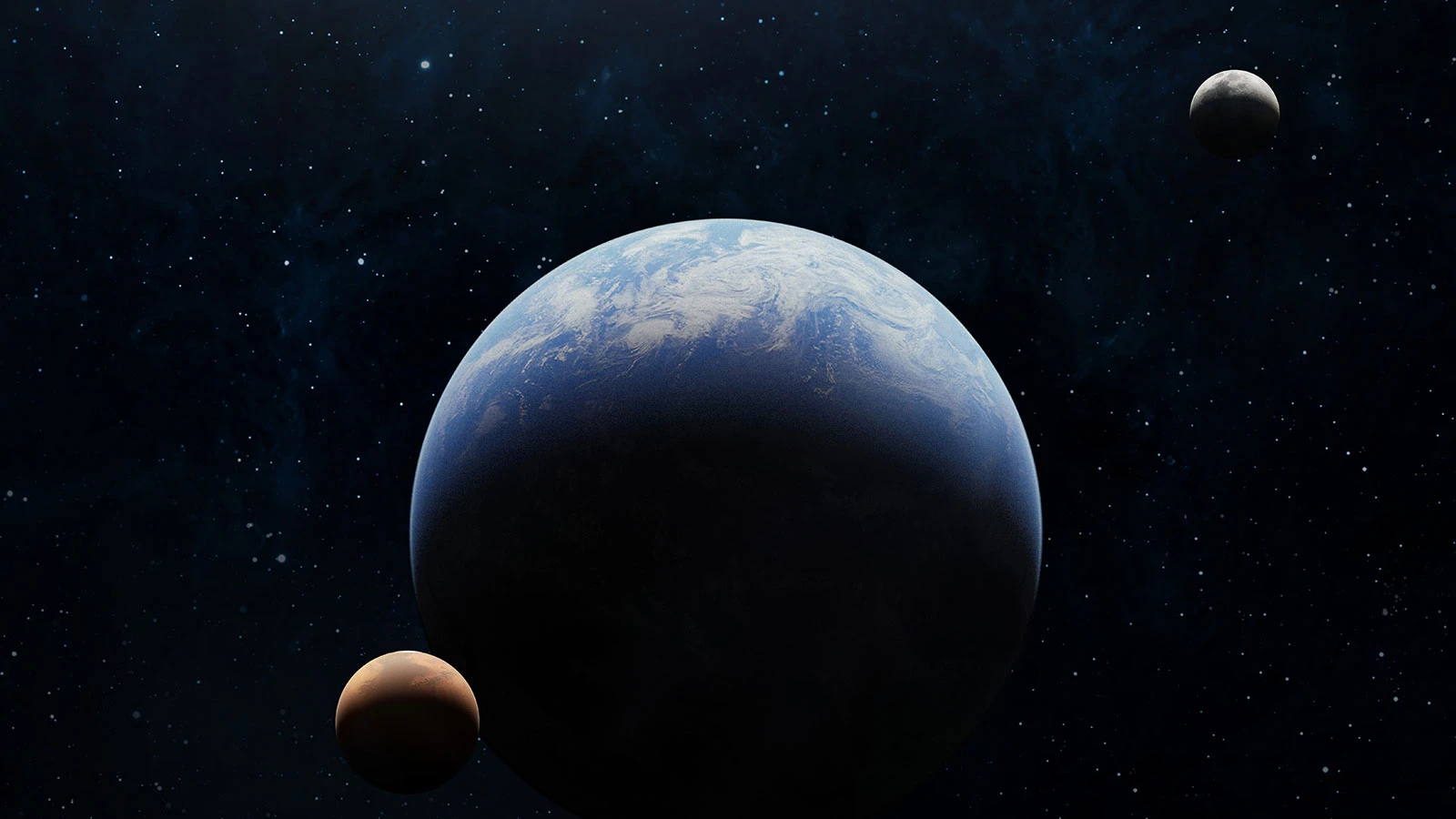
When all these data are brought together, it is calculated that the newly discovered lost planet has a gigantic structure at least the size of the Moon, and perhaps even the size of Mars.
Planets destroyed by collisions
The fate of this ancient planet, which created great excitement in the scientific world, is not yet fully known.
Researchers think that this huge world may have been torn apart in one of the violent and chaotic collisions that the Solar System witnessed when it was still in its infancy.
Some of the small pieces remaining from this extinction were mixed into the structure of other rocky planets, including the Earth, over time.
Experts emphasize that there are many meteorites waiting to be examined in laboratory drawers, and that traces of more lost proto-planets may be found in the future with similar studies.
