
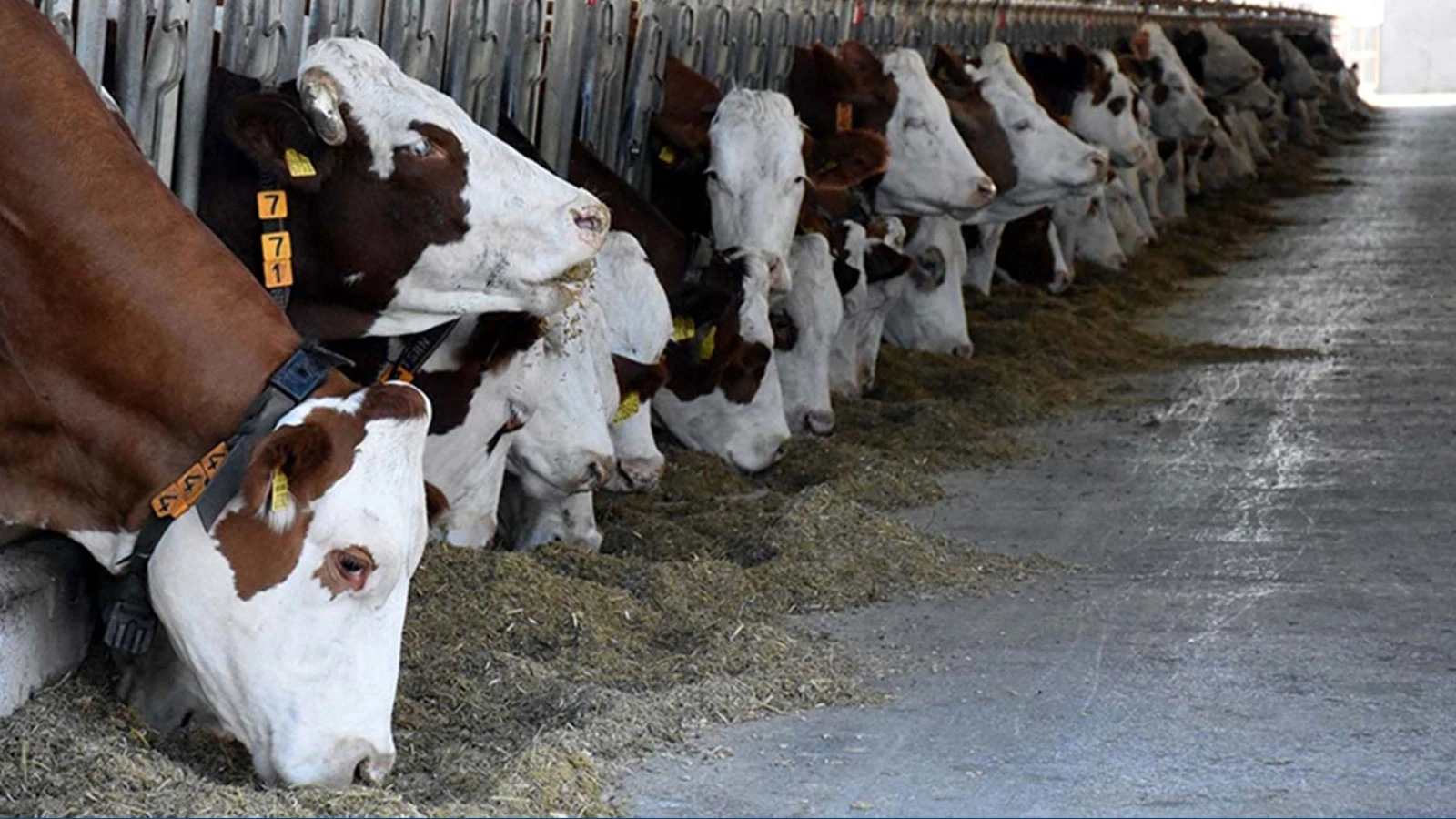
Şemsi Bayraktar, Chairman of the Union of Chambers of Agriculture of Turkey (TZOB), stated that 3 million 300 thousand sacrificial animals, including 750 thousand cattle and 2 million 550 thousand sheep, are planned to be slaughtered during the Eid.
In his statement regarding Eid al-Adha and sacrificial animal prices, Bayraktar pointed out the importance of the Eid for the country’s economy.
Pointing out that the purchase and sale of sacrificial animals brings with it a wide range of commercial activity, from the feed industry to veterinary services, from transportation to market area rents, from slaughtering services to the leather and offal economy, Bayraktar said, “Considering the sacrificial sales data of recent years, it is estimated that 3 million 300 thousand sacrificial animals will be slaughtered. It is estimated that 750 thousand of the sacrificial animals will be cattle and 2 million 550 thousand sheep. Prices and sales methods of sacrificial animals vary by province. Sales in some regions “While the price is based on the live kilogram or carcass meat price, in some regions, live animal sales or share sales are applied. It seems that slaughter fees are also included in the sales price, especially in metropolitan cities.” made his assessment.
Bayraktar stated that, according to the data they received from the chambers of agriculture, the price of sacrificial cattle is around 120 thousand lira-450 thousand lira, and that of small cattle is around 15 thousand lira-45 thousand lira, and that the share prices vary between 25 thousand-60 thousand lira on average.
Providing information about the economic value of sacrificial animals, Bayraktar continued as follows:
“Considering that the live kilogram price of a cattle with an average live weight of 400 kilograms will be 411 liras and 19 kurus, it is estimated that the amount to be paid for approximately 750 thousand animals to be slaughtered during the holiday will reach 123 billion 357 million liras. Assuming that the average sales price for small cattle will be 26 thousand 900 liras, the amount to be paid for approximately 2 million 550 thousand animals is 68 billion 595 million “It is estimated that our people will spend approximately 192 billion liras in total for approximately 3 million 300 thousand sacrificial animals.”
“LEATHERS ARE IMPORTANT RAW MATERIALS FOR THE INDUSTRY”
Bayraktar stated that it is important to fully meet the basic needs of producers in the sacrificial markets.
Reminding that the skins obtained from millions of cattle and sheep to be slaughtered during Eid al-Adha are important raw materials for the leather and textile industry, Bayraktar made the following evaluation:
“However, due to the problems experienced in the leather collection and processing processes in recent years, this economic value cannot be evaluated sufficiently. Due to the increase in collection costs, stagnation in the market and the decrease in the number of leather collectors, in many regions the skins either change hands at very low prices or are lost without being collected at all. Losses especially in small cattle skins have reached remarkable levels. Butchery services also constitute an important area of economic activity during the Eid al-Adha period. Butchers demand different fees depending on the slaughtering, skinning and chopping operations. For cattle, only slaughtering, skinning and quartering are possible. It is estimated that the total amount to be paid for butchery services will reach approximately 8.2 billion liras, while slaughtering fees for small cattle vary between 1500 liras and 2500 liras. In addition, offal products such as heads, tripe and intestines are also an important economic item. creates value.”
Bayraktar noted that if sales are not at the expected level during the holiday period, it is of great importance to purchase the remaining animals at prices that will not cause inconvenience, taking into account the additional expenses incurred by the producer by the Meat and Milk Institution.
