
Common remembrance
Reconciliation March commemorates victims of expulsion
Updated on May 23, 2026 – 12:57 p.mReading time: 2 minutes

Moving words at a mass grave and a march against forgetting: How Germans and Czechs stand up for a common future with a hike from Pohorelice to Brno.
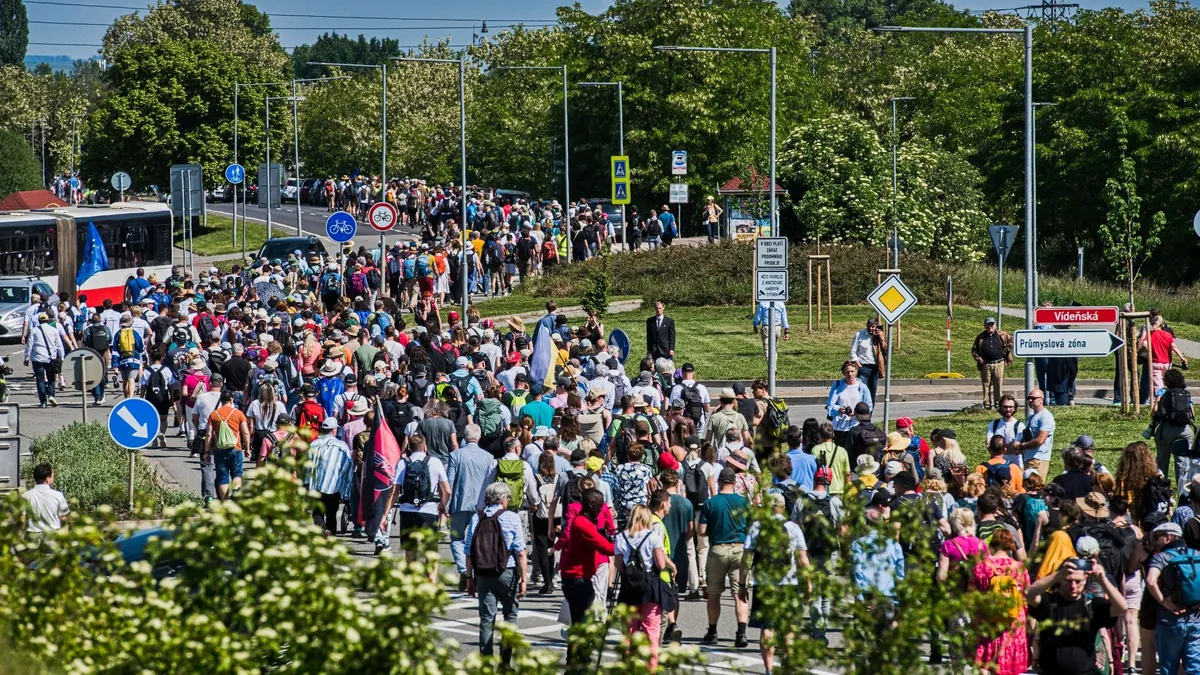
Germans and Czechs jointly remembered the victims of expulsion after the Second World War. According to the organizers, around 1,300 people took part in a reconciliation march that began at the site of a mass grave in Pohorelice, around 25 kilometers south of Brno. “The graves at which we symbolically stand today are witnesses of deep suffering,” said Federal Interior Minister Alexander Dobrindt, who traveled from Germany.
The CSU politician praised the initiators of the “Meeting Brno” dialogue festival event: “You are true bridge builders,” emphasized the 55-year-old. Reconciliation requires courage and the willingness to listen. It’s not about balancing guilt against each other. “European friendship is the bulwark against any new nationalism,” emphasized Dobrindt.
The event was overshadowed by isolated counter-protests. The police were on site with, among other things, an anti-conflict team. A memorial stone at the mass grave was defaced with swastika graffiti by unknown perpetrators.
First Sudeten German Day in Brno
This year, the dialogue festival “Meeting Brno” invited the Sudeten German compatriots to the second largest Czech city. The displaced persons’ association is holding its Pentecost meeting, the Sudeten German Day, in the Czech Republic for the first time. The expulsion was injustice, “like any collective guilt,” said the spokesman for the Sudeten German ethnic group, Bernd Posselt, in Pohorelice. He called for lessons to be learned and to pave the way for a future of human rights and freedom.
Czech government members stayed away from the commemoration event. In a resolution, the majority of the House of Representatives spoke out against holding the Sudeten German Day in the Czech Republic.
Way in reverse direction
The Reconciliation March, called the Reconciliation Pilgrimage (pout smireni) in Czech, follows the so-called “Brno Death March” in the opposite direction: In May 1945, around 27,000 German-speaking residents of Brno were driven to the Austrian border. More than 2,000 people, mostly women, children and the elderly, did not survive the hardships. Some estimates even put the number at more than 5,000 dead.
After the Second World War and the horrors of the National Socialist occupation, a total of around three million Sudeten Germans were expelled from what was then Czechoslovakia. Most found a new home in the Federal Republic and what was then the GDR. The main receiving countries were Bavaria, Hesse, Saxony-Anhalt and Thuringia.
