
War
440 kilos of uranium: central point of contention with Iran
Updated May 11, 2026 – 10:47 amReading time: 4 minutes

It is likely to be stored deep underground in two nuclear facilities. The whereabouts of the highly enriched uranium remains the main conflict with Tehran. Netanyahu sees his rescue as a condition for an end to the war.
From the perspective of Israeli Prime Minister Benjamin Netanyahu, the war with Iran can only be ended once highly enriched uranium has been removed from the country. Netanyahu confirmed in an interview with the US broadcaster CBS on the program “60 Minutes” that the enriched material must be completely “removed from Iran.”
Tehran’s nuclear program is seen as the biggest sticking point in efforts to resolve the conflict. According to experts, there is enough material in the Islamic Republic to build several nuclear bombs – in particular, around 440 kilograms of uranium enriched to 60 percent raises questions.
What is known about the whereabouts of the enriched uranium?
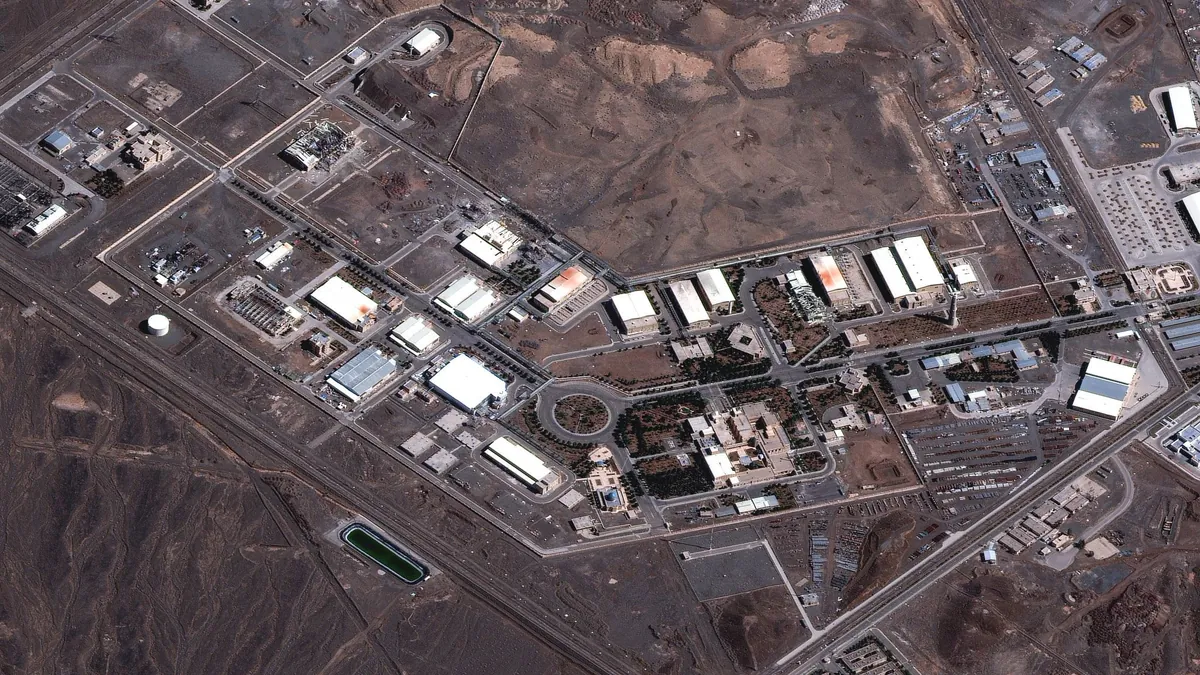
According to Rafael Grossi, head of the International Atomic Energy Agency (IAEA), most of the material is likely to be stored in underground tunnels at the Isfahan nuclear site, with another part in the nuclear facility in Natans. However, since the Israeli and US attacks on Iran’s nuclear program, the IAEA no longer has access to the affected facilities and therefore no independent control over the material suspected to be there.
Before the first attacks on the nuclear program in June 2025, US nuclear expert David Albright estimated that Iran could further enrich the 60 percent uranium to weapons-grade 90 percent within a few weeks. According to experts, it would take at least six months or even significantly longer to build a nuclear bomb from it.
How realistic is it to recover the material?
US President Donald Trump has stated in the past that he wants to physically mine the uranium. It should then be brought to the USA. There was a contradiction from Tehran: transferring the material to the USA was never an option.
IAEA boss Grossi told PBS that recovery was in principle possible, but required safety precautions. The gaseous uranium is in cylindrical containers. According to Grossi, the greatest danger comes from the toxicity of the material. Comparatively simple protective measures such as respiratory protection could help against radioactive radiation.
How likely is a military operation for forced rescue?
The Israeli Iran expert Danny Citrinowicz believes that military access to the storage locations is theoretically possible, but in practice it is extremely difficult. An operation would mean bringing the Isfahan and Natan nuclear facilities and their surroundings under control over several days – under hostile conditions and presumably sustained counterattacks. Mined areas can also be assumed. Overall, it is an “extremely complex process” with an uncertain outcome, he said in an interview with the German Press Agency. “If it were that easy, it would probably have been done a long time ago.”
Is the rescue done?
Even securing the material would not solve the basic problem. Several tons of additional uranium stocks as well as Iran’s technical know-how were preserved. IAEA chief Grossi has indicated that Iran could rebuild its uranium enrichment facilities destroyed by Israel and the US.
