
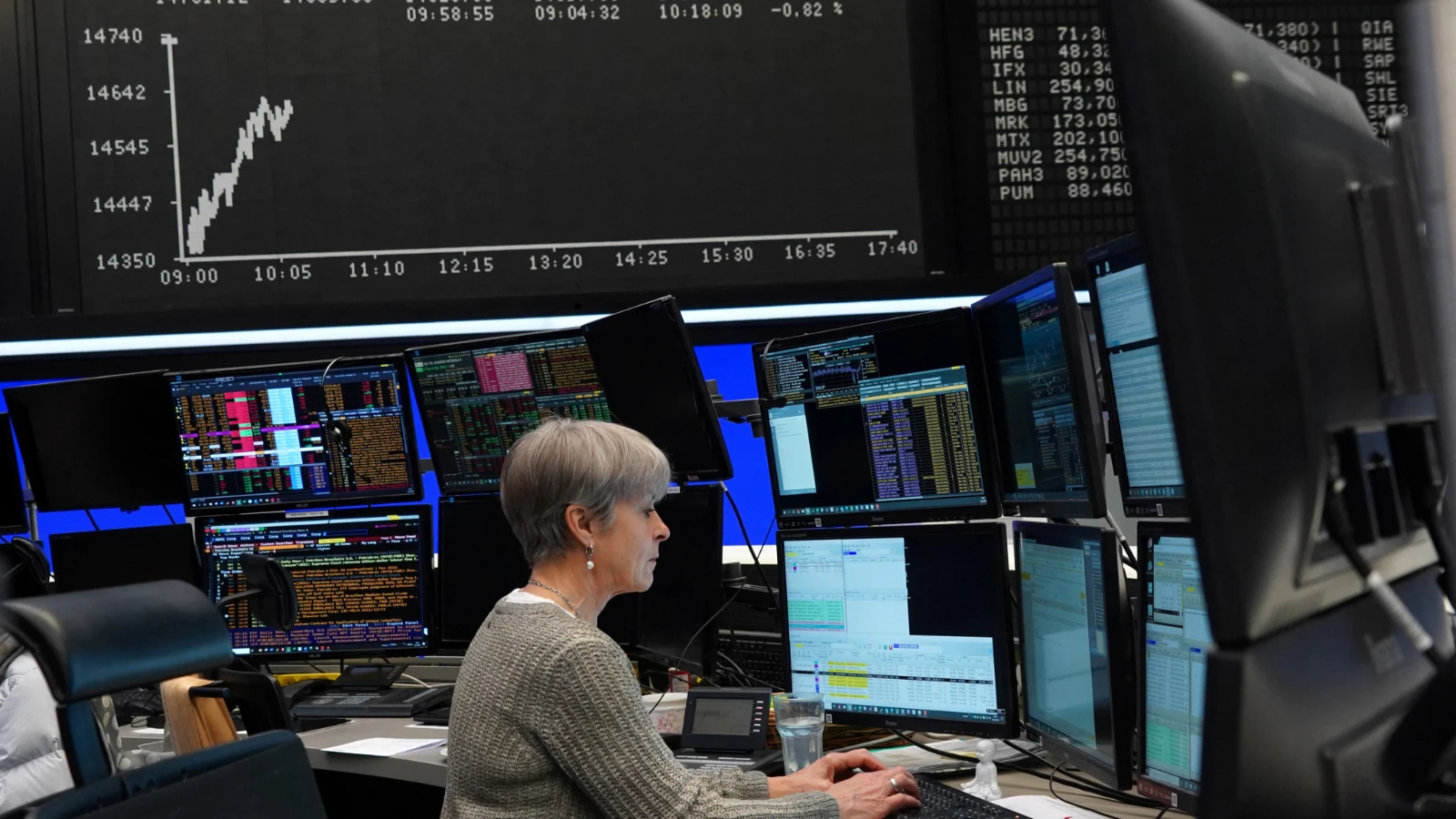
A mixed trend is observed in European stock markets due to the fact that there is no consensus yet on the tension in the Middle East.
While the conflicts and tension between the USA/Israel and Iran, which has reached its second month, continues to be the main agenda item for investors, the closure of the Strait of Hormuz and increasing energy costs cause global inflation expectations to increase.
With these developments, a mixed trend stands out on the European side, with investors avoiding taking risks.
As of 10.30 in European markets, the Stoxx Europe 600 indicator index is at 608 points, with a 0.1 percent decrease, and the FTSE 100 index in the UK is at 10,330 points, with a 0.1 percent increase.
In Germany, the DAX 40 index is at 24,019 points with a 0.3 percent decrease, in Italy the FTSE MIB 30 index is at 48,035 points with a 0.8 percent premium, in France the CAC 40 index is at 8,135 points with a 0.1 percent loss, and in Spain the IBEX 35 index is at 17,817 points with a 0.7 percent increase.
While increasing energy costs in Europe continue to remain the focus of the region, energy prices stand out as the main risk in terms of both efficiency and economic stability in the future.
Due to the Strait of Hormuz still being closed, the barrel price of Brent oil closed the day at 101.9 dollars with an increase of 1.7 percent yesterday, and moved in an upward trend on the new day, rising by 2.1 percent to 103.9 dollars.
While inflationary pressures are expected to gain strength in the region if energy costs continue to remain high, messages regarding the energy field will be closely monitored in the monetary policy decisions of the European Central Bank (ECB) and the Bank of England (BoE), which will be announced on Thursday.
While the statements of officials in the region remain on the agenda, European Union (EU) Commission President Ursula von der Leyen said that dependence on imported fossil fuels creates a serious fragility and makes Europe vulnerable.
Von der Leyen, who attended the workshop of the Christian Union Parties (CDU/CSU) in Berlin, the capital of Germany, stated that they have paid 27 billion euros extra for gas and oil imports without obtaining additional energy since the beginning of the crisis in the Middle East.
Von der Leyen pointed out that Europe is facing its second major energy crisis in 4 years.
Analysts stated that in the rest of the day, the developments in the Middle East as well as the New York Fed consumer confidence index, Richmond Fed manufacturing industry index and housing price index in the USA will be followed.
