
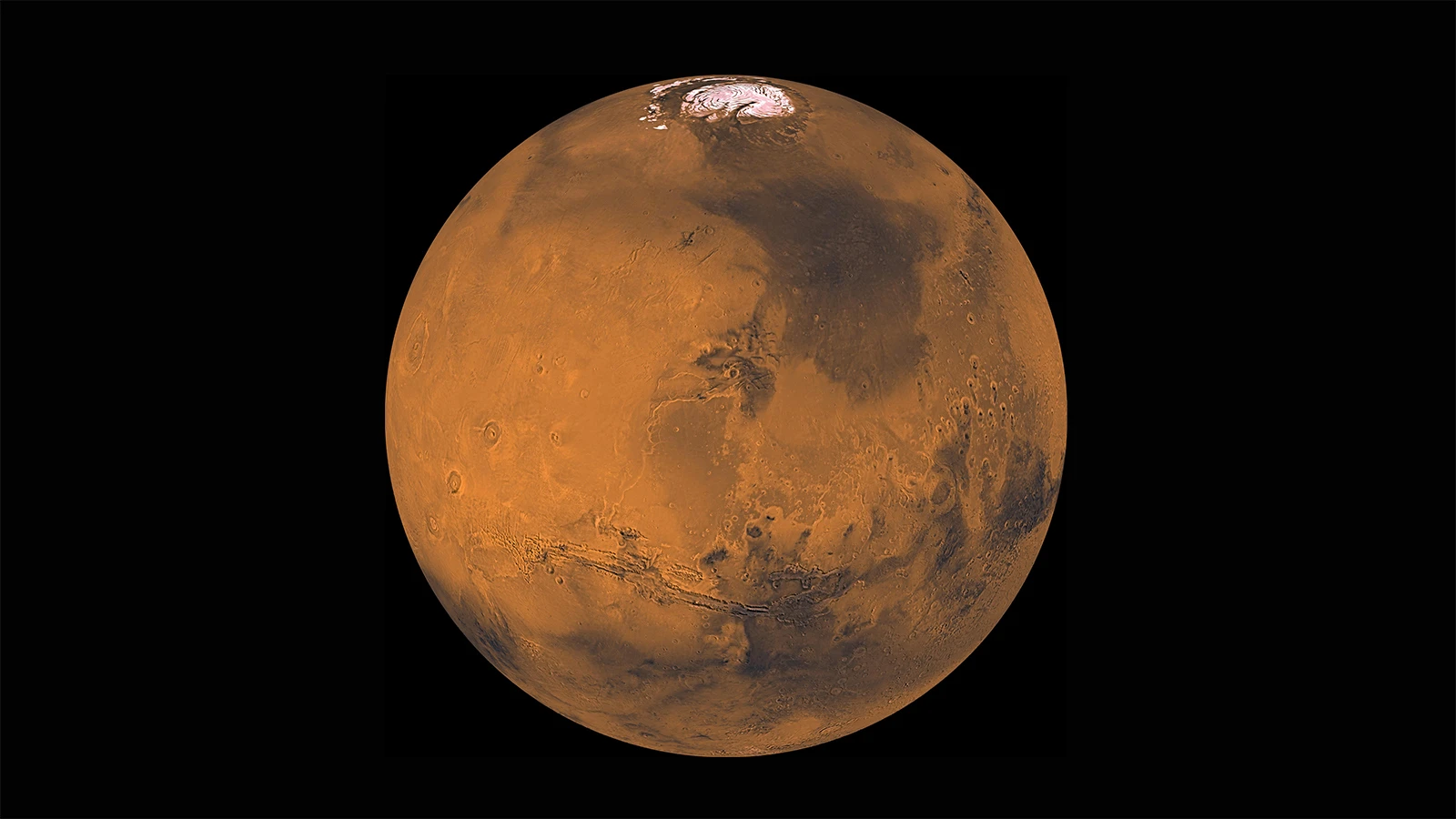
NASA’s Curiosity vehicle, operating on the surface of Mars, obtained new findings pointing to the building blocks of life with a chemistry experiment performed for the first time on another planet.
According to AFP news; While scientists emphasized that the organic molecules obtained do not constitute definitive evidence for the existence of life in the past, they stated that these compounds may have formed on Mars through natural processes or were carried by meteorites.
3 BILLION YEAR OLD TRACES
According to the research team, the findings show that chemical traces older than three billion years have been preserved on the surface of Mars. It is thought that the surface of Mars at that time was covered with lakes and rivers containing liquid water, which is critical for life.
Curiosity landed in Gale Crater, an ancient lake bed, in 2012 and has been searching for signs of past life ever since.
MORE THAN 20 ORGANIC MOLECULES
In the experiment, more than 20 organic molecules were detected. Among these is the molecule called “benzothiophene”, which is also found in meteorites and asteroids.
Scientists state that such compounds were carried to Earth by meteorites and may have contributed to the emergence of life on our planet. It is also stated that a nitrogen-containing molecule detected is one of the precursor substances that play a role in the formation process of DNA.
“THE CHEMISTRY OF LIFE IS PRESERVED”
Astrobiologist Amy Williams, who took part in the research, said that “the building blocks of life and prebiotic chemistry have been preserved” in the rocks on Mars for billions of years. However, it was especially emphasized that these findings do not prove the existence of microbial life on Mars.
According to scientists, rock samples from Mars need to be brought to Earth in order for such claims to be certain.
