
The war started with the attacks of the USA and Israel against Iran; While it causes major disruptions in the maritime, logistics and geostrategic equation, it also directly reshapes the direction of global trade, energy security and supply chains. The developments in the Strait of Hormuz reveal with concrete data how fragile the system is. While before the crisis, an average of 138 ships passed through the Strait daily, this number decreased to 9 ships after the war, and in some periods the decrease reached 95 percent. The fact that only 144 ships passed through Hormuz in March with the start of the war mirrored the great rupture that occurred.
Türkiye IS AT THE CENTER OF THE SYSTEM
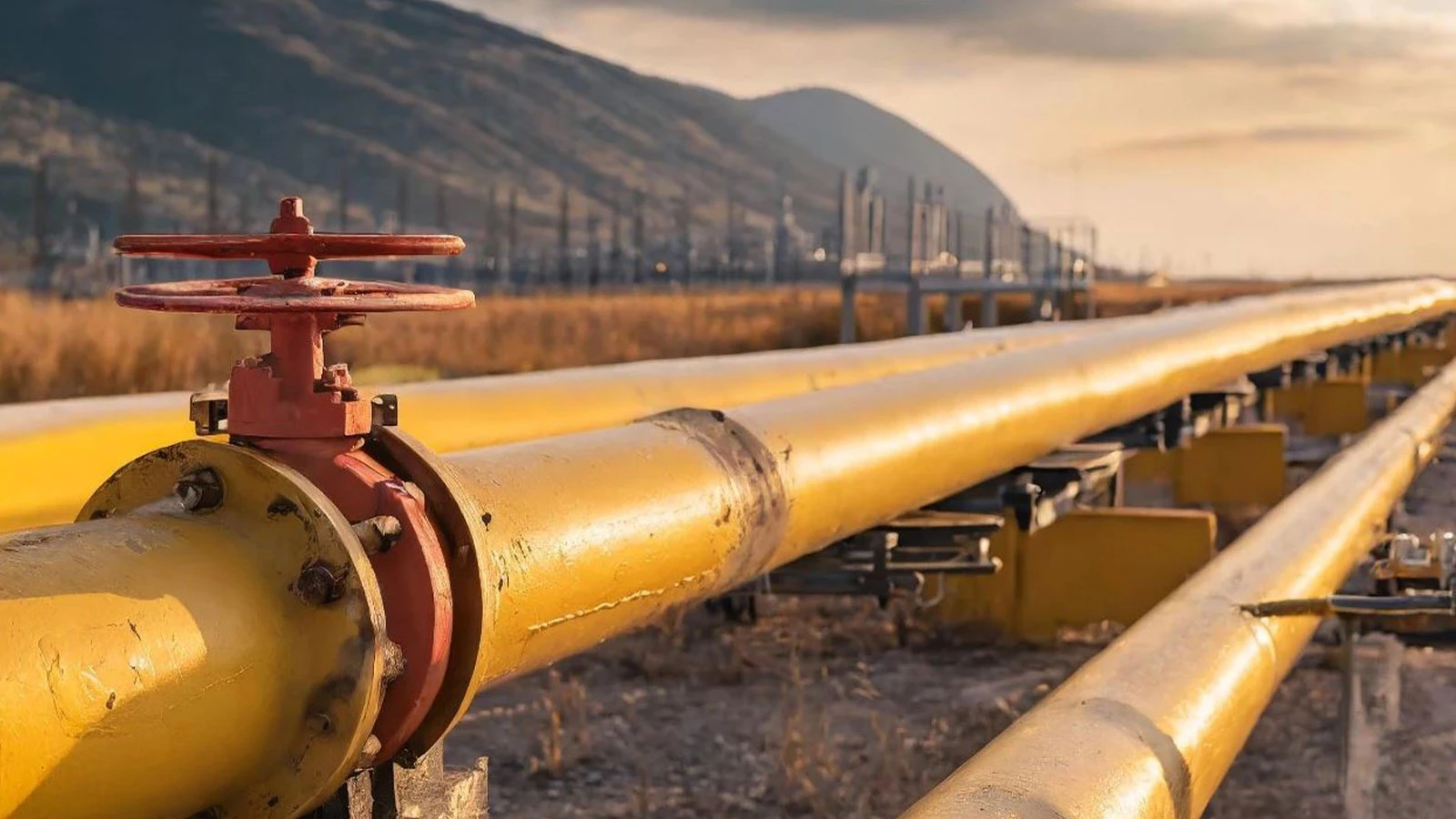
The crisis, as well as electronic warfare threats, flag risks, port policies and the increase in military assets, have turned maritime transportation into a high-cost and unpredictable field. The limited capacity of alternative lines to Hormuz continues to shake global markets. While the total capacity of alternative pipelines that can be provided through Saudi Arabia and the UAE is limited to 4.5 million barrels per day, this amount is far behind the total volume passing through Hormuz. While analysts point out that the global system needs new and safe corridors, they state that Türkiye stands out as an alternative energy and logistics backbone. IThe daily transportation capacity of the Iraq-Turkey Oil Pipeline, approximately 1.5 million barrels, the natural gas flow reaching Europe via TANAP and the energy line established through TurkStream over the Black Sea, places Türkiye at the center of a system that is not dependent on the seas.
COMMERCIAL FLEET IS SHOWING UP
As Europe’s search for supply security accelerates, lines passing through Türkiye stand out in terms of both resource diversity and route security. This situation strengthens Türkiye’s potential to be not only a transit country but also a center that directs the energy flow. On the other hand, Türkiye’s maritime potential has become a strategic complementary element within the global rupture. While the Turkish-owned merchant fleet has grown in terms of capacity and tonnage in recent years, Turkish ports stand out as critical transfer centers on the Mediterranean, Black Sea and Aegean lines.
Türkiye IS THE BONE OF THE SYSTEM
Türkiye’s geostrategic position is also highlighted in the analysis. The heavy traffic passing through the Bosphorus and Dardanelles Straits is of particular importance as it is the only line connecting the Black Sea to the Mediterranean. Experts also point to energy storage, re-export and distribution capacity. While Türkiye has established a structure that provides flexibility in energy trade thanks to LNG terminals and floating storage units; Corporate Marketing, Business and Logistics Specialist Volkan Soykan said, “In this new period when the risk in the seas increases, the reliability of the straits is discussed and trade changes direction, the land-sea integrated infrastructure model offered by Türkiye is gaining value. In the new balance.” Türkiye is not just a transit point with its energy corridors, port infrastructure and maritime capacity; “It becomes one of the re-established backbones of the system.” he said.
THOSE WHO WILL HEAD TO Türkiye
Economics Expert Barlas Yurtsever, on the other hand, drew attention to the damage to the ‘stability center’ perception created in the Gulf in recent years and said: “Turkey has the potential to stand out as a safer, more accessible and predictable center compared to the region. As a matter of fact, the re-emergence of Istanbul as a regional financial center gives the first signals of this trend. “It will not be a surprise that not only the financial sector but also multinational companies will shift their operational centers to Türkiye in the coming period.”
(email protected)
