
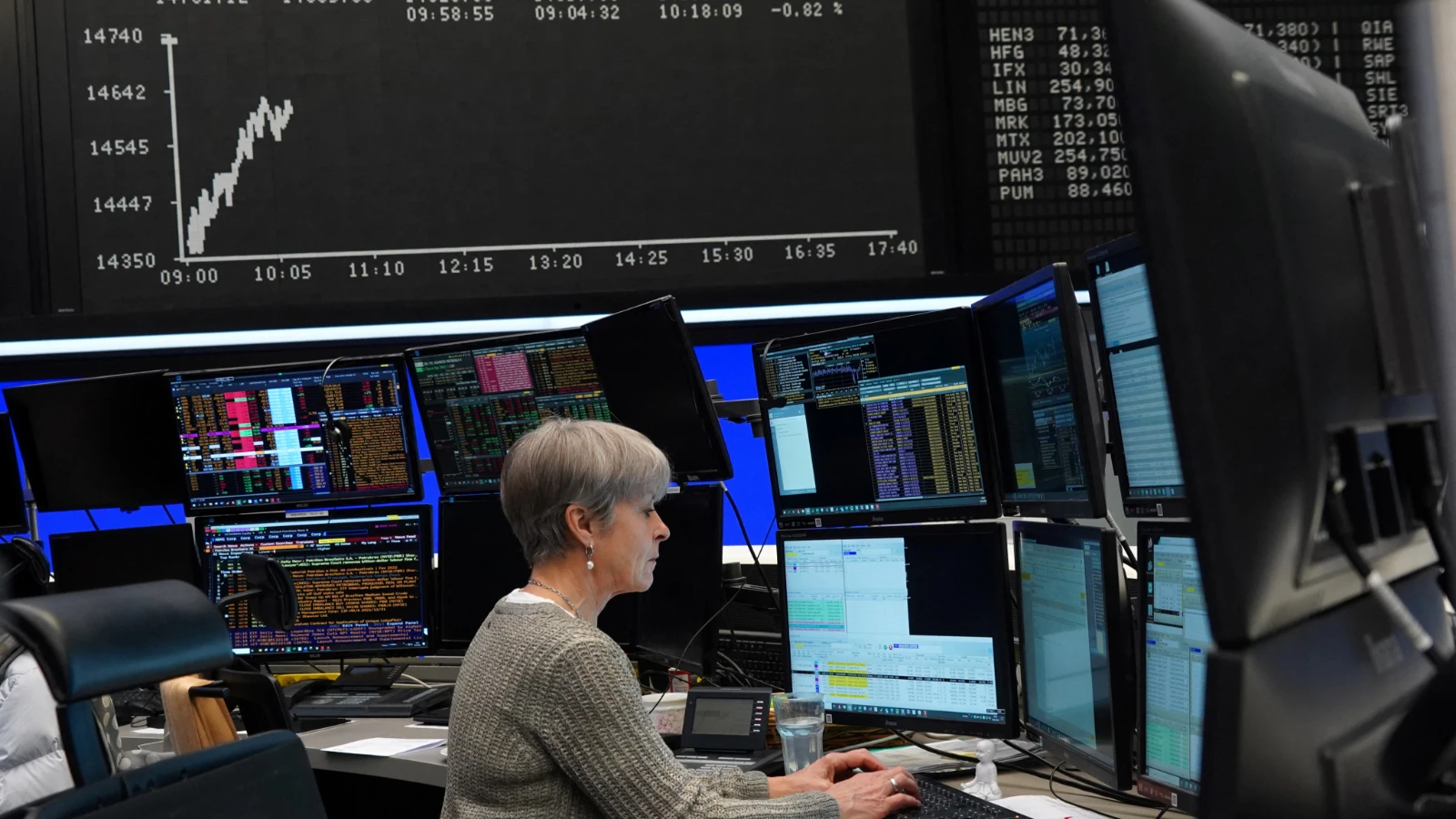
European stock markets follow a negative trend on the first trading day of the week, as the escalating tension in the Middle East increases risks regarding energy supply, inflation and interest rate outlook.
As of 11:50 in European markets, the Stoxx Europe 600 indicator index is traded at 563 points, with a 1.8 percent decrease, and the FTSE 100 index in the UK is traded at 9,760 points, with a 1.6 percent decrease.
In Germany, the DAX 40 index is traded at 21,926 points, with a 2.1 percent decrease in value, in Italy, the FTSE MIB 30 index is traded at 42,008 points, with a 2 percent decrease, in Spain, the IBEX 35 index is traded at 16,342 points, with a 2.2 percent decrease, and in France, the CAC 40 index is traded at 7,544 points, with a 1.6 percent decrease.
While the escalating tension in the Middle East increases the risks to the global economy, global markets follow a negative course.
US President Donald Trump’s decision to give Iran 48 hours to reopen the Strait of Hormuz and the harsh response statements from Tehran strengthened concerns that the conflict could spread to a wider region.
G7 countries also called for the protection of navigation security in the Strait of Hormuz and related sea lanes and stated that they are ready to take all necessary steps to support global energy supply.
While concerns continue that tensions in the region may last longer than expected, the volatility in oil prices caused by risks to energy supply has made its impact on the global inflation outlook evident.
Rising energy costs on the European side increase the pressure on bond markets and monetary policy expectations.
Expectations that the European Central Bank (ECB) will increase interest rates at its next month’s meeting have begun to price in with a 78 percent probability.
Rising inflation concerns continue to put upward pressure on the region’s bond markets. While France’s 10-year bond interest reached its highest level since April 2011 with 3.75 percent, Britain’s 10-year bond interest approached 5 percent, testing the peak for the first time after July 2008.
While Germany’s 10-year bond interest rate rose above 3 percent for the first time since July 2011, Spain’s 10-year bond rate reached its highest level since November 2023 at 3.58 percent.
A joint statement was made by the foreign ministers of the G7 countries and the European Union (EU) High Representative for Foreign Affairs and Security Policy, Kaja Kallas, on behalf of the G7 countries, regarding the current situation in the Middle East.
In the statement, it was emphasized that the security of sea routes and navigation, especially the Strait of Hormuz and its key waterways, should be maintained, and the security of energy supply chains and the stability of energy markets were requested to be maintained.
Analysts stated that geopolitical and political developments in the region and oil prices will be monitored for the rest of the day, and that the Chicago Fed National Activity Index in the USA and consumer confidence index data in the Eurozone are in the focus of investors.
